Wabi Sabi Bathroom: The Art of Finding Beauty in Imperfection
Introduction:
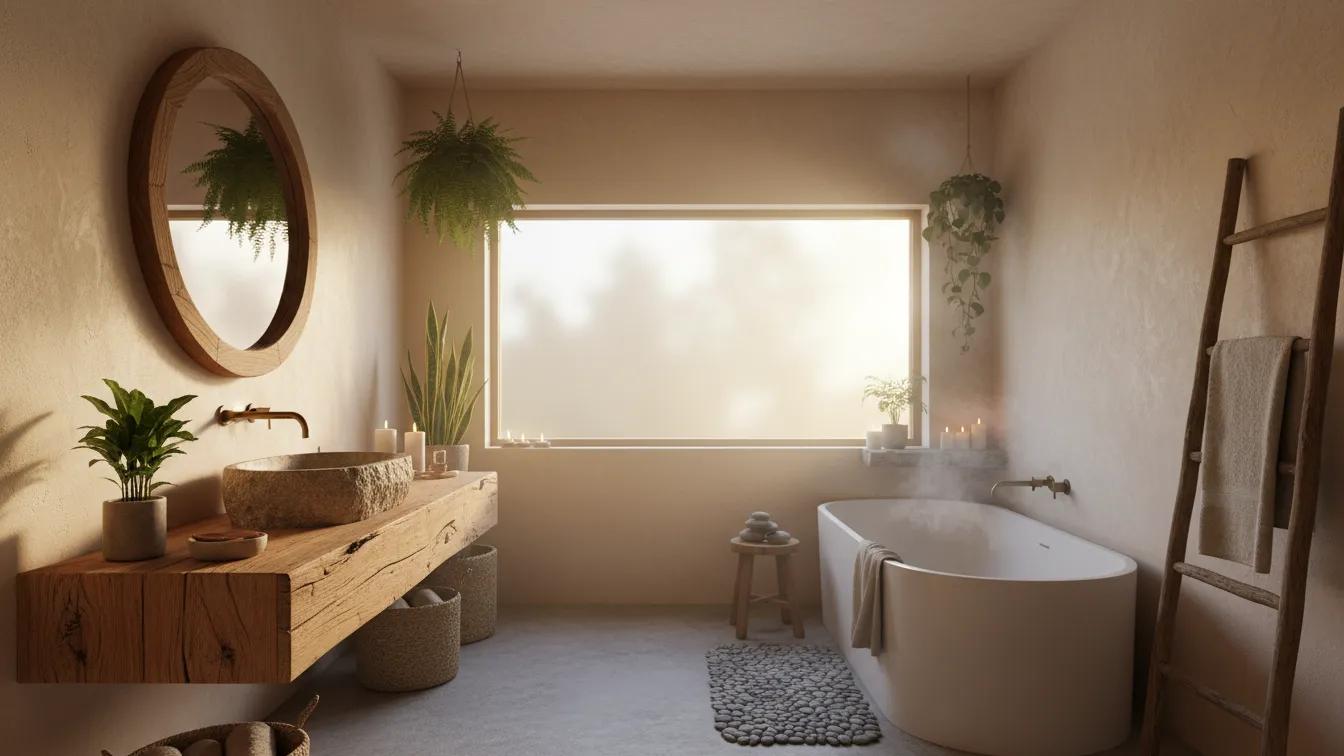
You know that feeling when you walk into a perfectly styled bathroom and it feels… too perfect? Like you’re afraid to touch anything? Well, here’s where the wabi sabi bathroom concept flips everything on its head.
I’ll be honest with you—when I first heard about wabi sabi, I thought it was just another design trend that’d fade away. But after diving deep into this Japanese philosophy, I realized it’s so much more than aesthetics. It’s about embracing the natural wear of materials, celebrating simplicity, and finding peace in spaces that aren’t trying too hard.
In my experience, modern bathrooms often feel cold and sterile. Everything’s gleaming chrome and perfect tiles. But what if your bathroom could tell a story instead? What if those slight variations in your stone countertop weren’t flaws but features?
That’s exactly what a wabi sabi bathroom offers. It’s a space where natural materials age gracefully, where simplicity creates calm, and where imperfection becomes the whole point. And the best part? You don’t need a massive budget or a complete renovation to get started.
What Is Wabi Sabi and Why It Works Perfectly in Bathrooms
Let’s break this down in simple terms. Wabi sabi is a Japanese aesthetic philosophy that finds beauty in imperfection, impermanence, and incompleteness. The word “wabi” originally meant loneliness or solitude, while “sabi” referred to the beauty that comes with age.
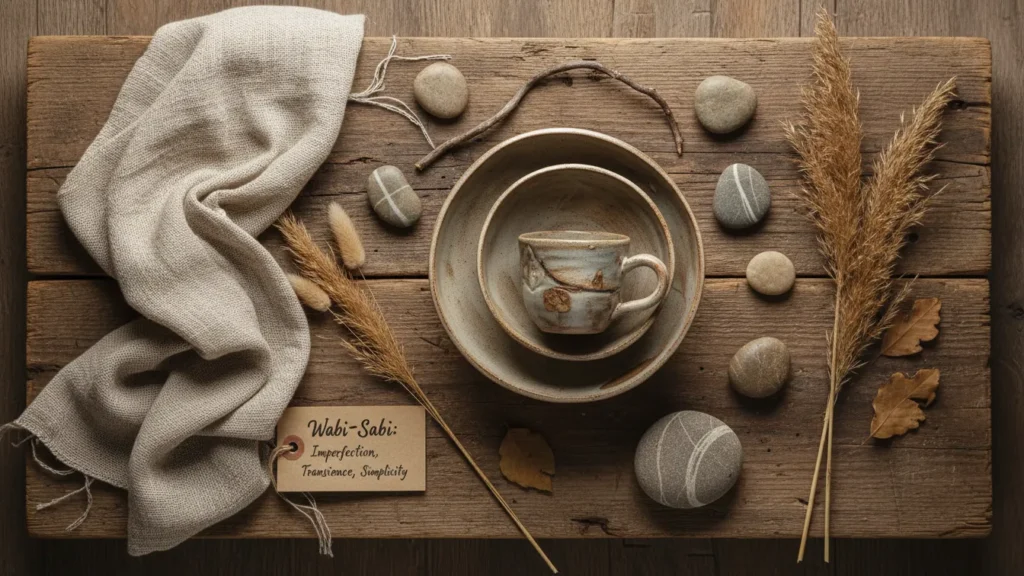
Now here’s where it gets interesting. These two concepts merged over centuries to create a worldview that celebrates the natural cycle of growth and decay. Think about a weathered wooden fence or a handmade ceramic bowl with slightly uneven edges—that’s wabi sabi in action.
Why Bathrooms Are Perfect for This Philosophy
Bathrooms are inherently intimate spaces. You start and end your day there. Moreover, they’re rooms where we interact constantly with water, steam, and moisture—elements that naturally weather and change materials over time.
In my experience, fighting against this natural aging process is exhausting. You’re constantly polishing, sealing, and replacing. But when you embrace a wabi sabi bathroom design, you’re working with nature instead of against it.
Here’s what I love about this approach: a water stain on your wooden stool becomes a mark of use rather than something to stress about. The slight patina developing on your copper faucet? That’s exactly what you want.
The Core Principles of Wabi-Sabi Design
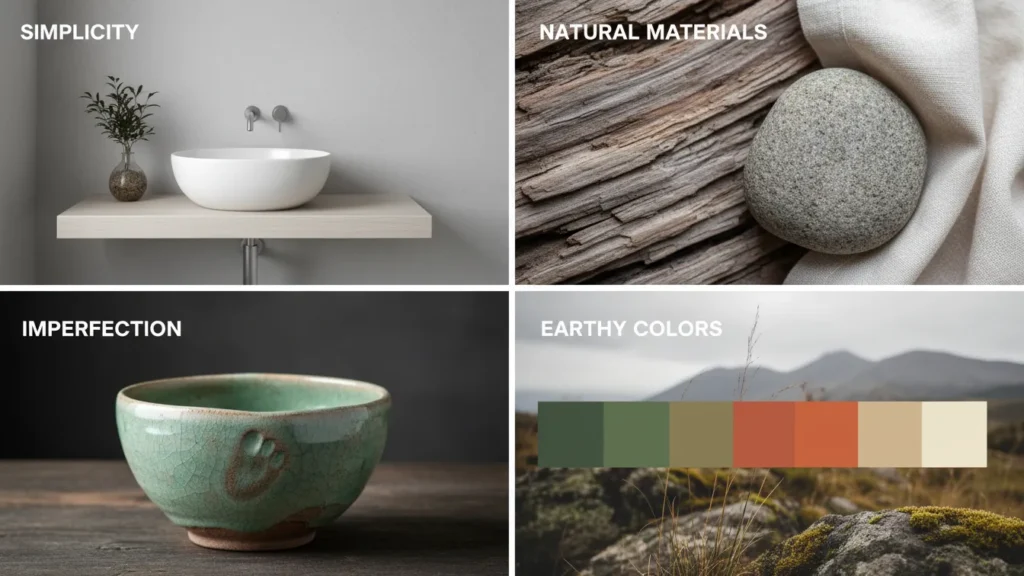
Before we dive into specifics, let’s understand the fundamental principles that guide wabi sabi bathroom design:
Simplicity and minimalism form the foundation. This doesn’t mean your space needs to be empty or boring. Instead, it’s about being intentional with every element you include. Each piece should serve a purpose or bring genuine joy.
Natural and organic materials take center stage. stone, bamboo, clay, and linen. These materials show their age beautifully and connect us to the natural world.
Embracing imperfection might be the hardest principle for perfectionists. You might be wondering how this works practically. It means choosing handmade items over mass-produced ones, accepting natural variations in materials, and finding beauty in asymmetry.
Muted and earthy color palettes create the calm atmosphere wabi sabi is known for. We’re talking soft greys, warm beiges, muted greens, and gentle browns—colors you’d find in nature.
Essential Elements of a Wabi Sabi Bathroom Design
Let’s get practical. Creating a wabi-sabi bathroom isn’t about following strict rules—it’s about understanding principles and adapting them to your space.
Natural Materials That Age Gracefully
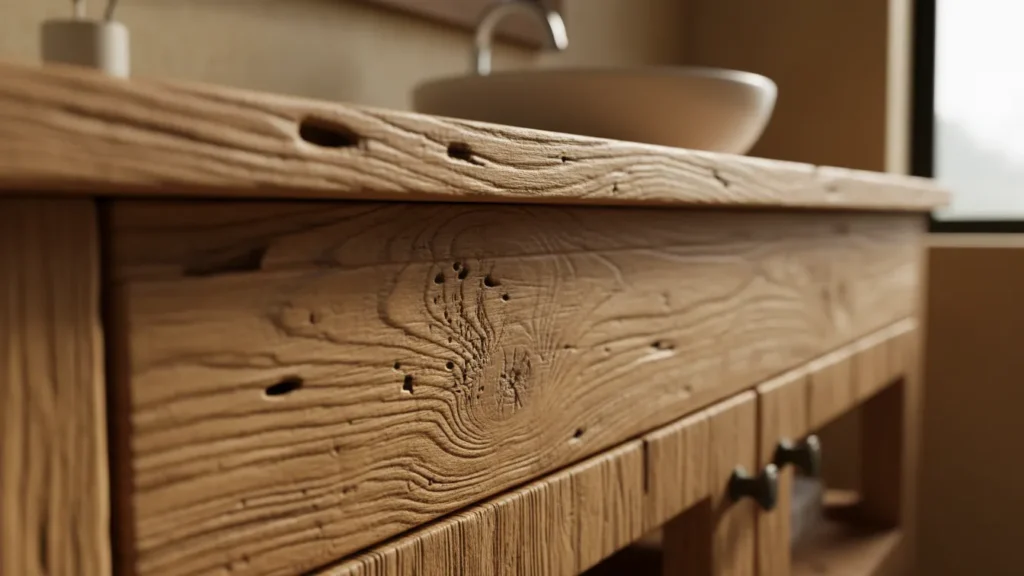
The materials you choose will define your entire wabi sabi bathroom aesthetic. Here’s where material selection becomes crucial.
Wood is probably the most versatile material for this style. Reclaimed wood, weathered teak, or even bamboo bring warmth and organic texture. I’ve seen bathroom vanities made from old barn wood that look absolutely stunning—complete with knots, grain variations, and natural color differences.
Don’t worry about water damage if you treat the wood properly. Actually, a little weathering is exactly what you want. Just make sure you’re using appropriate sealants in high-moisture areas.
Stone offers another fantastic option. Think about rough-hewn granite, tumbled marble, or natural river rocks. The key is choosing stones with visible variation rather than perfectly uniform pieces. Those mineral deposits and natural fissures? They’re features, not bugs.
Clay and ceramics add artisanal charm. Handmade tiles with slight irregularities, pottery sinks, and terracotta accessories all fit perfectly within the wabi sabi aesthetic. What I love about these materials is that no two pieces are identical.
Linen and cotton textiles complete the picture. Choose natural, undyed fabrics for your towels and bath mats. They’ll soften with washing and develop their own character over time.
Color Schemes That Embody Tranquility

Your wabi sabi bathroom color palette should feel like stepping into a peaceful forest or walking along a quiet beach.
Start with a neutral base—think warm whites, soft greys, or gentle beiges. These create a calm foundation that won’t compete with your natural materials. In my experience, avoid stark white walls. They’re too harsh and clinical.
Layer in earthy tones through accessories and accents. Muted greens from plants, warm terracotta from pottery, or soft browns from wooden elements all work beautifully. The goal is creating depth without overwhelming the senses.
Here’s a practical tip: test your paint colors in different lighting throughout the day. Natural light changes how colors appear, and you want your space to feel peaceful from morning to evening.
Lighting That Enhances Natural Beauty
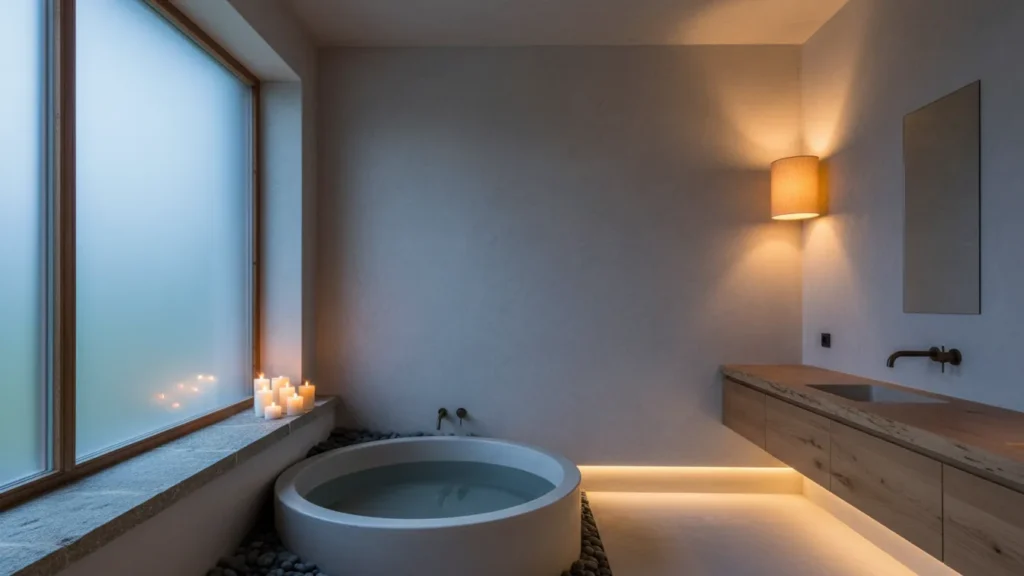
Lighting can make or break your wabi sabi bathroom design. Harsh overhead fluorescents? Absolutely not. Instead, think about layering soft, warm light sources.
Natural light should be your primary source whenever possible. If you’re lucky enough to have windows, embrace them. You might be wondering about privacy—try frosted glass or sheer curtains made from natural fabrics.
For artificial lighting, choose warm-toned bulbs (around 2700-3000K). Install dimmer switches so you can adjust the mood. Wall sconces with fabric or paper shades create gentle, diffused light that’s perfect for the wabi sabi aesthetic.
Consider adding candles for evening relaxation. There’s something deeply calming about flickering candlelight that perfectly aligns with wabi sabi principles.
Practical Step-by-Step Guide to Creating Your Wabi Sabi Bathroom
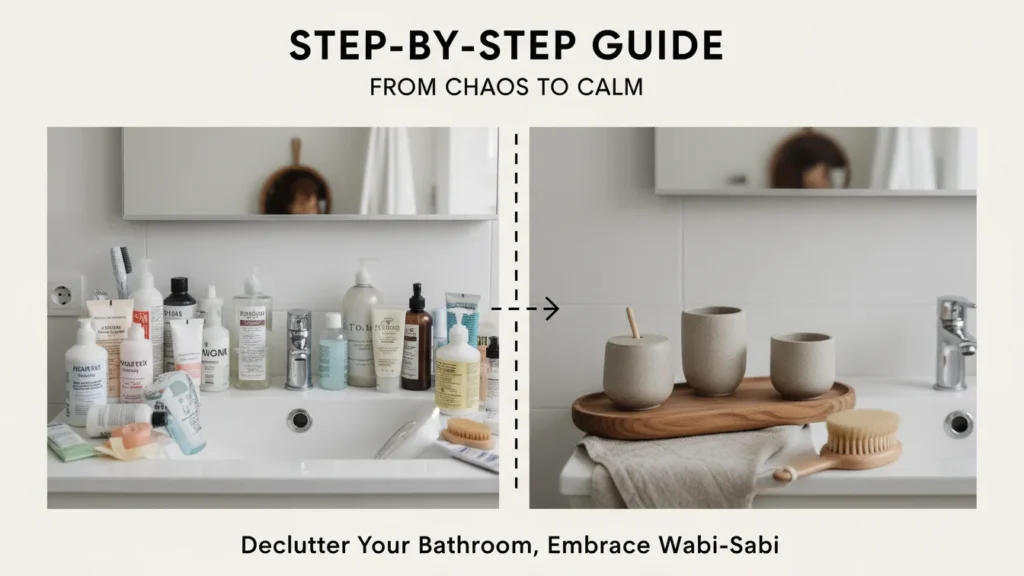
Now let’s talk about actually making this happen. You don’t need to gut your entire bathroom—small changes can create a big impact.
Step 1: Declutter and Simplify
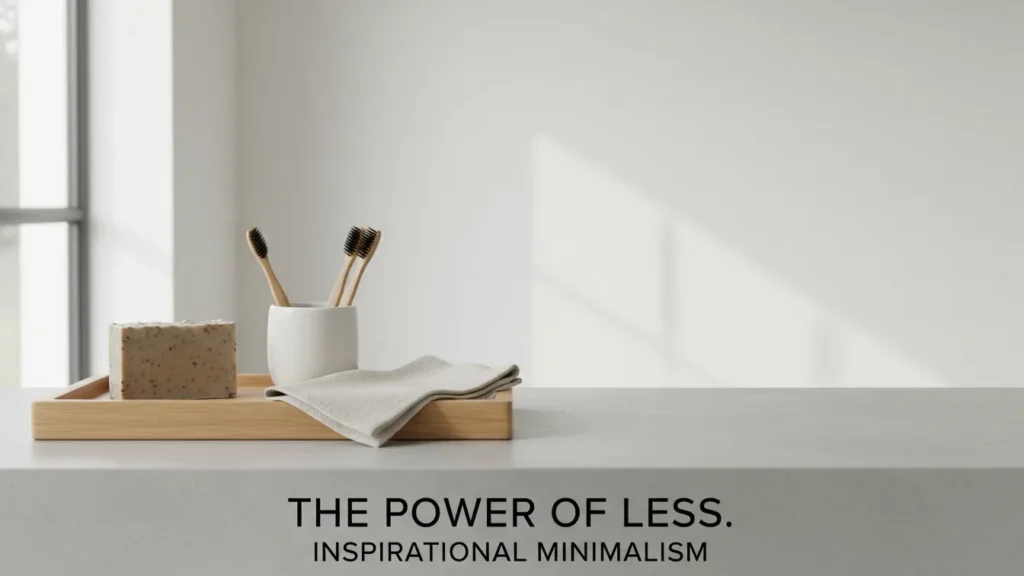
Before you buy anything new, start by removing what doesn’t serve you. This is where many people struggle because we’re conditioned to think more is better.
Take everything out of your bathroom. Yes, everything. Then thoughtfully consider what you actually use daily. Those twenty half-empty bottles of products? Pick your favorites and donate or discard the rest.
The wabi sabi bathroom philosophy values quality over quantity. It’s better to have three beautiful items you love than twenty things cluttering your counter.
Step 2: Assess Your Existing Elements
Look at what you already have with fresh eyes. You might be surprised at what fits the wabi sabi aesthetic.
That old wooden stool you were thinking of replacing? If it’s solid and functional, it might be perfect just as it is. The slight wear on the seat tells a story. Those vintage tiles with a bit of crazing? They’ve got character that new tiles can’t replicate.
Take inventory of elements worth keeping versus those that truly need replacing. This approach saves money and honors the wabi sabi principle of valuing existing things.
Step 3: Choose Your Focal Point
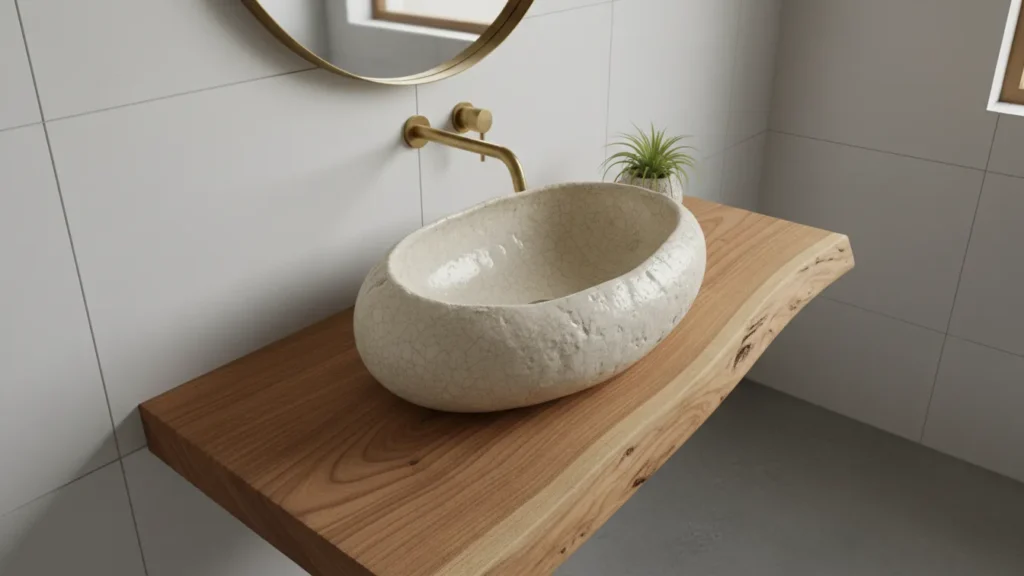
Every well-designed bathroom needs a focal point—something that draws the eye and sets the tone for the space.
In a wabi sabi bathroom, this might be a handmade vessel sink, a stunning piece of reclaimed wood, or a beautiful natural stone feature wall. Choose something that speaks to you personally and reflects the natural, imperfect beauty central to this design philosophy.
I’ve seen bathrooms where a simple wooden bathtub tray becomes the focal point when paired with minimal surroundings. The key is creating intentional visual interest without clutter.
Step 4: Incorporate Natural Textures
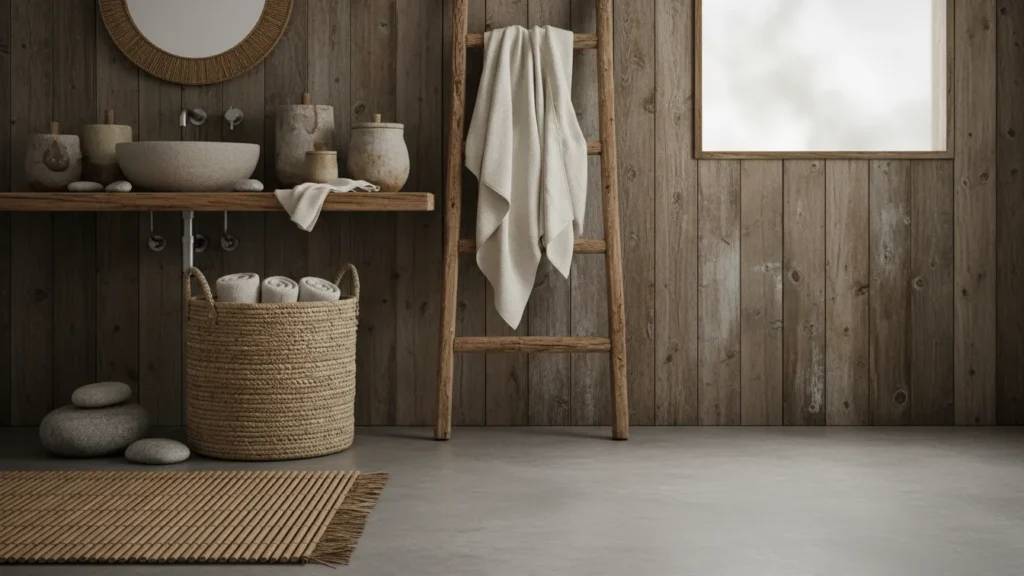
Now here’s where things get fun. Start layering in those natural textures that define the wabi sabi aesthetic.
Add a bamboo bath mat. Replace plastic containers with ceramic or wooden alternatives. Hang linen towels instead of synthetic ones. Each small change moves you closer to that organic, grounded feeling.
Don’t rush this process. In my experience, wabi sabi design develops organically over time. You’ll find the perfect pieces when you’re not frantically searching for them.
Step 5: Embrace Imperfection in Details
This step challenges everything we’ve been taught about “proper” design. Instead of hiding flaws, you’re celebrating them.
Choose handmade soap dishes with slight irregularities. Display vintage or antique accessories with patina. Use natural fiber baskets that’ll soften and change over time. These imperfect details make your wabi-sabi bathroom feel authentic and lived-in.
What I love about this approach is the freedom it provides. You’re not stressed about maintaining perfection because perfection isn’t the goal.
Wabi-Sabi Bathroom Features and Fixtures
Let’s talk about the bigger elements—the fixtures and features that really define your space.
Sinks and Vanities
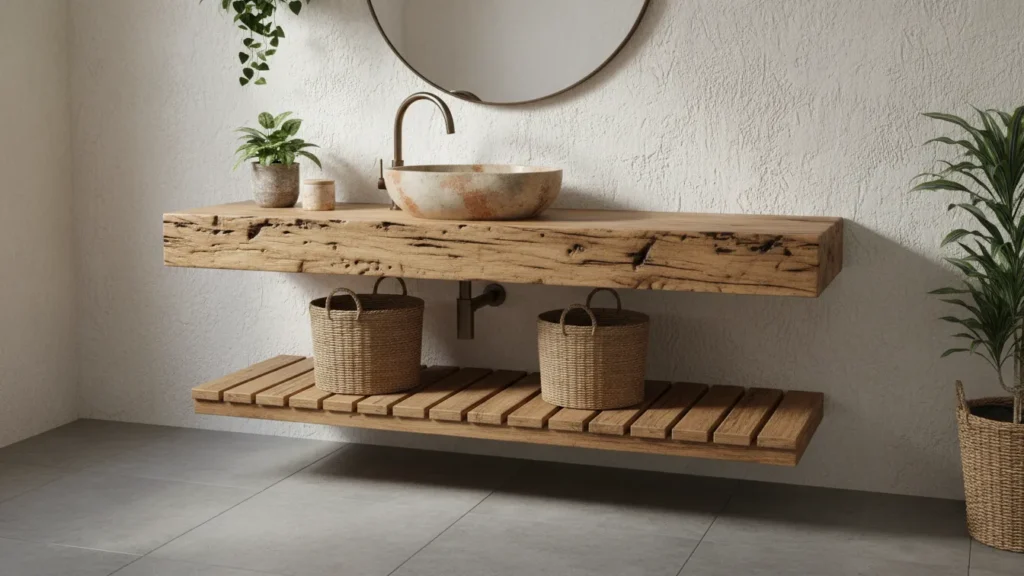
The sink area is usually the first thing you see when entering a bathroom. For a wabi sabi bathroom, this is your chance to make a statement through simplicity.
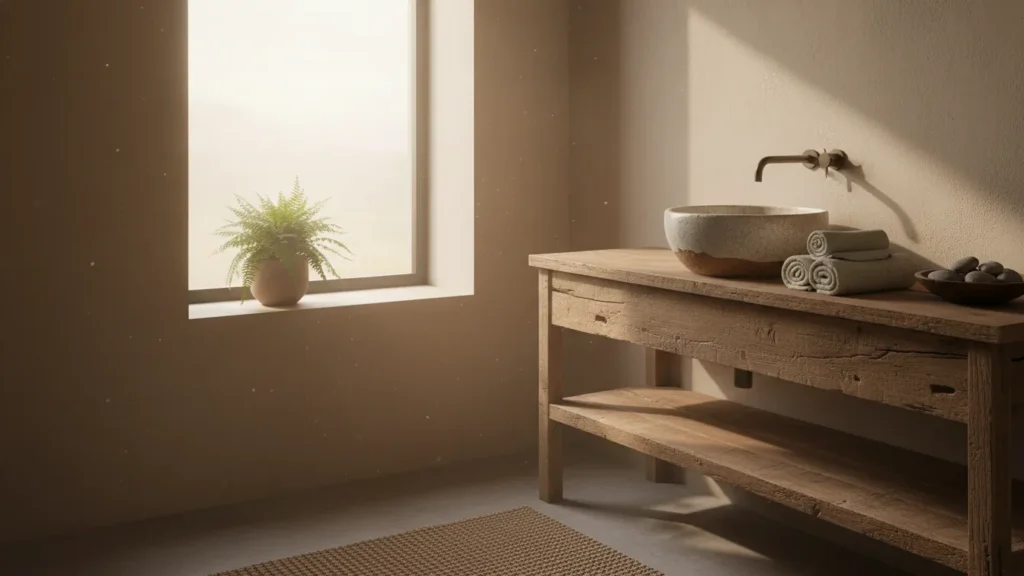
Vessel sinks made from natural stone or hand-thrown ceramics embody wabi sabi perfectly. Each one is unique with natural variations and organic shapes. I’ve seen marble vessel sinks with visible veining that look like works of art.
For vanities, reclaimed wood is your best friend. An old wooden dresser converted into a vanity? That’s peak wabi sabi. The existing wear marks, the slightly uneven surface—these “imperfections” add character.
Alternatively, consider a simple floating shelf made from a thick wood slab. Pair it with an undermount or vessel sink, and you’ve got a minimalist setup that highlights the beauty of natural materials.
Bathtubs and Showers
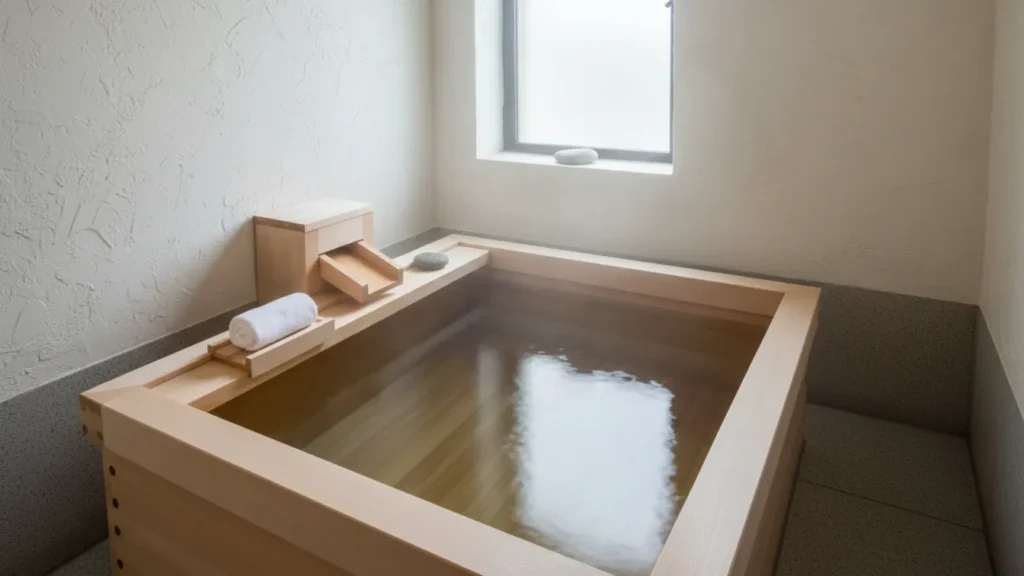
If you’re in a position to replace your tub or shower, think about materials and shapes that feel organic.
Japanese soaking tubs (ofuro) align perfectly with wabi sabi principles. They’re typically deeper than Western tubs and made from wood like cedar or hinoki. The warm wood against your skin creates a completely different bathing experience.
Can’t replace your tub? No problem. You can still embrace wabi sabi bathroom design through how you style it. A simple wooden bath tray, natural stone accessories, and linen curtains can transform the entire feel.
For showers, consider natural stone tiles with visible variation or pebble flooring that feels like walking on a riverbed. Skip the perfectly uniform glass enclosures in favor of something with more character—maybe frosted glass or even a simple linen curtain.
Storage Solutions
Storage in a wabi sabi bathroom should be both functional and beautiful. Open shelving works wonderfully for displaying your carefully curated items.
Wooden shelves showcase your natural fiber towels, handmade soap, and ceramic containers. Everything is visible, which encourages you to keep only what you truly need and love.
Woven baskets made from natural materials like seagrass, rattan, or bamboo provide closed storage that still feels organic. They’re perfect for items you want accessible but not on display.
Faucets and Hardware
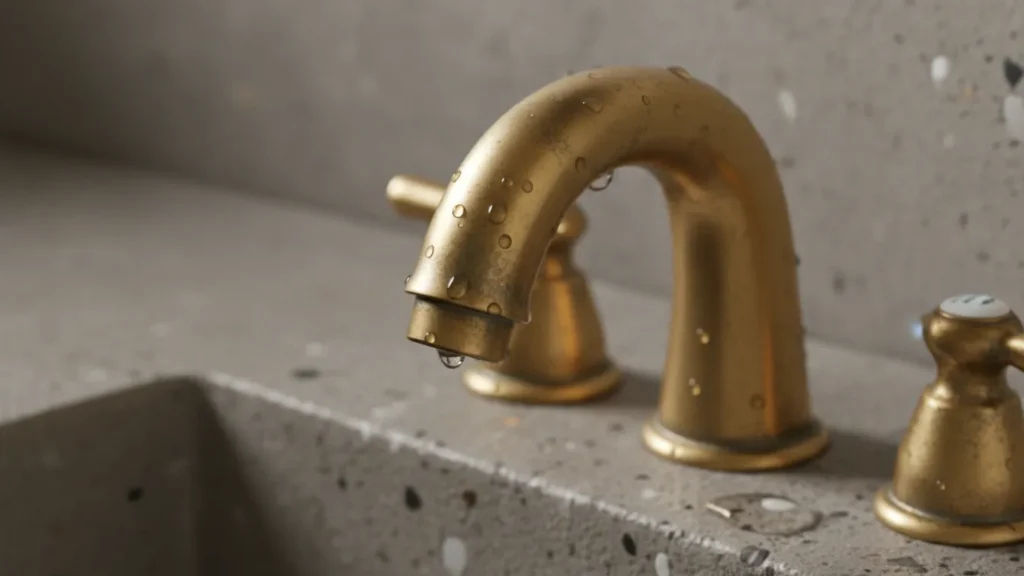
Here’s where many people struggle—finding fixtures that match the wabi sabi aesthetic without looking overly rustic.
Consider unlacquered brass or copper faucets that’ll develop a natural patina over time. This aging process is exactly what wabi sabi celebrates. Some manufacturers even offer pre-aged finishes if you want that look immediately.
Matte black fixtures also work beautifully, especially when paired with natural materials. They provide a modern touch while maintaining the understated elegance central to wabi sabi bathroom design.
Oil-rubbed bronze offers another option—it has natural variation and depth that fits the aesthetic perfectly.
Adding Life Through Plants and Natural Elements
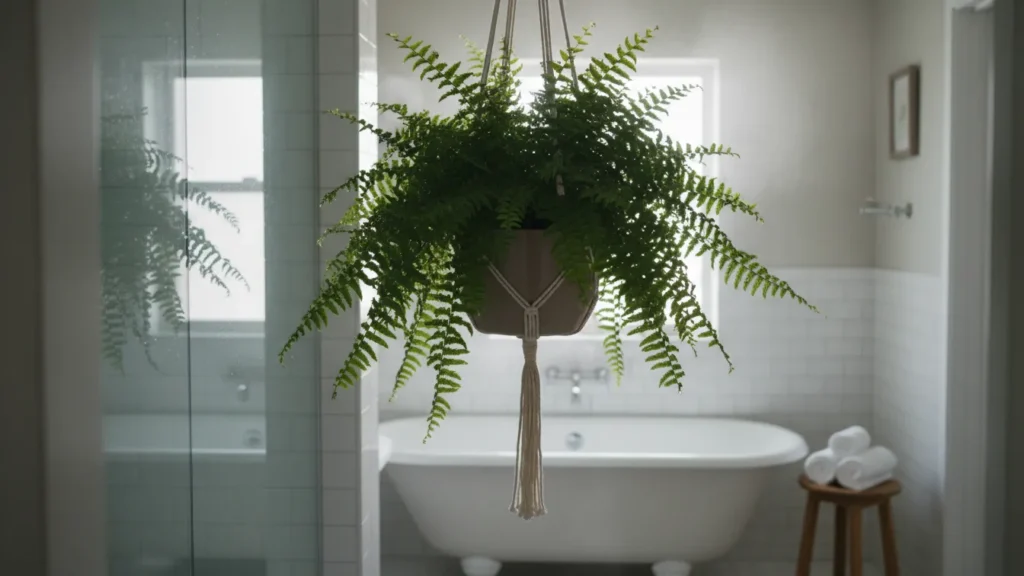
A wabi-sabi bathroom isn’t complete without living elements that connect your space to nature.
Best Plants for Humid Bathroom Environments
Plants bring life, improve air quality, and add that organic touch essential to wabi sabi design. The trick is choosing varieties that thrive in bathroom conditions.
Ferns absolutely love bathroom humidity. Boston ferns, bird’s nest ferns, or maidenhair ferns all create lush, organic texture. They’re forgiving and actually prefer the moisture your shower creates.
Pothos is practically indestructible and grows beautifully in low to medium light. Let it trail from a shelf or hang in a simple basket—the cascading vines soften hard edges and add movement.
Snake plants work perfectly if your bathroom lacks natural light. They’re sculptural and modern while still feeling organic. Plus, they’re incredibly low-maintenance.
Bamboo (the real plant, not lucky bamboo which is actually dracaena) connects directly to Japanese design traditions. It grows well in water or soil and adds vertical interest.
Don’t worry if you’re not confident with plants. Start with one or two hardy varieties and see how they do. In my experience, bathrooms create such ideal conditions that plants often thrive with minimal care.
Natural Decorative Elements
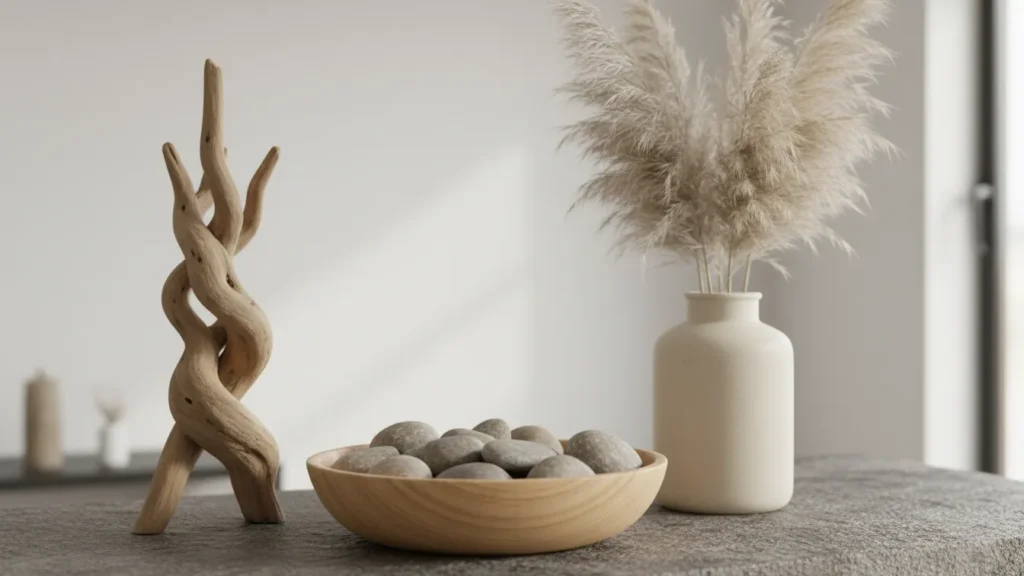
Beyond plants, other natural elements enhance your wabi sabi bathroom without adding clutter.
Smooth river rocks displayed in a wooden bowl create a simple, meditative focal point. Driftwood pieces can become towel hooks or shelf brackets. Dried flowers or grasses in simple ceramic vases add texture without bright colors.
Consider the changing seasons too. A few pussy willow branches in spring, dried lavender in summer—these small touches keep your space connected to the natural world’s cycles.
Wabi Sabi Bathroom Styles and Variations
While wabi sabi has Japanese roots, it adapts beautifully to different design contexts.
Modern Wabi Sabi Fusion
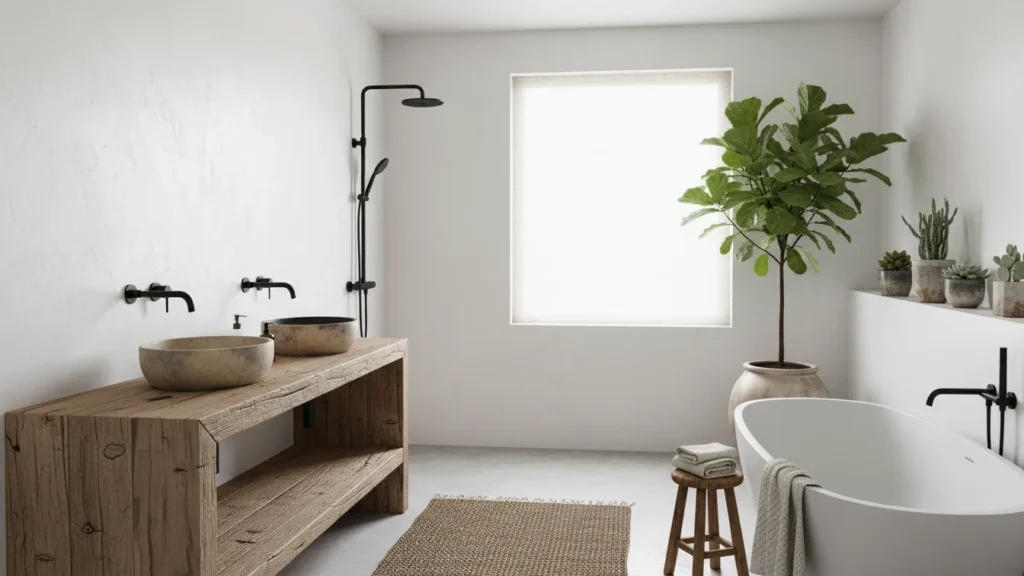
You might be wondering if you can blend wabi sabi principles with contemporary design. Absolutely.
A modern wabi sabi bathroom might feature clean lines and minimal fixtures but incorporate natural materials and handmade elements. Think concrete countertops paired with wooden accents, or sleek white walls offset by organic pottery.
The key is maintaining the philosophy—simplicity, natural materials, acceptance of imperfection—while using contemporary forms and structures.
Rustic Wabi Sabi Approach
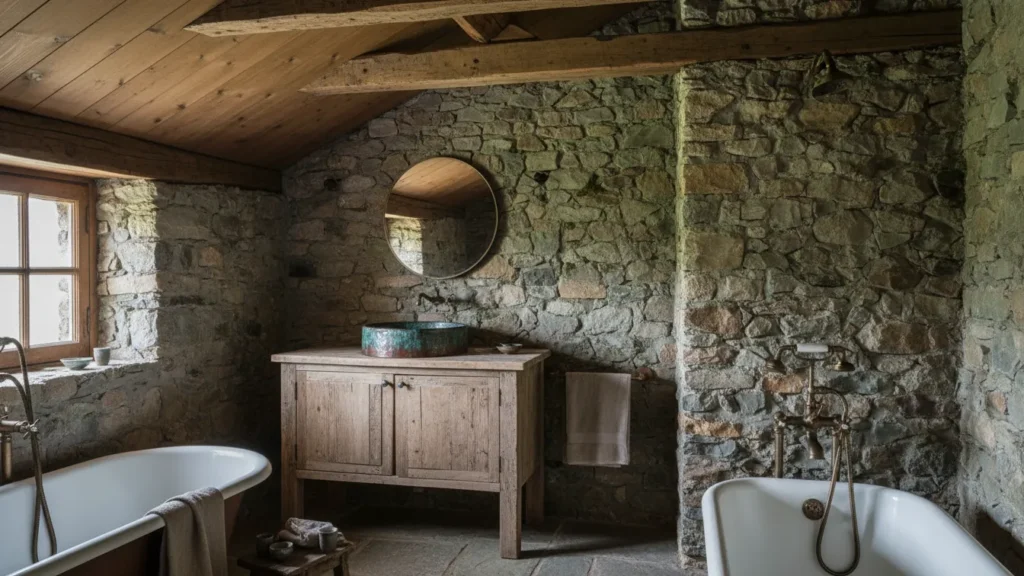
On the other end of the spectrum, a rustic wabi sabi bathroom leans heavily into weathered materials and vintage elements.
Exposed wooden beams, stone walls, antique fixtures—these create a space that feels like it’s existed for decades. This approach works particularly well in older homes or countryside settings where the rustic aesthetic feels natural.
Minimalist Zen Interpretation
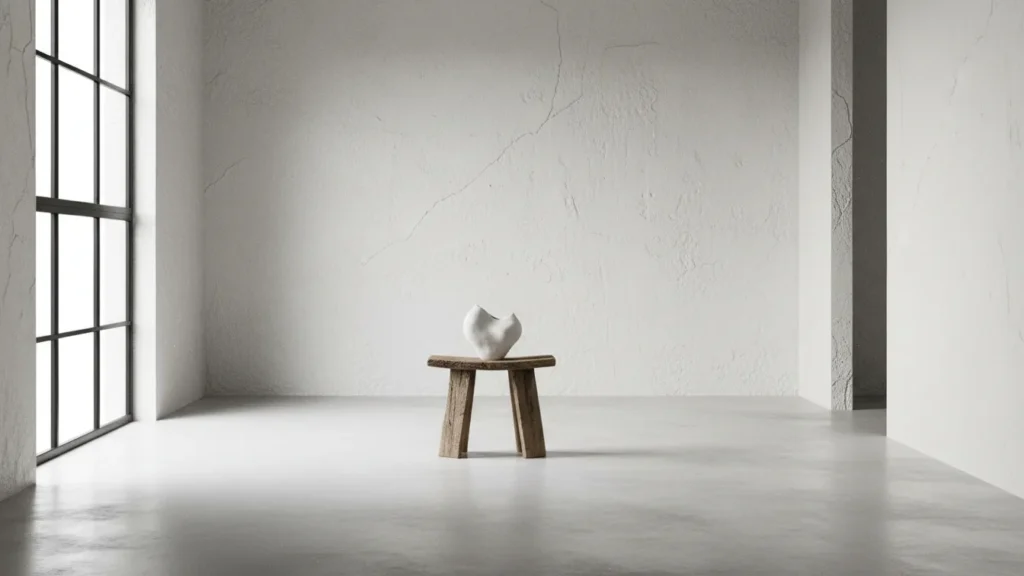
Some people take wabi sabi bathroom design to its most minimal expression, creating spaces that feel almost meditative.
This interpretation uses the absolute minimum number of elements, emphasizes empty space, and focuses on perfect imperfection in every detail. It’s challenging to achieve but incredibly peaceful when done well.
Maintenance and Care for Wabi Sabi Bathrooms
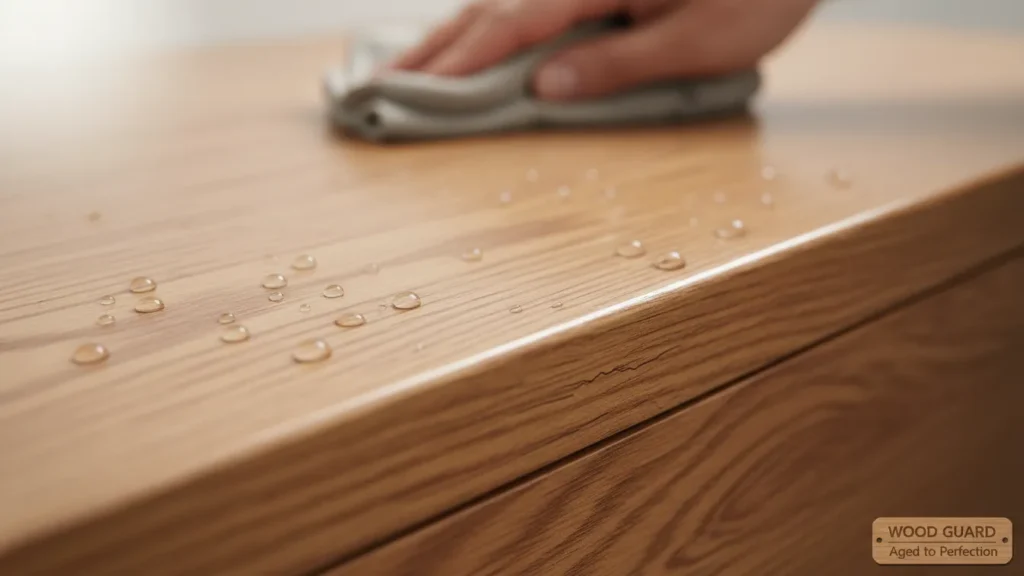
Here’s something important that doesn’t get discussed enough: how to care for a wabi sabi bathroom without fighting against its nature.
Working With Natural Material Changes
Remember, wabi sabi celebrates aging and change. Your maintenance approach should honor this rather than trying to keep everything looking new.
Wood will develop a patina. Stone might show water marks. Linen will soften. These changes aren’t problems—they’re the whole point.
That said, you still want to protect your materials appropriately. Seal wood in high-moisture areas, but choose products that allow the material to breathe and age naturally. For stone, use pH-neutral cleaners that won’t strip away natural characteristics.
Cleaning Without Over-Processing
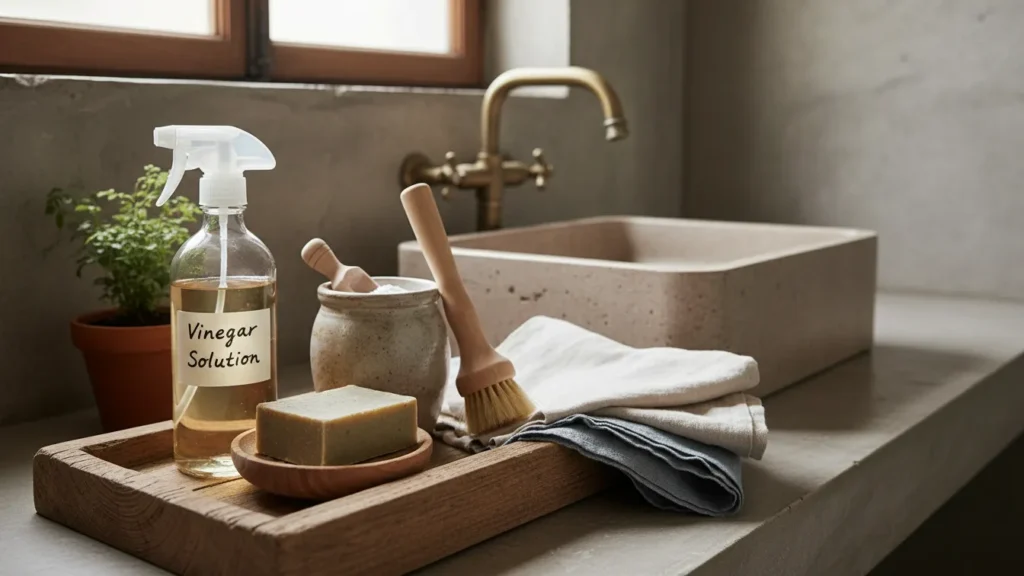
A wabi sabi bathroom needs cleaning, obviously, but the approach differs from conventional bathrooms.
Skip harsh chemical cleaners in favor of natural alternatives— baking soda, or plant-based soaps. These clean effectively without leaving artificial residues or fighting against natural material properties.
Clean regularly but don’t obsess over making everything perfect. A little mineral buildup on your stone? That’s patina developing. Some water spots on wood? Character building.
What I love about this approach is how it reduces stress. You’re maintaining hygiene and function without pursuing an impossible standard of perfection.
Budget Considerations for Your Wabi Sabi Bathroom

Let’s talk money. You might assume creating a wabi sabi bathroom requires a huge budget, but that’s not necessarily true.
Cost Comparison Table
Here’s a realistic breakdown of what you might spend depending on your approach:
| Project Scope | Budget Range | Key Investments | Cost-Saving Strategies |
|---|---|---|---|
| Basic Refresh | $200-$800 | Natural textiles, plants, storage baskets, paint | Keep existing fixtures, DIY projects, thrift vintage pieces |
| Moderate Update | $800-$3,500 | New faucet, vessel sink, wooden vanity, lighting | Refinish existing bathtub, install own fixtures, buy reclaimed materials |
| Significant Renovation | $3,500-$15,000 | Natural stone tile, wooden tub, custom cabinetry | Mix high-end focal pieces with budget materials, phase project over time |
| Complete Remodel | $15,000-$40,000+ | Premium natural materials throughout, soaking tub, custom everything | Source materials directly, consider doing demo yourself, prioritize quality over quantity |
Where to Invest and Where to Save
In my experience, prioritizing your spending makes all the difference in creating an authentic wabi sabi bathroom on any budget.
Invest in items you’ll touch and use daily—faucets, sink, primary lighting. These should be quality pieces that’ll age beautifully. Also invest in one stunning focal point, whether that’s a handmade sink or gorgeous piece of wood.
Save on items that don’t need to be perfect or expensive. Paint, basic storage, towel bars—these can be budget-friendly without compromising the aesthetic. Thrift stores and salvage yards often have incredible finds for wabi sabi design since you’re actively looking for pieces with character and age.
DIY Projects to Reduce Costs
Many wabi sabi bathroom elements are perfect DIY projects if you’re handy or willing to learn.
Making your own wooden bath tray, refinishing a vintage piece into a vanity, creating macramé plant hangers, or even mixing your own natural limewash paint—these projects save money while adding personal touches.
The beautiful thing about wabi sabi is that slight imperfections in your DIY work actually enhance the aesthetic. Your handmade shelf doesn’t need to be perfectly level because perfect isn’t the goal.
Common Mistakes to Avoid
Even with the best intentions, it’s easy to miss the mark when creating a wabi sabi bathroom. Let’s talk about pitfalls I’ve seen (and honestly, made myself).
Over-Decorating the Space
The biggest mistake? Adding too much stuff. Wabi sabi is about simplicity, but many people can’t resist filling empty space.
If every shelf is full, every wall has something hanging, and surfaces are covered with accessories, you’ve missed the point. Empty space isn’t something to fear—it’s essential to the aesthetic. It lets your eyes rest and allows each element room to breathe.
Choosing Faux Materials
Another common error is using fake versions of natural materials. Plastic that looks like wood, vinyl that mimics stone—these completely undermine the wabi sabi bathroom philosophy.
The whole point is celebrating real materials with genuine aging characteristics. Faux materials don’t age beautifully—they just look cheap over time. If budget is a concern, it’s better to use less of a real material than more of a fake one.
Forcing a Perfect Imperfection
Here’s an ironic mistake: trying too hard to create the “right” kind of imperfection. I’ve seen people artificially distress new wood or deliberately damage items to make them look aged.
That’s not wabi sabi—that’s contrived. True wabi sabi appreciates natural aging and genuine wear, not manufactured character. If you’re working with new materials, let them age naturally over time. The wait is part of the beauty.
Ignoring Functionality
Sometimes people get so caught up in the aesthetic that they forget bathrooms need to function well. A beautiful wooden shelf that’s too shallow for your toiletries? Frustrating, not zen.
Your wabi sabi bathroom should make your life easier, not harder. Every element should serve a purpose, even if that purpose is simply bringing you joy when you look at it.
Finding Inspiration and Sources
Creating your wabi sabi bathroom vision requires gathering ideas and finding the right materials.
Where to Shop for Authentic Pieces
Local artisan markets often feature handmade pottery, wooden items, and textiles perfect for wabi sabi design. You’re supporting local craftspeople and getting unique pieces.
Salvage yards and architectural antique stores are treasure troves for reclaimed wood, vintage fixtures, and materials with authentic history. I’ve found incredible pieces at a fraction of retail cost.
Online marketplaces like Etsy connect you with artisans worldwide. Search for handmade ceramics, natural fiber textiles, or custom woodwork. The key is looking for makers who embrace imperfection and natural materials.
Import stores specializing in Japanese or Asian goods often carry items perfectly suited to wabi sabi bathroom design—Japanese towels, wooden bath accessories, ceramic pieces.
Social Media and Design Resources
Pinterest is actually useful here for collecting visual inspiration. Create a private board for your wabi sabi bathroom ideas and notice what elements consistently appeal to you.
Instagram hashtags like #wabisabi, #wabisabihome, or #Japanesebathroom show real spaces for inspiration. Follow designers who specialize in this aesthetic.
Design blogs focused on minimalism, natural living, or Japanese design often feature wabi sabi principles even if they don’t use that exact term.
Real-Life Wabi Sabi Bathroom Transformations
Nothing inspires quite like seeing actual transformations. Let me share some examples that illustrate what’s possible.
Small Bathroom Transformation
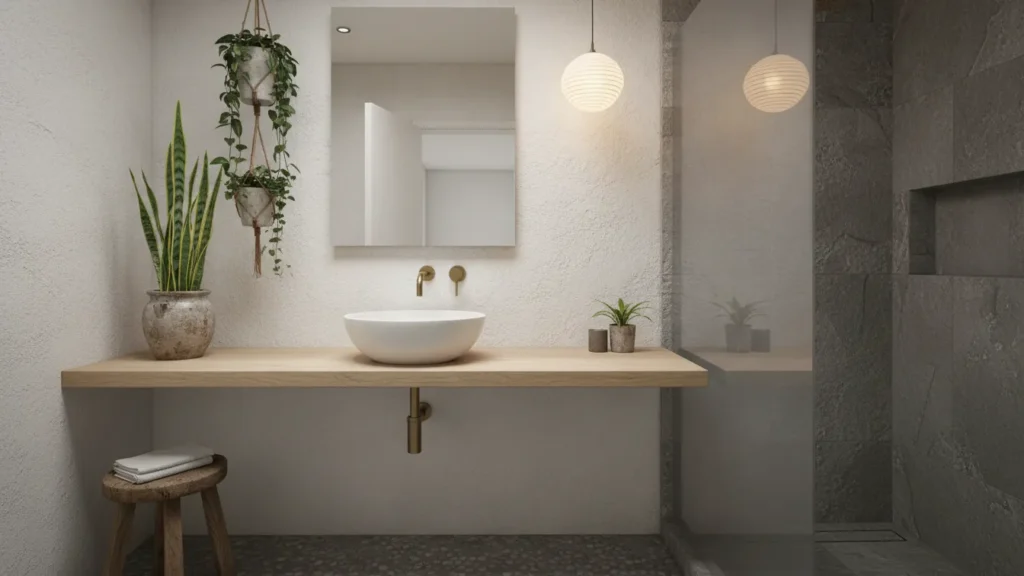
I know someone who transformed a tiny 5×7 foot bathroom on a $1,200 budget. She kept the existing tub and toilet but painted walls in warm grey, replaced the vanity with a floating shelf made from reclaimed barn wood, installed a handmade ceramic vessel sink, added floating shelves for rolled linen towels, and brought in plants.
The result? A space that felt twice as large and infinitely more peaceful. The key was removing clutter and letting each element shine.
Master Bath Renovation
On the other end, I’ve seen a complete master bath renovation embracing wabi sabi principles with a $30,000 budget. This included a Japanese cedar soaking tub, river rock shower floor, rough-hewn granite countertops, reclaimed wood beam accents, and custom pottery lighting fixtures.
What made it special wasn’t just the money—it was the thoughtful selection of materials that would age beautifully together and the restraint shown in not over-decorating the space.
Wabi Sabi Beyond the Bathroom
Once you embrace wabi sabi in your bathroom, you might find yourself wanting to extend these principles throughout your home.
Connecting Spaces with Shared Philosophy
The beauty of wabi sabi is how it creates cohesion across different rooms when you follow the same core principles—natural materials, simplicity, acceptance of imperfection.
Your wabi sabi bathroom might inspire a kitchen renovation using similar materials, a bedroom redesign focused on natural textiles, or a living room that celebrates handmade and vintage pieces.
Living the Wabi Sabi Lifestyle

Ultimately, wabi sabi isn’t just about design—it’s a philosophical approach to life. It teaches us to find beauty in aging, accept impermanence, and appreciate simplicity.
Applying these principles in your bathroom might be the first step toward a more mindful, less stressful approach to your home and life in general. And honestly, couldn’t we all use a little more of that kind of peace?
Conclusion: Creating Your Perfect Wabi Sabi Bathroom Sanctuary
We’ve covered a lot of ground here, from the philosophy behind wabi sabi to practical implementation steps. Now here’s where it gets personal—creating your own wabi sabi bathroom that reflects your unique needs and aesthetic.
Remember, this isn’t about following rigid rules or achieving someone else’s version of perfect. It’s about creating a space that brings you peace, celebrates natural beauty, and accepts the passage of time gracefully.
Start small if you need to. Replace your plastic accessories with wooden or ceramic ones. Add a plant. Swap synthetic towels for linen. Each small change moves you toward a more authentic, calming space.
What I love most about the wabi sabi bathroom aesthetic is the freedom it offers. You’re released from the exhausting pursuit of perfection and instead invited to appreciate what already exists, what naturally develops, and what genuinely serves you.
Your bathroom should be a sanctuary—a place where you begin each day with calm and end each evening with peace. When you embrace wabi sabi principles, you create exactly that kind of space.
Ready to transform your bathroom into a wabi sabi sanctuary? Start by clearing the clutter today. Remove everything that doesn’t serve a purpose or bring you joy. Then begin thoughtfully adding back elements that embody natural beauty and simplicity. Your perfect imperfect bathroom awaits.