Transform Your Autumn Gatherings: The Complete Guide to Fall Table Centerpieces
Introduction:
You know that feeling when you walk into a room and something just clicks? That’s exactly what the right fall table centerpieces can do for your dining space. I’ve spent countless autumn seasons experimenting with different arrangements, and I’m here to tell you—creating beautiful seasonal displays isn’t as complicated as you might think.
Here’s the thing: fall centerpieces aren’t just about throwing some pumpkins on a table and calling it a day. They’re about capturing the essence of the season—those warm amber tones, the cozy textures, and the natural abundance that makes autumn so special. Whether you’re hosting Thanksgiving dinner, planning a casual weekend brunch, or just want your dining room to feel more inviting, the right centerpiece changes everything.
What I love about fall table decorations is how forgiving they are. Unlike spring flowers that wilt in days, autumn materials last. We’re talking weeks of gorgeous displays without constant maintenance. And the best part? You don’t need a huge budget or professional design skills to create something spectacular.
In this guide, I’ll walk you through everything you need to know about creating autumn table centerpieces that’ll have your guests asking, “Where did you get that?” From selecting the perfect materials to arranging them like a pro, you’ll discover techniques that work whether your style is rustic farmhouse or elegant modern.
Why Fall Table Centerpieces Matter More Than You Think
Let me ask you something: when was the last time you sat down for a meal at a beautifully decorated table? If you’re like most people, it probably wasn’t yesterday. But here’s what I’ve noticed—when you make that effort, the entire atmosphere shifts.
Fall centerpieces create focal points that draw people together. They signal that you’ve put thought into the gathering, that this meal matters. In my experience, conversations flow more naturally when there’s something beautiful to admire. It sounds simple, but it works.
Beyond aesthetics, seasonal centerpieces connect us to nature’s rhythms. There’s something grounding about bringing elements from outside—acorns, leaves, branches—into your home. It reminds us to slow down and appreciate the changing seasons.
Now here’s where it gets interesting: the psychological impact of seasonal decor is real. Studies show that seasonal decorations can boost mood and create a sense of anticipation for upcoming holidays. Your Thanksgiving centerpieces aren’t just pretty—they’re mood enhancers.
Understanding the Elements of Perfect Fall Table Centerpieces
Before we dive into specific designs, let’s talk about what makes a centerpiece actually work. You might be wondering why some arrangements look effortlessly elegant while others feel cluttered. The difference comes down to understanding a few key principles.
The Foundation: Height and Scale
Your fall table centerpieces need to fit your space. I learned this the hard way when I created a towering arrangement that blocked everyone’s view during dinner. Not my finest moment.
Here’s the rule I follow: if people will be seated and conversing across the table, keep centerpieces under 12 inches tall. For buffets or side tables where height won’t interrupt sight lines, go taller—18 to 24 inches creates dramatic impact.
The length matters too. For a standard 6-foot dining table, your centerpiece should span about 2 to 3 feet. On an 8-foot table, you can go longer or create multiple smaller arrangements spaced along the length.
Color Palette: More Than Just Orange
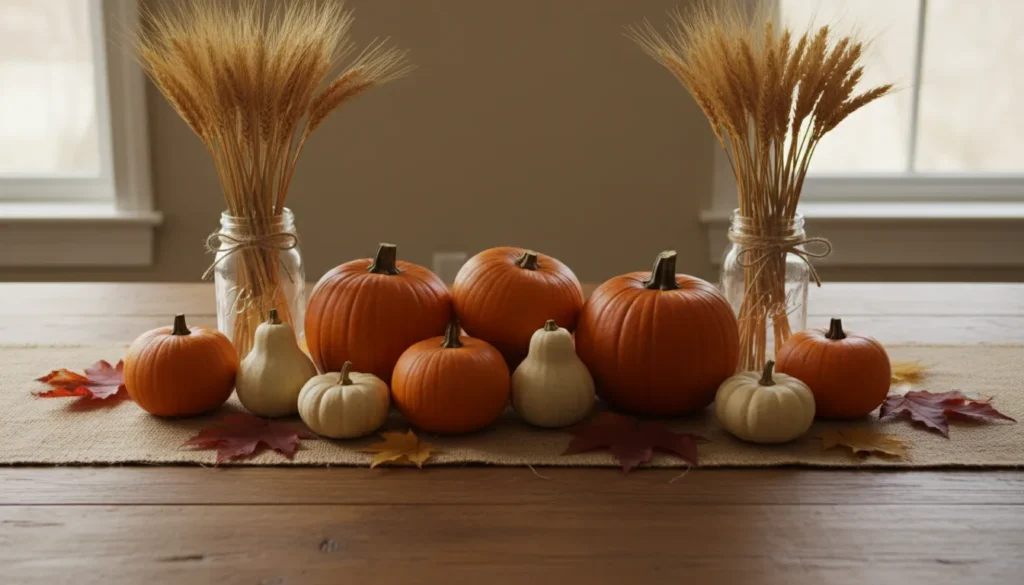
Yes, orange is iconic for fall. But the best autumn centerpieces use a more nuanced palette. Think about what you see on an October walk: burnt sienna, deep burgundy, golden yellow, rich brown, olive green, and touches of cream.
In my experience, limiting yourself to 3-4 main colors creates cohesion. Pick one dominant color (maybe that gorgeous rust orange), add a supporting color (perhaps cream or gold), and accent with deeper tones (burgundy or brown).
Don’t forget about neutrals. White pumpkins have become incredibly popular for elegant fall centerpieces because they work with any color scheme. Gray weathered wood adds texture without competing with your focal elements.
Texture: The Secret Ingredient
This is what separates amateur arrangements from professional-looking displays. Mixing textures creates visual interest that holds attention.
Combine smooth elements (pumpkins, gourds) with rough ones (burlap, bark). Add soft touches (moss, feathers) alongside hard surfaces (candlesticks, glass). Layer shiny (metallic accents) with matte (dried flowers, leaves).
When you run your eyes across a well-textured fall centerpiece, there’s always something new to discover. That’s the magic you’re after.
Classic Fall Table Centerpiece Ideas That Never Fail
Let’s get practical. These tried-and-true designs work for any skill level, and you can adapt them to match your personal style.
Pumpkin Paradise: The Quintessential Autumn Display
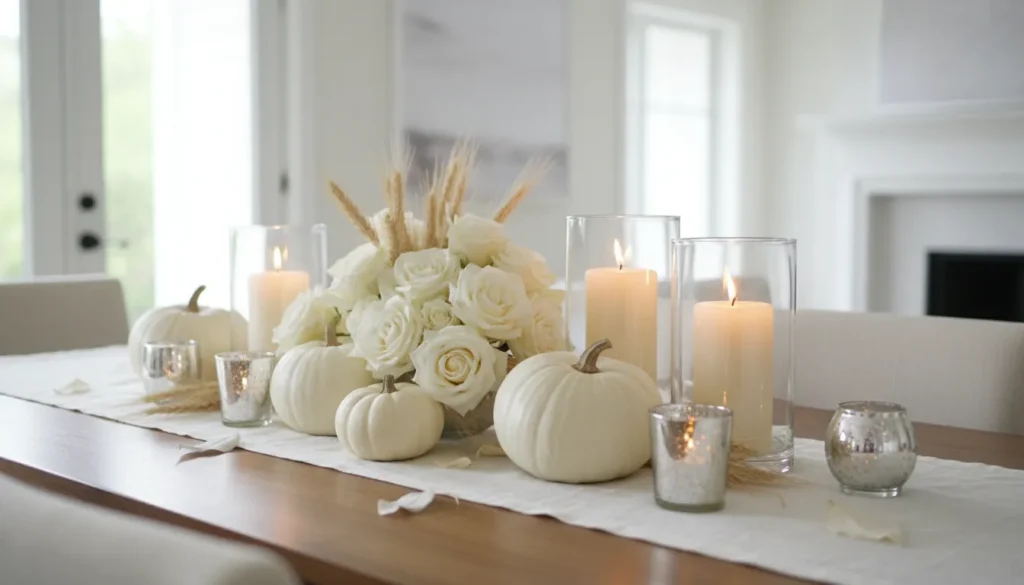
Nothing says fall like pumpkins. But here’s the thing—you don’t have to use them the traditional way.
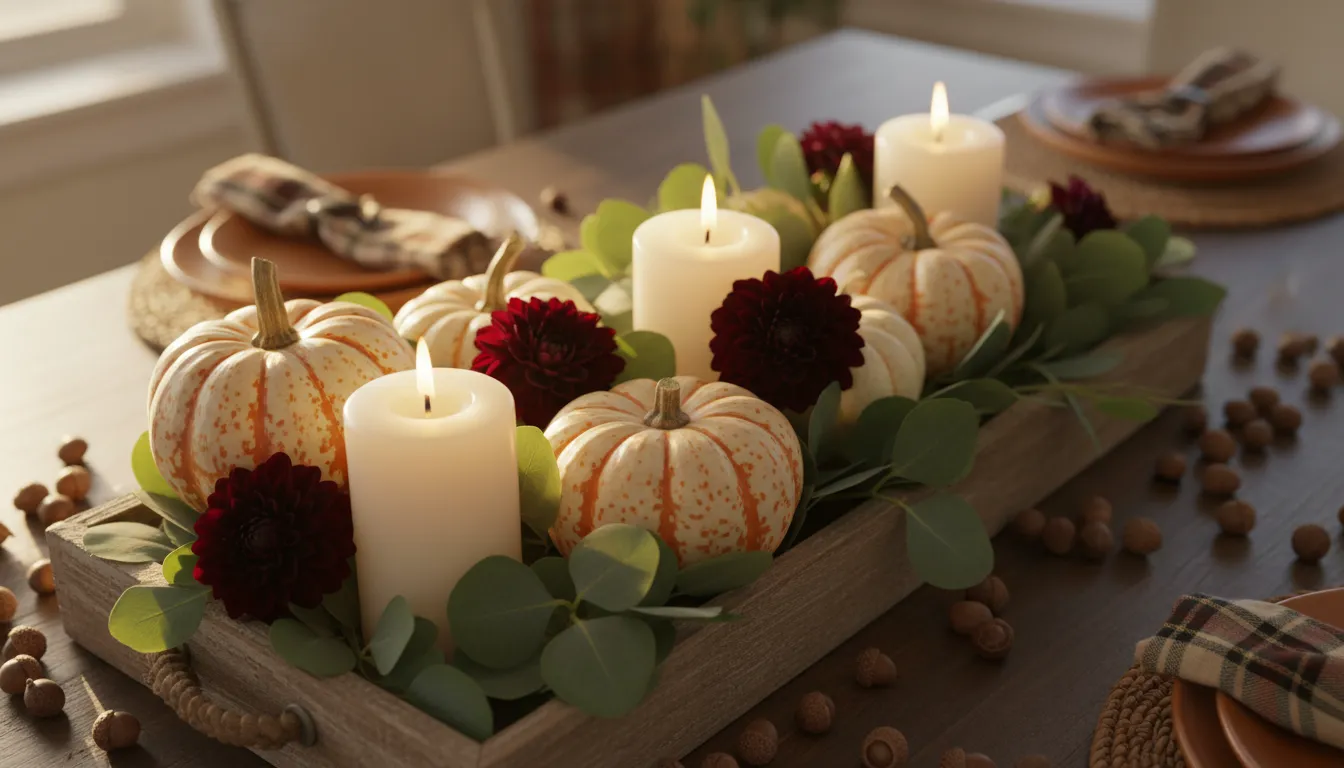
For a simple yet stunning pumpkin centerpiece, arrange 3-5 pumpkins of varying sizes down your table’s center. Mix real and artificial (yes, I said it—quality artificial pumpkins look amazing and last forever). Tuck in some fresh or faux autumn leaves between them. Add votives or pillar candles for evening ambiance.
What I love about this approach is its flexibility. Use all orange pumpkins for traditional fall vibes. Go with white and cream for a sophisticated look. Mix in blue-gray heirloom varieties for something unexpected.
Want to elevate it? Hollow out medium pumpkins to use as vases. Fill them with fall flower arrangements featuring chrysanthemums, dahlias, or sunflowers. The contrast between the rustic pumpkin and delicate blooms is absolutely stunning.
Harvest Cornucopia: Abundance on Display
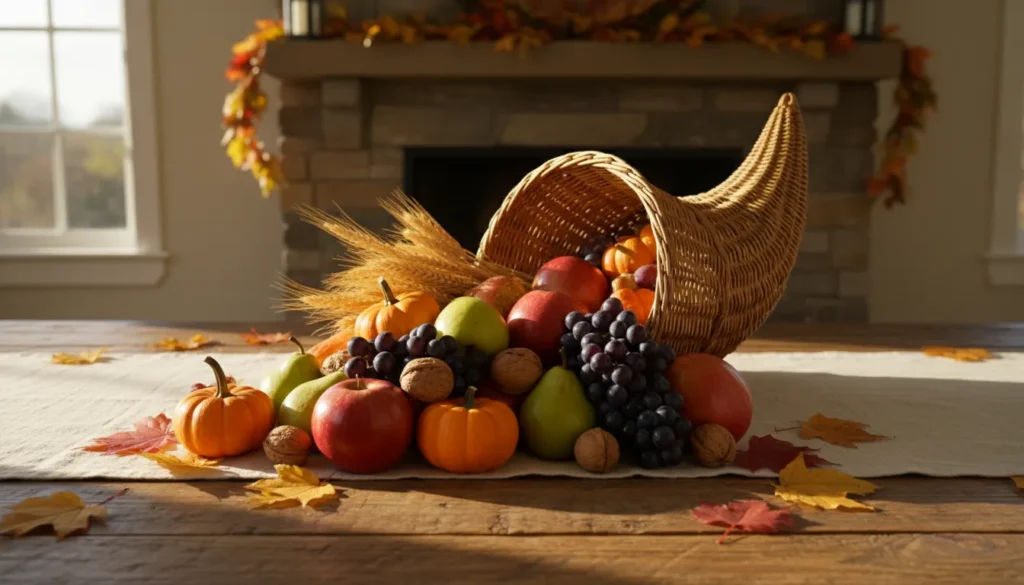
The cornucopia (or horn of plenty) symbolizes abundance—perfect for Thanksgiving table centerpieces. You can buy woven baskets shaped like horns, or create the same effect with any curved basket.
Here’s how I build mine: Start with your cornucopia positioned on one side of the arrangement, tilted slightly as if spilling its contents. Fill it with a mix of small pumpkins, gourds, apples, pears, and grapes. Let some fruit “spill out” onto the table surface.
Add height variation by including wheat stalks, cattails, or branches with autumn leaves. Nestle in some nuts still in their shells—walnuts, pecans, and acorns add authentic harvest feel.
The beauty of cornucopia centerpieces is their storytelling quality. They celebrate the harvest season and create a sense of grateful abundance that’s perfect for fall gatherings.
Candle-Centric Elegance
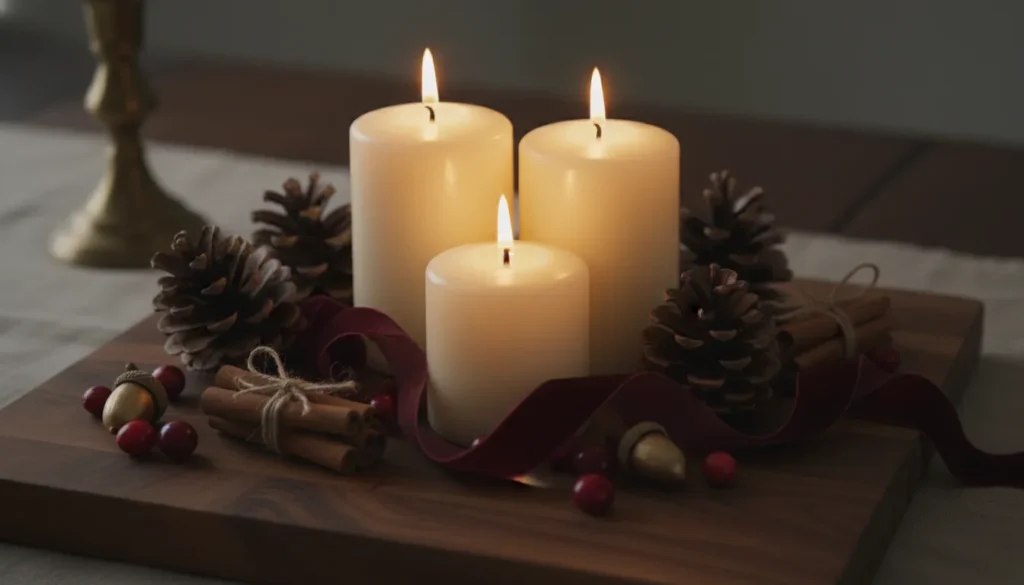
If you’re hosting evening dinners, candlelight transforms your fall table decorations into something magical. And you don’t need elaborate candelabras to pull this off.
For a simple approach, gather pillar candles in varying heights (3, 5, and 7 inches works well). Place them on a wooden tray or runner. Surround the bases with elements like:
- Small pinecones
- Acorns and nuts
- Cranberries (fresh ones are gorgeous)
- Cinnamon sticks tied with twine
- Scattered autumn leaves
The key is keeping elements low and clustered tightly around the candles. This creates that cozy, intimate atmosphere we all love about fall evenings.
For safety, always use LED candles if you’re incorporating dried materials. Real flame and dried leaves aren’t a good combination.
Natural Wood and Branch Arrangements
There’s something about weathered wood that screams autumn. Creating rustic fall centerpieces with branches and wood elements brings the outdoors in beautifully.
Start with a wooden tray, cutting board, or even a thick tree slice as your base. Arrange birch logs or thick branches (cut to 6-10 inch lengths) down the center. Drill shallow holes in the tops to hold taper candles, or simply lean them against each other.
Fill gaps with moss, small succulents in fall colors, pinecones, and acorns. Add metallic accents—copper or gold spray-painted leaves, for instance—to prevent the arrangement from feeling too rustic.
What I love about this style is how it works for both casual and upscale settings. The same basic structure adapts easily by changing your accent pieces.
Creative DIY Fall Centerpiece Projects
Now here’s where it gets fun. These projects require a bit more effort, but the results are worth it. And honestly, half the joy of DIY fall centerpieces is the creative process itself.
Mason Jar Harvest Display
Mason jars are incredibly versatile for fall centerpiece ideas. Here’s a project that looks expensive but costs almost nothing.
Materials needed:
- 3-5 mason jars (varying sizes)
- Twine or burlap ribbon
- Fall flowers or branches
- Small pumpkins or gourds
Step-by-step instructions:
- Wrap twine around each jar’s neck, securing with hot glue or tying in a bow
- Fill jars halfway with water
- Arrange fall branches, berries, or flowers in each jar
- Place jars down the center of your table
- Nestle small pumpkins and gourds between jars
The varying heights create visual interest, and you can easily change out the flowers or branches as the season progresses. For evening events, drop battery-operated fairy lights into empty jars for a magical glow.
Floral Foam Pumpkin Arrangement
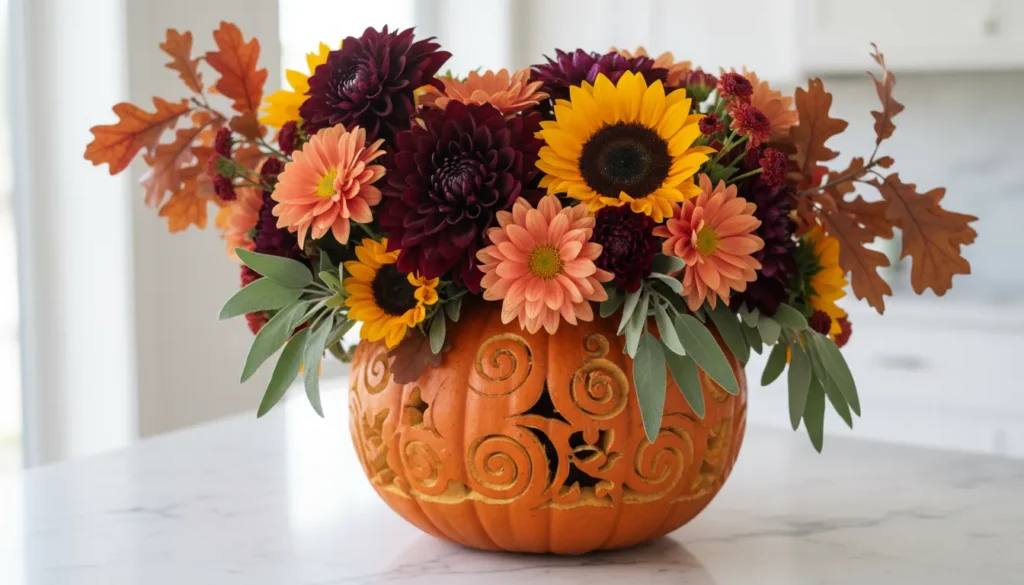
This technique creates those stunning pumpkin floral arrangements you see in magazines, and it’s easier than you think.
What you’ll need:
- Large artificial or real pumpkin
- Floral foam block
- Fresh or silk fall flowers
- Greenery (eucalyptus works beautifully)
- Sharp knife
- Waterproof container (if using real flowers)
Here’s how to do it:
- Cut the top off your pumpkin and clean out the interior
- If using fresh flowers, place a waterproof container inside and fill with water
- Cut floral foam to fit snugly in the container
- Soak foam completely (if using fresh flowers)
- Begin with greenery, inserting stems at angles to create a base shape
- Add your focal flowers, distributing colors evenly
- Fill gaps with smaller blooms and additional greenery
- Mist regularly to keep fresh flowers looking their best
This fall floral centerpiece makes an incredible statement for special occasions. And here’s a tip: if you use silk flowers and an artificial pumpkin, this arrangement lasts for years.
Tiered Tray Seasonal Display
Tiered trays have exploded in popularity, and for good reason. They let you create layered fall table decor that’s easily changeable.
On the bottom tier, place larger items: small pumpkins, a bowl of seasonal fruit, or a chunky candle. The middle tier holds medium elements: pinecones in a dish, acorns, small floral picks. The top tier showcases delicate items: a miniature pumpkin, decorative sign, or tiny vase with a single bloom.
What I love about tiered displays is how they maximize visual impact in a small footprint. Perfect for smaller dining tables or as a sideboard accent.
Wheat Bundle Simplicity
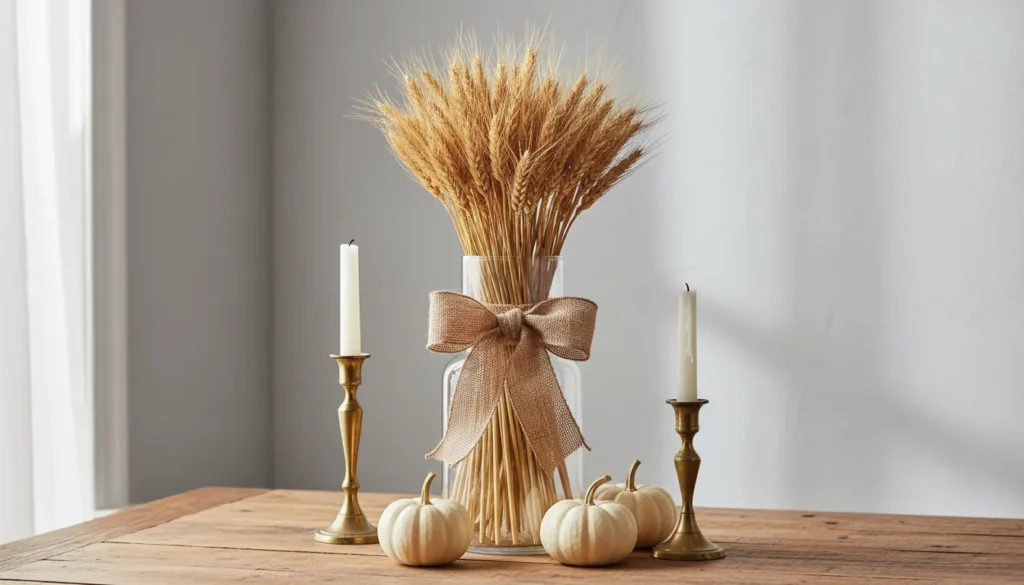
Sometimes the most striking rustic centerpieces are the simplest. A bundle of wheat tied with ribbon creates instant fall atmosphere.
Gather 30-50 wheat stalks (available at craft stores or farmers markets). Trim stems to equal length, around 18-24 inches. Bundle together and secure tightly with rubber band at the base. Cover the band with burlap ribbon, twine, or plaid fabric ribbon.
Place the bundle in a tall vase or ceramic pitcher. Surround the base with small pumpkins, votives, or scattered autumn leaves. That’s it. Effortlessly elegant.
Modern and Elegant Fall Centerpiece Designs
Not everyone wants rustic vibes. If your style leans contemporary, these elegant fall centerpieces prove autumn decor can be sophisticated.
Monochromatic Sophistication
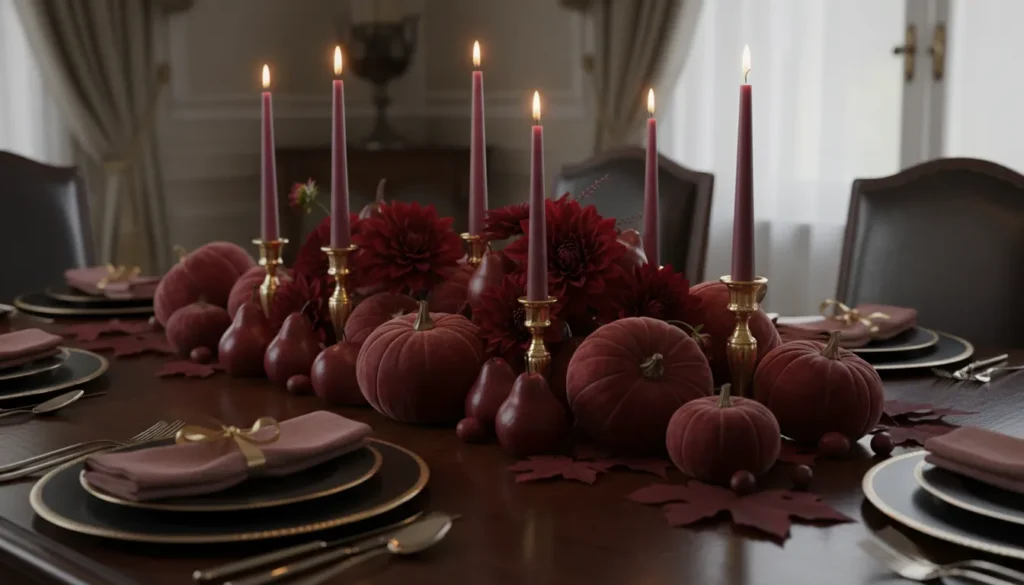
Choose a single color and run with it. All-white fall centerpieces using white pumpkins, bleached branches, white candles, and white flowers create stunning, refined displays.
Or go deep and moody with burgundy: burgundy dahlias, plum-colored candles, deep red pears, and wine-colored taper candles on gold candlesticks. The monochromatic approach feels intentional and polished.
The trick is varying textures and heights within your chosen color family. Without that variation, monochromatic can feel flat.
Geometric Modern Displays
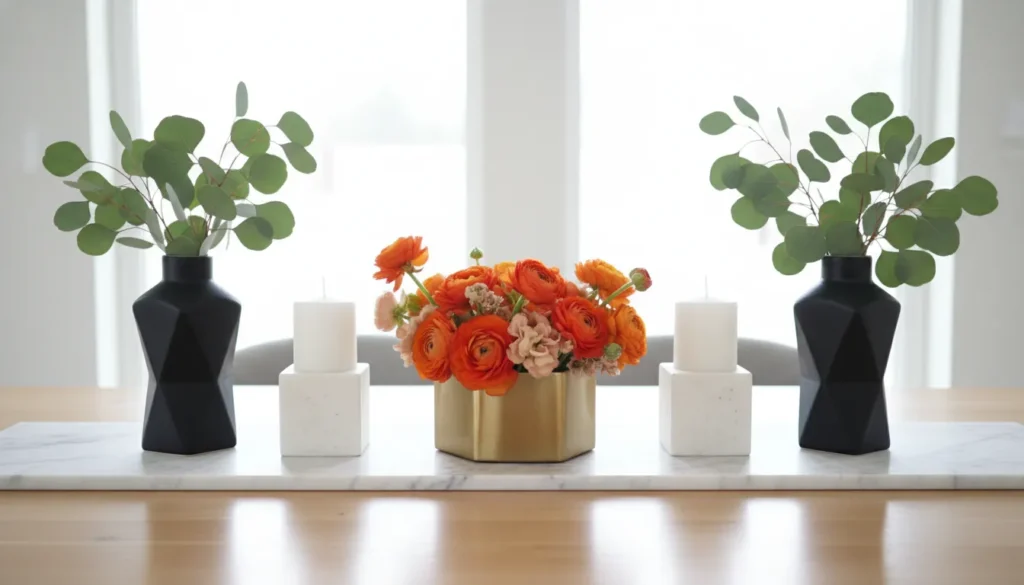
Incorporate geometric shapes for contemporary fall table centerpieces. Hexagonal mirrors as bases, cube-shaped vases, or modern angular candleholders create clean lines.
Arrange elements with mathematical precision rather than organic clustering. Three identical arrangements spaced evenly down the table. Five white pumpkins in a perfect line. Symmetry and repetition define this aesthetic.
Keep the color palette restrained—maybe copper, cream, and charcoal. Add one organic element (like eucalyptus or olive branches) to prevent the arrangement from feeling too sterile.
Minimalist Elegance
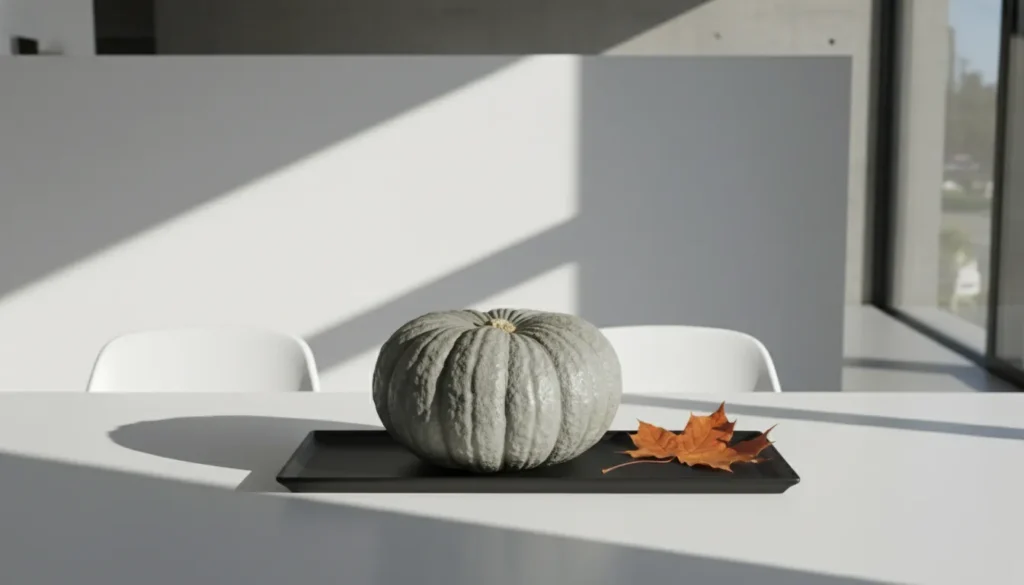
Less is more for minimalist elegant fall table decorations. A single statement piece often outshines busy arrangements.
Try one large, spectacular pumpkin (the fancy heirloom varieties work beautifully) on a simple wooden board. Add nothing else except maybe one perfect autumn leaf beside it. The negative space lets the pumpkin shine.
Or create a minimalist floral display: three perfect stems of fall branches in a sleek black vase. Quality over quantity defines this approach.
Metallic Accents for Glamour
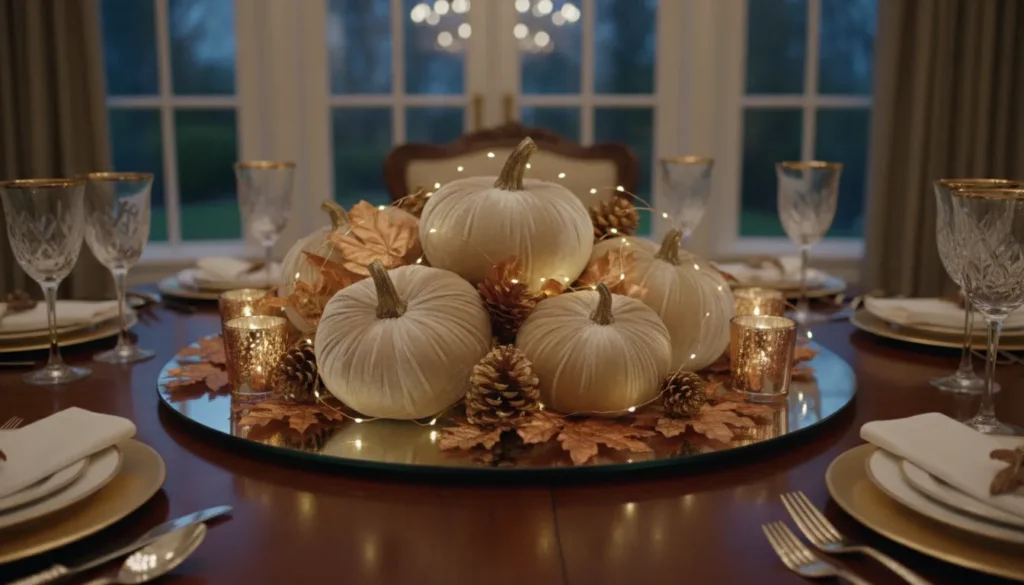
Metallics elevate any fall centerpiece instantly. Gold-dipped pinecones, copper votive holders, silver-leafed branches, or bronze candlesticks add luxurious shine.
Mix metallics with natural elements for balance. A gold-rimmed glass bowl filled with fresh pears and cinnamon sticks. Mercury glass vases holding rust-colored dahlias. Rose gold fairy lights woven through natural grapevine wreaths.
The combination of organic autumn materials and metallic gleam creates sophisticated Thanksgiving centerpieces perfect for formal dinners.
Seasonal Materials: What to Use and Where to Find Them
Creating beautiful fall table centerpieces starts with sourcing quality materials. Here’s your comprehensive guide to what works and where to find it.
Natural Elements from Your Yard
Before you spend a dime, check your own property. You’d be surprised what’s available:
- Branches and twigs: Look for interesting shapes or those with colorful leaves still attached
- Pinecones: Gather various sizes for versatility
- Acorns: Perfect fillers for bowls or scattered accents
- Leaves: Press beautiful specimens between heavy books for lasting color
- Seed pods: Nature’s sculptural elements
- Berries: Bittersweet, winterberry, and rose hips add pops of color
A single afternoon walk can yield enough materials for multiple fall centerpiece ideas. Just remember to check local regulations before foraging in public spaces.
Farmers Markets and Pumpkin Patches
Farmers markets offer incredible variety you won’t find in stores. Beyond standard orange pumpkins, look for:
- Heirloom varieties in unusual colors (blue, white, warty, striped)
- Decorative gourds in every shape and size
- Fresh wheat, corn stalks, and hay
- Late-season flowers (mums, asters, sunflowers)
- Fresh herbs like sage and rosemary
- Seasonal fruits (apples, pears, pomegranates)
Building relationships with farmers sometimes leads to discounts on materials specifically for decorating. Don’t be shy about asking what they’d recommend for centerpieces.
Craft Stores for Supplemental Items
When natural materials aren’t enough, craft stores fill gaps. Shop the seasonal sections for:
- High-quality artificial pumpkins and gourds
- Silk fall flowers and foliage
- Decorative ribbon and twine
- Foam wreaths and bases
- Floral foam and wire
- Candleholders and votives
Here’s a money-saving tip: craft stores run 40-50% off sales constantly. Never pay full price. Download their apps for coupons and wait for sales on the items you need.
Online Resources for Specialty Items
Sometimes you need something specific that local sources don’t carry. Online shopping expands your fall decor possibilities:
- Etsy for handmade elements and unique finds
- Amazon for bulk items like LED candles or specific decorative pieces
- Specialty floral suppliers for preserved materials
- Home decor sites during seasonal sales
Order well in advance of when you need items. Shipping delays happen, especially during peak fall decorating season in September and October.
Styling Tips for Different Table Shapes and Sizes
Your table’s dimensions determine what fall centerpiece designs work best. Let’s break this down by table type.
Round Tables: Creating Circular Harmony
Round dining tables need centerpieces that work from all angles. Nobody wants to stare at the “back” of an arrangement.
The best approach is creating a 360-degree design. Start with a round base (a charger, cake stand, or wreath) and build outward in concentric circles. Place your tallest element in the exact center—perhaps a candle or tall vase—and arrange items of decreasing height as you move outward.
For smaller round tables (36-48 inches), keep centerpieces compact—about 12-18 inches in diameter. Larger rounds (60+ inches) can handle more substantial displays up to 24 inches across.
Multiple smaller arrangements also work beautifully on round tables. Three small fall centerpieces evenly spaced around the table’s perimeter create visual interest without blocking conversation.
Long Rectangular Tables: Linear Arrangements
Rectangular tables offer the most flexibility for fall table centerpieces. You have options:
Single long runner arrangement: Create one continuous display running 60-70% of the table’s length. This works especially well for casual, family-style meals where dishes will be passed.
Multiple statement pieces: Space 2-3 identical or complementary centerpieces evenly along the table. This works better for plated dinners where passing dishes isn’t necessary.
Symmetrical bookends: Place identical arrangements at each end of the table, leaving the center open for serving pieces.
The key with rectangular tables is managing negative space. Too much open table feels empty; too much centerpiece feels cluttered. Aim for balance.
Square Tables: Centered Focal Points
Square tables are all about that central focal point. Your fall centerpiece should be positioned in the exact middle with equal visual weight on all four sides.
Keep it relatively compact since diners sit on all sides. A 12-15 inch arrangement works for most square tables. Think low and wide rather than tall and narrow.
Alternatively, create a grid pattern with four smaller elements at each corner and something taller in the center. This approach adds visual interest while maintaining the symmetry that square tables demand.
Buffet and Console Tables: Going Grand
Here’s where you can really go for it. Since buffet tables don’t need sight-line consideration, height restrictions disappear.
Create dramatic vertical displays with tall branches, stacked pumpkins, or elevated candelabras. Layer items at varying heights—tall in back, medium in middle, low in front—for dimensional interest.
Use the full depth of the table. These surfaces often run 18-24 inches deep, giving you space for substantial autumn centerpieces that would overwhelm a dining table.
Bookend larger buffets with matching arrangements at each end, or create one spectacular central display flanked by serving pieces.
Color Schemes and Themes for Fall Table Centerpieces
Choosing a cohesive color scheme elevates your fall centerpieces from random collection to thoughtful design. Here are winning combinations.
Traditional Autumn Palette
The classic fall colors never go out of style:
- Burnt orange: The quintessential autumn shade
- Deep red: Think cranberries and autumn leaves
- Golden yellow: Captures late afternoon sunlight
- Rich brown: Grounds the brighter colors
- Olive green: Adds natural balance
This palette works for any setting and feels instantly seasonal. Use it for traditional Thanksgiving centerpieces that please everyone from kids to grandparents.
Sophisticated Neutrals
For elegant, modern spaces, neutral fall table decorations make a statement:
- Cream and ivory: White pumpkins, bleached wheat, cream candles
- Gray and charcoal: Weathered wood, silver accents, dusty miller foliage
- Beige and tan: Natural jute, dried grasses, nude florals
- White and gold: Adds just enough glamour without going overboard
This scheme photographs beautifully and works year-round with simple swaps. Just change out a few accent pieces and it transitions to winter decor seamlessly.
Jewel Tones for Drama
Want to make an impression? Jewel tones create stunning fall centerpiece displays:
- Burgundy and plum: Deep wine colors feel rich and luxurious
- Emerald green: Adds unexpected vibrancy
- Sapphire blue: Blue pumpkins and blue-gray foliage
- Amber and topaz: Captures autumn’s golden glow
This palette works especially well for formal dinners and upscale gatherings. The saturated colors feel intentional and designed.
Rustic Farmhouse
The farmhouse style dominates fall decor, and for good reason:
- White and cream: Clean backgrounds that let natural elements shine
- Natural wood tones: Weathered, unstained wood
- Black accents: Iron candle holders, chalkboard signs
- Touches of plaid: Classic pattern in fall colors
Keep textures rough and materials natural. The imperfection is part of the charm in rustic fall table centerpieces.
Budget-Friendly Fall Centerpiece Ideas
Creating beautiful fall table decorations doesn’t require spending a fortune. These strategies keep costs down without sacrificing style.
Dollar Store Finds
Don’t underestimate dollar stores for seasonal decor. I’ve found incredible items for DIY fall centerpieces:
- Artificial pumpkins and gourds (seriously, they look great)
- Glass vases and jars perfect for arrangements
- LED tea lights and votives
- Fall-themed ribbon and twine
- Decorative leaves and picks
Pro tip: Shop early in the season for best selection. By October, popular items sell out fast.
Repurpose What You Have
Look around your home for items that transform into fall centerpieces:
- Kitchen bowls: Fill with seasonal fruit or pinecones
- Glass jars: Instant vases or candle holders
- Wooden cutting boards: Perfect bases for arrangements
- Serving trays: Corrals elements into cohesive displays
- Hurricane lamps: Add autumn elements around the base
Sometimes the best centerpieces come from creatively using existing items.
Nature’s Free Bounty
Your yard and local parks offer unlimited free materials:
- Collect fallen branches and interesting twigs
- Gather pinecones (bake at 200°F for 30 minutes to kill bugs)
- Press colorful leaves between book pages
- Find acorns, nuts, and seed pods
- Cut branches with autumn leaves still attached
These natural elements cost nothing and look more authentic than anything you can buy. Just 30 minutes outside yields enough for several fall centerpiece ideas.
Sales and Clearance Shopping
Strategic shopping saves serious money:
- September: End-of-summer clearance on vases and containers
- After Halloween: Fall decor gets marked down 40-70%
- After Thanksgiving: Stock up for next year at rock-bottom prices
- Thrift stores: Year-round source for vases, candleholders, and trays
Buy neutral, reusable pieces at clearance prices and refresh them annually with inexpensive seasonal accents.
Maintaining Your Fall Centerpieces Throughout the Season
Creating your fall table centerpiece is just the beginning. Keeping it fresh matters too.
Fresh Flower Care
If your fall floral arrangements include fresh blooms:
- Change water every 2-3 days
- Trim stems at an angle before each water change
- Remove any leaves below the water line
- Keep arrangements away from direct sunlight and heat vents
- Add flower food to extend bloom life
Mums, sunflowers, and dahlias typically last 5-7 days with proper care. Plan accordingly if you need arrangements for specific events.
Pumpkin and Gourd Preservation
Real pumpkins and gourds last surprisingly long if treated properly:
- Wipe surfaces with diluted bleach solution (10:1 water to bleach) before displaying
- Keep away from moisture and extreme temperatures
- Check regularly for soft spots indicating decay
- Small decorative gourds typically last 3-6 months
- Large pumpkins last 1-2 months in cool conditions
The bleach solution prevents mold and bacterial growth that causes rotting. This one step dramatically extends display life.
Refreshing Throughout Fall
Your fall centerpiece doesn’t need to stay static. Refresh it as the season progresses:
- Early September: Sunflowers, corn stalks, warm yellows and oranges
- October: Deeper colors, add Halloween elements if desired, incorporate mums
- November: Transition to Thanksgiving themes, add wheat and harvest elements
- Late November: Begin mixing in early winter elements like pine branches
Small updates keep your display feeling current without starting from scratch.
Storing for Next Year
Quality pieces deserve proper storage:
- Clean artificial elements before packing
- Wrap delicate items individually in tissue
- Store in climate-controlled space to prevent warping
- Label containers clearly for easy finding next fall
- Keep silica gel packets with fabric elements to prevent moisture damage
I keep one large bin specifically for fall decor. When September rolls around, everything’s ready to go.
Fall Centerpieces for Special Occasions
Different events call for different approaches to fall table centerpieces. Let’s customize for specific occasions.
Thanksgiving Centerpieces: Celebrating Gratitude
Thanksgiving table centerpieces should feel abundant and welcoming. This is the time to go all out with harvest themes.
Create a cornucopia-style display overflowing with squash, pumpkins, apples, pears, grapes, and pomegranates. Add wheat stalks, dried corn, and autumn leaves. The visual abundance mirrors the spirit of Thanksgiving gratitude.
For family-style dinners where dishes need to be passed, consider creating individual small centerpieces at each place setting instead of one large central arrangement. A tiny pumpkin with a place card and sprig of rosemary makes guests feel special without cluttering the table.
Don’t forget elements that encourage conversation. Some hosts place questions about gratitude or favorite memories on decorative cards around the centerpiece, prompting meaningful dinner discussion.
Halloween Table Decor: Spooky Meets Sophisticated
Halloween centerpieces range from kid-friendly cute to genuinely spooky, depending on your audience.
For family gatherings, use orange and black pumpkins, friendly plastic spiders, battery-operated LED candles in jack-o’-lanterns, and candy corn in glass containers. Keep it playful.
For adult Halloween dinners, go gothic: black candlesticks with dripping wax, dark burgundy flowers, mercury glass elements, black feathers, and white pumpkins painted with elegant designs. Skip the cartoon characters for sophisticated edge.
Adding elements like Spanish moss, bare black branches, and LED string lights creates eerie atmosphere without feeling childish.
Autumn Wedding Centerpieces: Romantic Seasonal Style
Fall wedding centerpieces capture romance with seasonal elements.
Combine lush florals (dahlias, garden roses, ranunculus) with organic touches like twisted willow branches, fall leaves, or fruit elements. The mix of cultivated and natural feels both elegant and earthy.
Popular wedding color schemes include burgundy and gold, rust and sage, plum and copper, or mauve and cream. These sophisticated palettes photograph beautifully and feel seasonally appropriate without being too Halloween or Thanksgiving specific.
Consider height variation: tall arrangements at some tables, low at others. This creates visual interest across the reception space and ensures no one’s view is blocked.
Birthday and Casual Gatherings: Festive and Fun
For casual fall celebrations, fall centerpieces can be playful and personalized.
Create theme-based displays: favorite fall activities, hobbies of the guest of honor, or fun autumn symbols. A centerpiece featuring miniature hay bales, tiny pumpkins, and photos of the birthday person through the years tells a story.
For kids’ parties, let them help create the centerpiece. Set out materials and let them arrange their own display. It becomes both decor and activity.
Common Mistakes to Avoid with Fall Table Centerpieces
Even experienced decorators make these errors. Here’s how to avoid them.
Blocking Conversation
The biggest mistake? Creating fall centerpieces so tall or wide that guests can’t see each other. If people have to lean sideways to make eye contact, your centerpiece is too large.
Test before your event: sit where guests will sit. Can you easily see and talk to the person across from you? If not, adjust height or width accordingly.
For seated dinners, the general rule is keep centerpieces under 12 inches tall or go very tall (30+ inches) so sight lines pass underneath. That awkward 15-20 inch range blocks faces perfectly—avoid it.
Overpowering Scents
Heavily scented candles, fresh flowers, or potpourri seem like good ideas until they compete with food aromas. Your beautifully roasted turkey shouldn’t have to fight with cinnamon-spice candle fragrance.
If you’re using your fall table centerpieces during meals, skip strong scents. Choose unscented candles, avoid heavily perfumed flowers like lilies, and save the potpourri for other rooms.
For non-dining displays, subtle scent works: vanilla, apple cider, or light cinnamon enhance autumn atmosphere without overwhelming.
Ignoring Table Function
Beautiful isn’t enough if your centerpiece doesn’t work with how you use your table.
For buffet-style meals, leave space for serving dishes. For family-style dining, consider whether serving bowls can pass around or over your arrangement. For plated dinners, you have more centerpiece freedom.
Think through the meal logistics before finalizing your design. Function and beauty should coexist.
Forgetting Lighting Conditions
A centerpiece that looks amazing in afternoon sunlight might disappear in evening dim lighting. Consider when you’ll use your fall table decorations and light accordingly.
Evening gatherings benefit from candles or LED lights incorporated into arrangements. Daytime displays can rely on natural elements without added illumination.
Test your centerpiece at different times of day if you’re unsure. The difference might surprise you.
Using Too Many Competing Elements
More isn’t always better. When you combine too many different materials, colors, and styles, fall centerpieces become visual chaos.
Choose 3-5 main elements and repeat them throughout your arrangement. This creates cohesion. Three types of pumpkins, two flower varieties, and one type of greenery arranged well beats ten different elements fighting for attention.
Editing is as important as adding. Step back periodically and remove anything that doesn’t serve the overall design.
Comparing Fall Centerpiece Styles: Find Your Perfect Match
Still not sure which direction to take? This comparison table breaks down popular fall centerpiece styles to help you choose.
| Style | Best For | Key Elements | Color Palette | Budget | Maintenance |
|---|---|---|---|---|---|
| Traditional Rustic | Casual gatherings, farmhouse decor | Pumpkins, wheat, burlap, wood | Orange, brown, yellow | Low | Low |
| Elegant Modern | Formal dinners, contemporary homes | Monochromatic elements, metallics, clean lines | White, gold, burgundy | Medium-High | Medium |
| Natural Harvest | Thanksgiving, family meals | Fruits, vegetables, cornucopia | Multi-color autumn palette | Low-Medium | Medium |
| Romantic Floral | Weddings, special occasions | Fresh flowers, candles, soft textures | Burgundy, blush, sage | High | High |
| Minimalist | Small spaces, modern aesthetic | Single statement piece, negative space | Neutrals, one accent color | Low | Low |
| Glamorous | Parties, upscale events | Metallics, crystal, luxe materials | Gold, silver, jewel tones | High | Low |
Use this guide to match your personal style, event type, and practical constraints.
Trending Fall Centerpiece Ideas for This Year
Fall centerpiece trends evolve, but certain styles are having major moments right now. Here’s what’s popular.
Dried Floral Arrangements
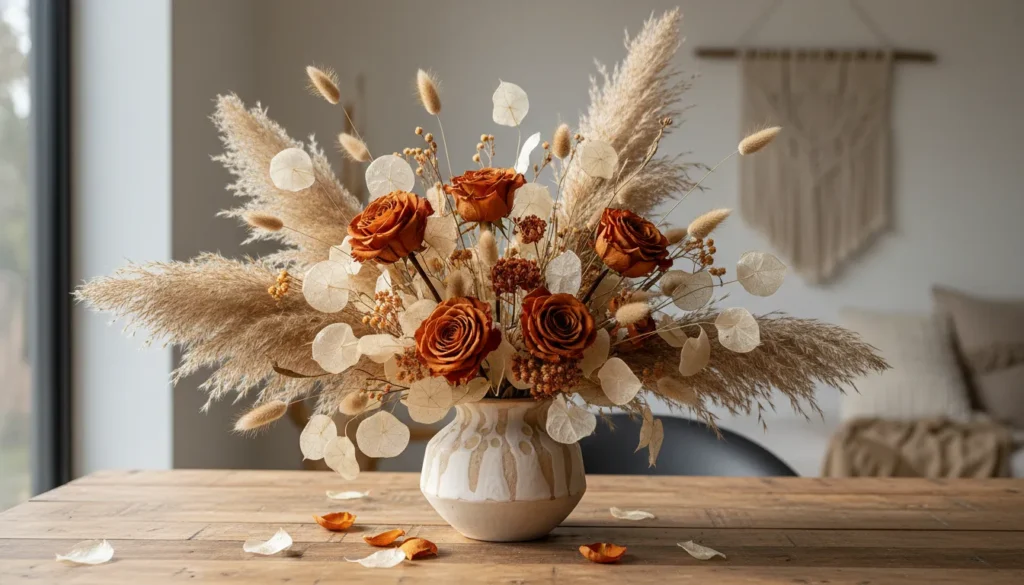
Dried flowers have exploded in popularity. Unlike fresh blooms, they last indefinitely and require zero maintenance.
Pampas grass leadsthe trend, creating soft, neutral texture that works with any style. Dried lunaria (money plant), bunny tails, and preserved roses add variety.
Create a dried arrangement in a vintage pitcher or modern ceramic vase. The organic texture feels fresh and current while being incredibly low-maintenance for your fall table decor.
Eucalyptus and Sage Green Accents
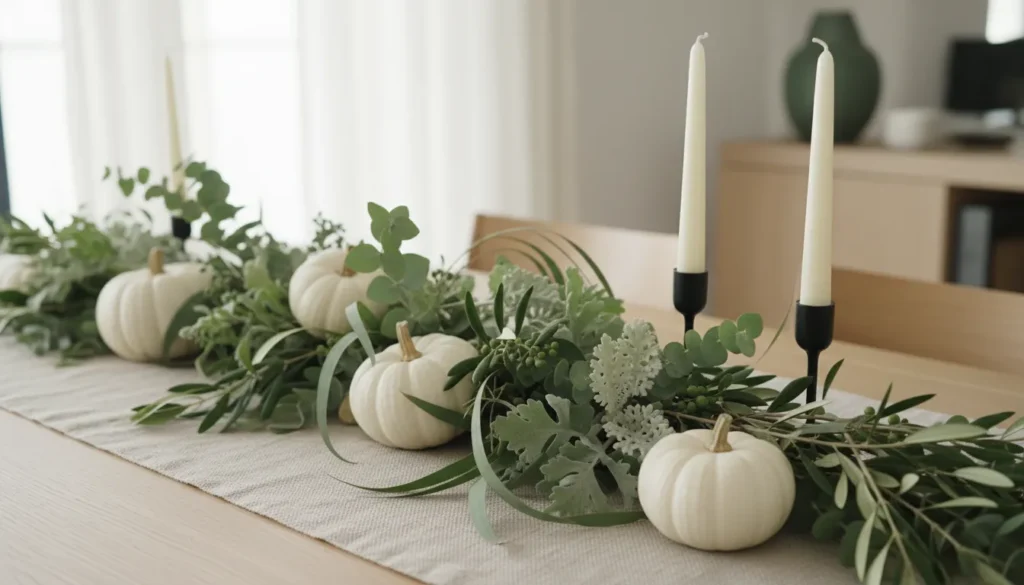
While traditional fall leans orange and red, sage green has become the it-color for modern autumn centerpieces. Eucalyptus, olive branches, and dusty miller create this muted green palette.
Pair sage greenery with white pumpkins and cream candles for an Instagram-worthy display that feels current. This color scheme photographs beautifully and works across decorating styles.
Velvet Pumpkins
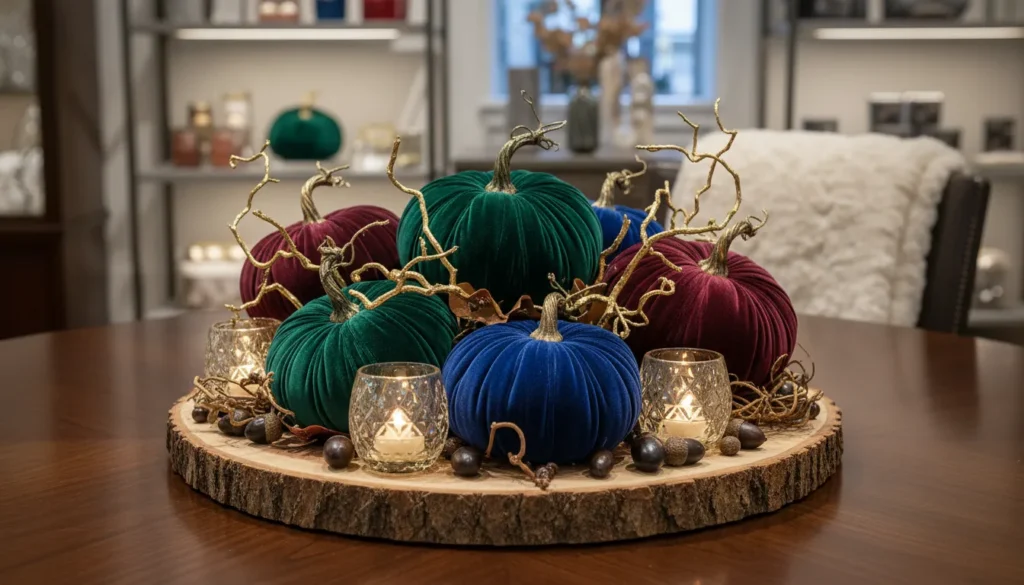
These luxury fabric pumpkins cost more than traditional plastic or real versions, but their texture and rich colors make them worth it. Velvet pumpkins in jewel tones add sophisticated texture to fall centerpieces.
Mix velvet pumpkins with natural elements like wood and greenery to prevent arrangements from feeling too precious. The combination of luxe fabric and organic materials creates interesting contrast.
Terracotta and Clay Elements
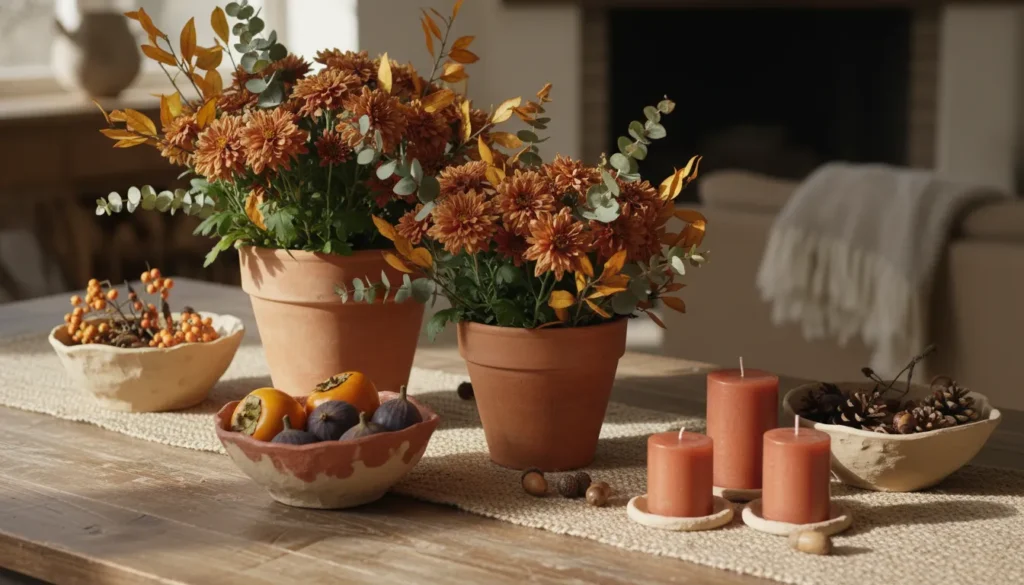
Earth-toned pottery and terracotta pots bring warmth to fall table centerpieces. This trend connects to the broader renaissance of artisanal, handmade items in home decor.
Use terracotta pots as vases, fill clay bowls with seasonal fruit, or arrange terracotta-colored candles with natural elements. The earthy quality feels grounded and authentic.
Frequently Asked Questions About Fall Table Centerpieces
Let me address the questions I hear most often about creating fall centerpieces.
How far in advance can I set up my fall centerpiece?
It depends on materials. Artificial elements can be set up weeks early. Fresh flowers last 5-7 days. Real pumpkins and gourds last 1-2 months if properly maintained. For events, I recommend setting up 1-2 days before if using fresh materials, or a week ahead for artificial arrangements.
What’s the ideal height for a dining table centerpiece?
For seated dinners where conversation happens across the table, keep centerpieces under 12 inches tall. Alternatively, go very tall (30+ inches) so sight lines pass underneath. Avoid the 15-20 inch range that blocks faces.
Can I mix real and artificial elements?
Absolutely! High-quality artificial pumpkins mixed with real pinecones, fresh flowers with faux leaves—these combinations work beautifully. The key is choosing quality artificial elements that genuinely mimic natural materials.
How do I make my centerpiece last through November?
Use long-lasting materials like artificial pumpkins, dried flowers, and preserved elements. If using real pumpkins, treat with bleach solution and keep cool. Refresh fresh flowers weekly. Add new elements mid-season to keep things feeling fresh.
What if my table is too small for a traditional centerpiece?
Try individual mini arrangements at each place setting, a single low bowl with floating candles and cranberries, vertical arrangements on a nearby sideboard, or a simple table runner with scattered votives and small pumpkins.
Conclusion: Create Fall Table Centerpieces That Tell Your Story
Here’s what I want you to remember: the best fall table centerpieces aren’t the most expensive or elaborate. They’re the ones that feel authentic to you and make your space feel welcoming.
Whether you go for traditional pumpkins and wheat, elegant monochromatic designs, or trendy dried florals, your centerpiece should reflect your personal style. Don’t get so caught up in following rules that you forget to have fun with the process.
The beauty of fall centerpieces is their flexibility. Start with basic elements—pumpkins, candles, natural materials—and build from there. Add pieces that speak to you. Remove anything that doesn’t feel right. Trust your instincts.
And remember, your autumn table centerpieces don’t need to stay static. Refresh them as inspiration strikes. Swap flowers, rearrange elements, try new color combinations. The creative process continues throughout the season.
Now it’s your turn. Gather some materials, clear off your dining table, and start creating. Take what you’ve learned here and make it your own. Your family and friends will appreciate the effort you’ve put into making your space beautiful and welcoming this fall.
Ready to transform your table? Start by choosing one style from this guide that resonates with you. Gather your materials this weekend and create your first fall centerpiece. Share your creation with friends and family—the joy is in both the making and the sharing.
What fall centerpiece will you create first? The season is waiting, and your beautiful autumn display is just a few simple steps away. Happy decorating!