Contemporary Coastal Living Room: Your Complete Guide to Relaxed Beach-Inspired Elegance
Introduction:
Picture this: You walk into your living room and immediately feel like you’re on vacation. The soft blues remind you of ocean waves, natural textures bring the beach indoors, and everything feels light, airy, and perfectly relaxed. That’s the magic of a contemporary coastal living room.
Now here’s where it gets interesting. Unlike the heavy nautical themes of the past (think anchors and ship wheels everywhere), contemporary coastal design takes a sophisticated approach. It’s all about capturing that breezy, effortless feeling of coastal life without looking like a themed restaurant.
I’ve spent years helping people create their dream coastal living spaces, and I can tell you this: getting it right isn’t about throwing some seashells on a table and calling it a day. There’s an art to balancing modern elements with beach-inspired touches. In this guide, you’ll learn exactly how to design a contemporary coastal living room that feels fresh, current, and incredibly inviting.
Whether you’re lucky enough to live by the ocean or you’re hundreds of miles inland, you can absolutely create this look. Let’s dive in.
What Makes a Contemporary Coastal Living Room Different?
Before we get into the details, you might be wondering what actually defines contemporary coastal style. It’s a fair question, especially since “coastal” can mean different things to different people.
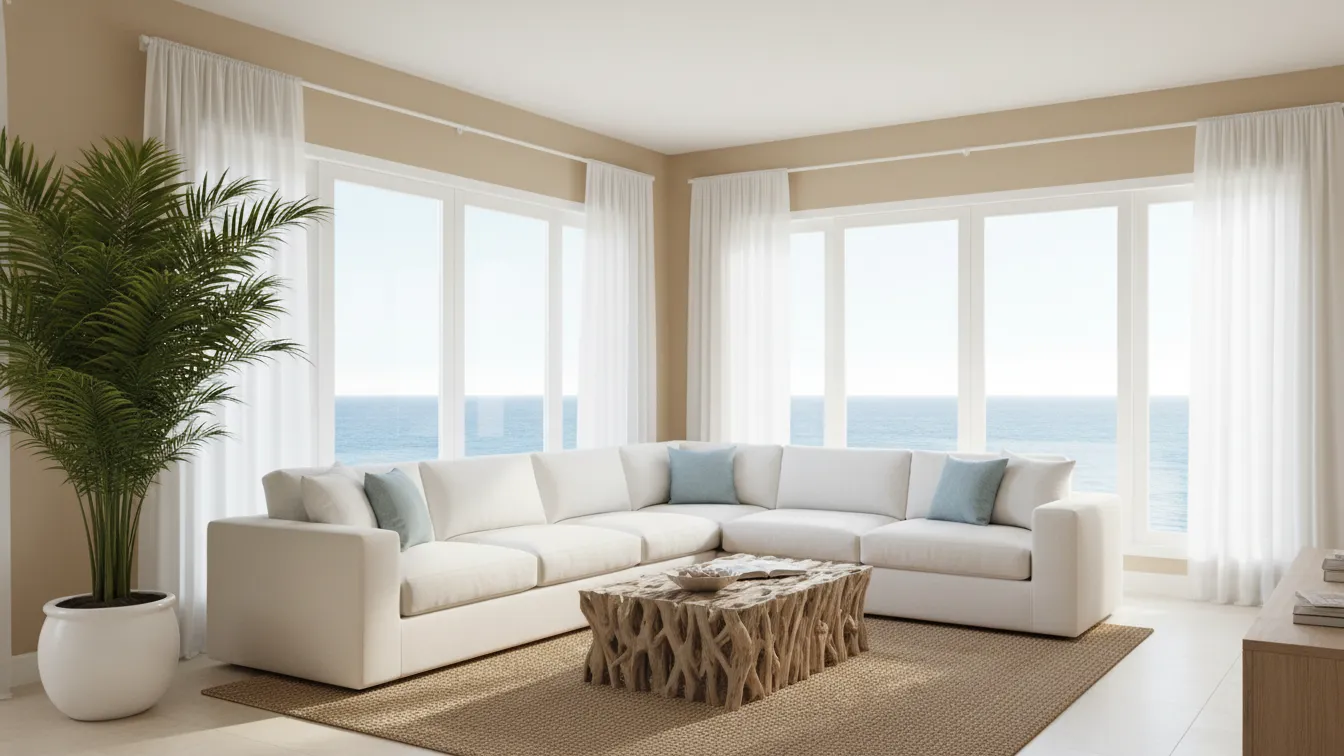
Contemporary coastal living rooms blend modern design principles with beach house aesthetics. Think clean lines meeting natural textures. Neutral palettes punctuated with ocean-inspired colors. Minimalism that still feels warm and welcoming.
What I love about this style is how it ditches the predictable coastal clichés. You won’t find cartoon-y seahorse pillows or rope-wrapped everything here. Instead, contemporary coastal design focuses on:
The feeling of openness and light. Natural materials that reference the shoreline. A color palette inspired by beach landscapes. Comfortable, livable furniture that invites relaxation. Subtle nods to nautical elements rather than over-the-top themes.
In my experience, the best coastal living rooms make you feel relaxed the moment you enter. There’s something about the combination of soft colors, natural light, and organic textures that just works.
Essential Elements of Contemporary Coastal Living Room Design
Let’s break down the core components you’ll need to nail this look. These are the building blocks that’ll transform your space from ordinary to extraordinary.
Color Palette: Beyond Basic Blue and White
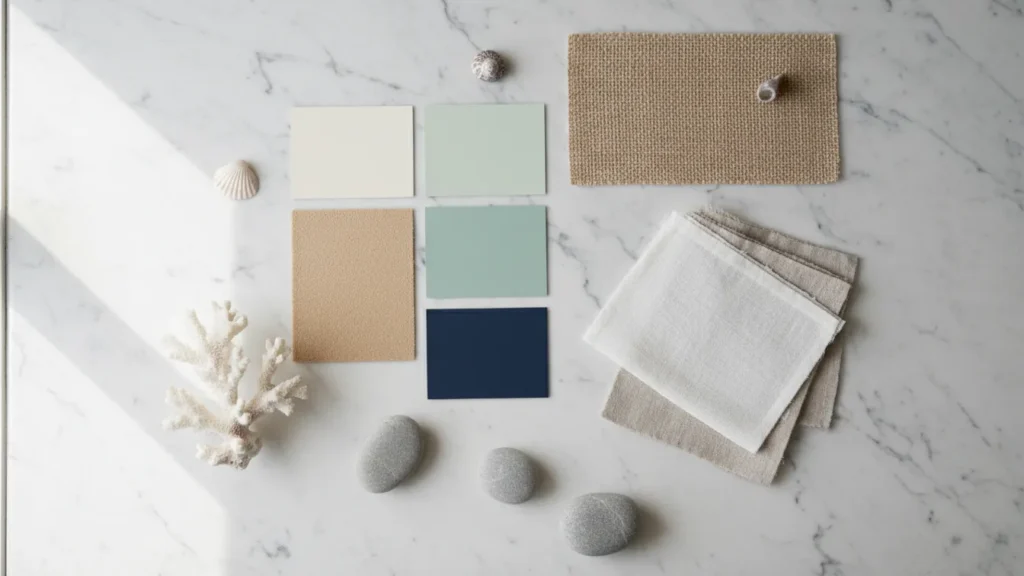
Yes, coastal color schemes often feature blues and whites, but there’s so much more to explore. The key is thinking about the actual colors you’d see at the beach throughout the day.
Your contemporary coastal living room should draw from nature’s palette. Sandy beiges and warm taupes ground the space. Soft whites and creams create that airy feeling. Blues can range from pale seafoam to deeper navy. Don’t forget about greens – sage, seafoam, and soft aqua all work beautifully.
Here’s a trick I use: choose one dominant neutral (usually white or beige) for about 60% of the room. Add a secondary neutral for another 30%. Then use your coastal accent colors for the final 10%. This keeps things balanced and sophisticated.
Some of my favorite coastal living room color combinations include:
Warm white walls with natural wood furniture and navy blue accents. Soft gray as a base with aqua and coral pops. Creamy beige throughout with seafoam green and weathered wood tones. Pure white brightened with various shades of blue and sandy neutrals.
The goal is creating layers of tone-on-tone neutrals with carefully chosen accent colors. This approach feels modern and fresh rather than themed or dated.
Furniture Selection: Comfort Meets Clean Lines
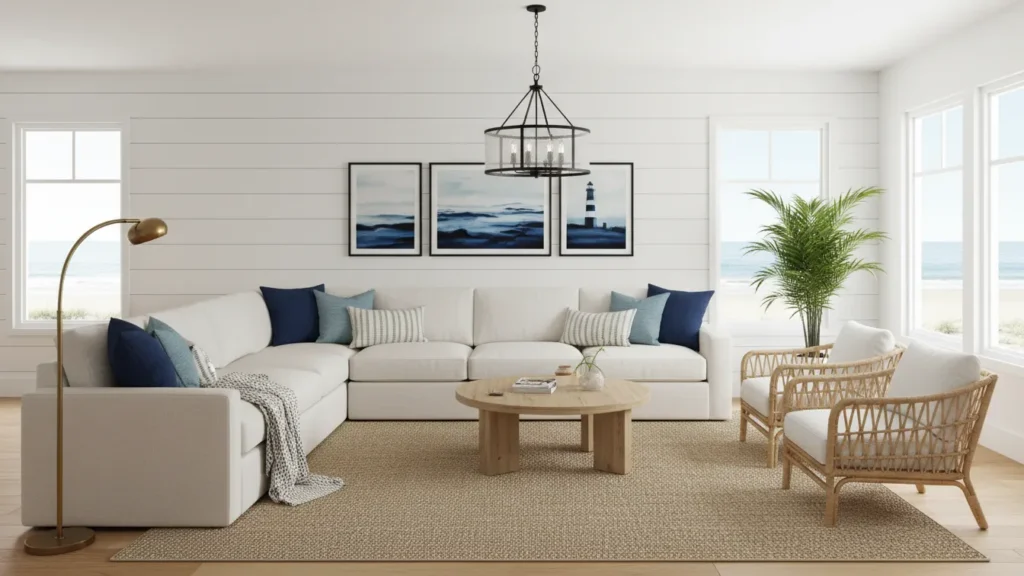
Your furniture choices will make or break your contemporary coastal living room. You want pieces that feel relaxed and inviting while maintaining that modern edge.
Coastal living room furniture should be comfortable first, stylish second. But honestly? You can have both. Look for sofas and chairs with clean, simple silhouettes. Skip anything too ornate or traditional. Slipcovers in natural fabrics like linen or cotton are perfect – they’re casual, washable, and totally coastal.
Now here’s where it gets interesting. Wood furniture works beautifully in coastal interiors, but choose wisely. Light-colored or weathered wood pieces reference driftwood without being literal. Teak, oak, and pine all work well. Avoid anything too dark or heavy-looking.
Consider these furniture staples for your space:
A comfortable sectional or sofa in neutral upholstery. A coffee table made from natural wood or with a weathered finish. Accent chairs with clean lines in complementary colors. Open shelving or light wood bookcases for an airy feel. An ottoman that doubles as extra seating and storage.
What I love about contemporary coastal furniture is how it prioritizes function. Every piece should serve a purpose while contributing to that relaxed, beachy atmosphere.
Textures and Materials: Bringing the Outdoors In
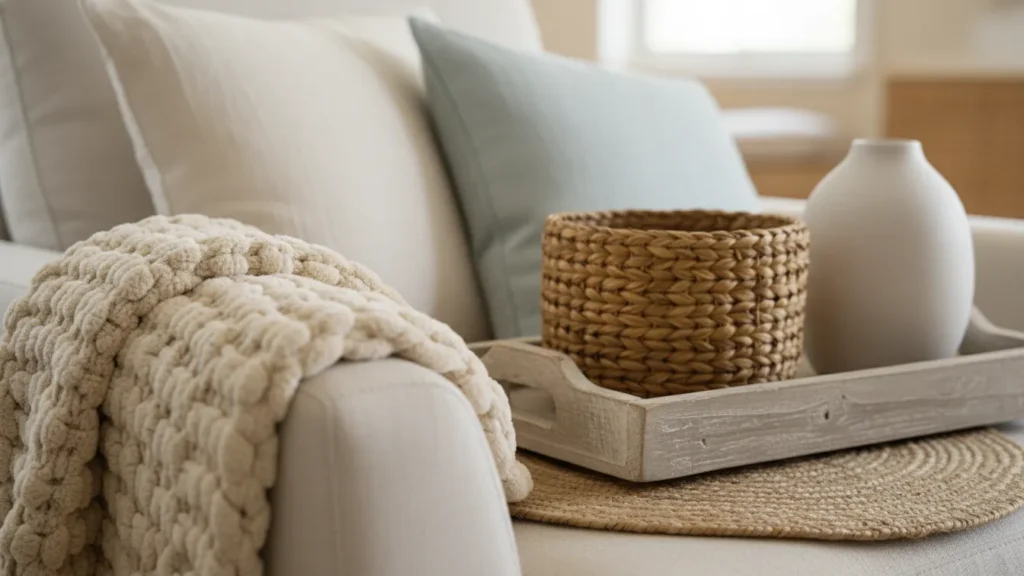
This is where your coastal living room really comes to life. Texture adds depth, interest, and that all-important tactile quality that makes spaces feel complete.
Think about what you’d actually find at the beach. Smooth stones, weathered wood, woven grasses, soft sand. Your material choices should echo these natural elements. Rattan, jute, seagrass, linen, cotton, bamboo, reclaimed wood, and natural stone all fit perfectly.
Layer different textures throughout your room. A chunky jute rug underfoot. Linen throw pillows on the sofa. A woven basket for blanket storage. Wooden bowls and trays on surfaces. This creates visual interest without adding clutter.
I always recommend mixing smooth and rough textures. Pair sleek modern furniture with chunky woven accessories. Balance soft fabrics with harder materials like wood and stone. This contrast keeps your contemporary coastal living room from feeling flat or one-dimensional.
Creating the Perfect Contemporary Coastal Color Scheme
Let’s dig deeper into color because it’s honestly one of the most important decisions you’ll make. Get this right, and everything else falls into place.
Neutral Foundations
Start with your neutrals. These form the backbone of your coastal living room design. White remains the most popular choice – it maximizes light and creates that airy beach house feeling. But not all whites are created equal.
Consider these paint colors for your walls:
Warm whites with subtle cream undertones feel inviting. Cool whites with gray undertones create a crisp, modern look. Off-whites and ivories add depth without heavy contrast. Soft grays work beautifully as an alternative to white.
Your ceiling should typically be the lightest color in the room. This draws the eye up and makes the space feel larger – essential for achieving that open, breezy coastal aesthetic.
Accent Colors: Ocean-Inspired Hues
Once your foundation is set, it’s time for the fun part: adding those beautiful coastal accent colors. This is where you bring in the blues, greens, and other ocean-inspired shades.
I love using varying shades of blue throughout a contemporary coastal living room. Maybe navy pillows on the sofa, a lighter blue throw blanket, and some pale aqua in artwork. This creates depth while staying cohesive.
Don’t limit yourself to just blues though. Seafoam green adds freshness. Coral brings warmth and energy. Sandy taupe grounds everything. Even touches of black can work for contrast in a modern coastal space.
The trick is distribution. You don’t want all your accent colors clustered in one area. Spread them throughout the room for balance and flow.
Lighting Your Contemporary Coastal Living Room
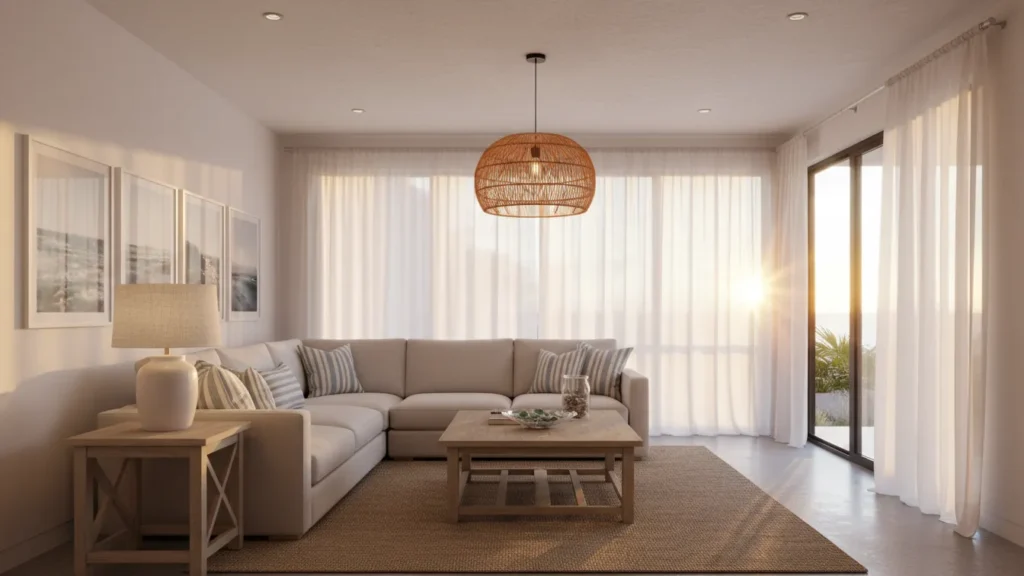
Let’s talk about something that often gets overlooked: lighting. It’s absolutely crucial for achieving that bright, airy coastal living room feel.
Maximizing Natural Light
Natural light is your best friend in coastal interior design. If you’re blessed with large windows, celebrate them. Don’t hide them behind heavy drapes or dark curtains.
Instead, opt for light, breezy window treatments that filter light without blocking it. Sheer white curtains. Woven bamboo shades. Light linen panels. These all work beautifully in a contemporary coastal setting.
If your room lacks natural light, don’t worry. You can fake it. Paint walls in light colors. Add mirrors strategically to reflect available light. Choose light-colored furniture that doesn’t absorb light.
Artificial Lighting Strategies
Your lighting fixtures contribute significantly to your room’s overall style. Coastal living room lighting should feel natural and organic, never harsh or overly formal.
Layered lighting works best. Start with ambient lighting from ceiling fixtures or recessed lights. Add task lighting with table lamps or floor lamps near reading areas. Include accent lighting to highlight artwork or architectural features.
For contemporary coastal style, I love these lighting options:
Woven pendant lights in natural materials. Driftwood or weathered wood lamps. Glass fixtures that resemble sea glass. Brass or brushed nickel finishes for a modern touch. Simple ceramic table lamps in neutral colors.
Avoid anything too ornate or traditional. Clean lines and natural materials keep things current and coastal.
Contemporary Coastal Living Room Layout and Space Planning
How you arrange your furniture matters just as much as what furniture you choose. The right layout enhances flow, maximizes space, and creates that open feeling essential to coastal living room design.
Creating Conversation Areas
Your contemporary coastal living room should invite people to relax and connect. Arrange seating to encourage conversation. Face sofas and chairs toward each other rather than all pointing at the TV.
Leave enough space between furniture pieces – at least 18 inches for walkways. This open flow mimics the spaciousness of beach landscapes. Nothing should feel cramped or cluttered.
If you have a large room, consider creating multiple zones. A main seating area for conversation. A reading nook by the window. A small workspace tucked in a corner. Each zone should feel distinct yet connected to the overall coastal aesthetic.
Balancing Function and Style
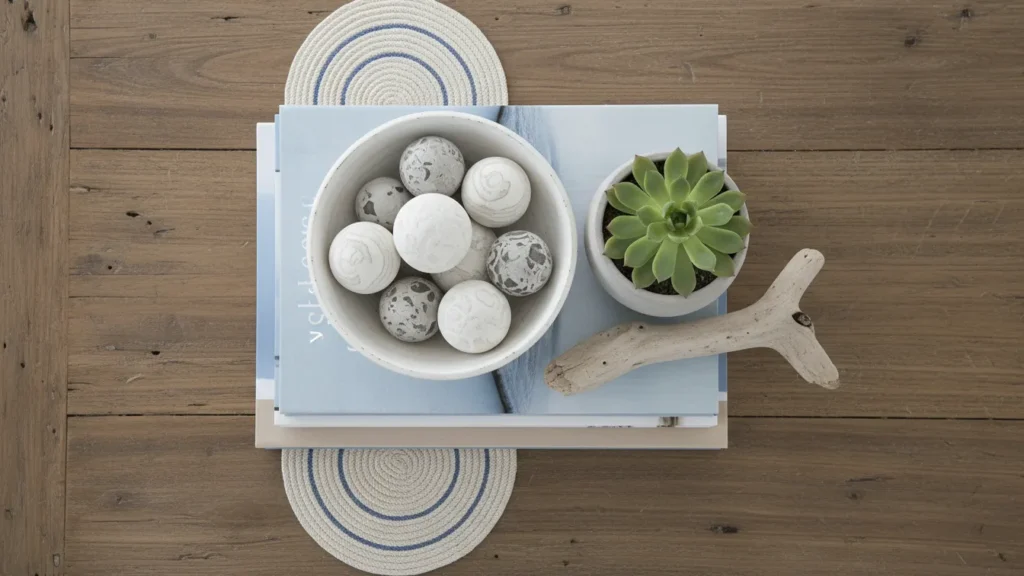
In my experience, the most successful contemporary coastal living rooms work hard while looking effortless. Every element serves a purpose beyond just looking pretty.
Choose furniture with hidden storage to keep clutter at bay. Opt for nesting tables that can be tucked away when not needed. Select pieces that can serve multiple functions – like an ottoman that’s seating, footrest, and coffee table all in one.
Think about traffic patterns. People should be able to move through the space easily without bumping into furniture or navigating obstacle courses. Keep pathways clear and direct.
Decorating Your Contemporary Coastal Living Room
Now for the finishing touches that’ll take your space from nice to absolutely stunning. This is where your personality shines through.
Artwork and Wall Decor
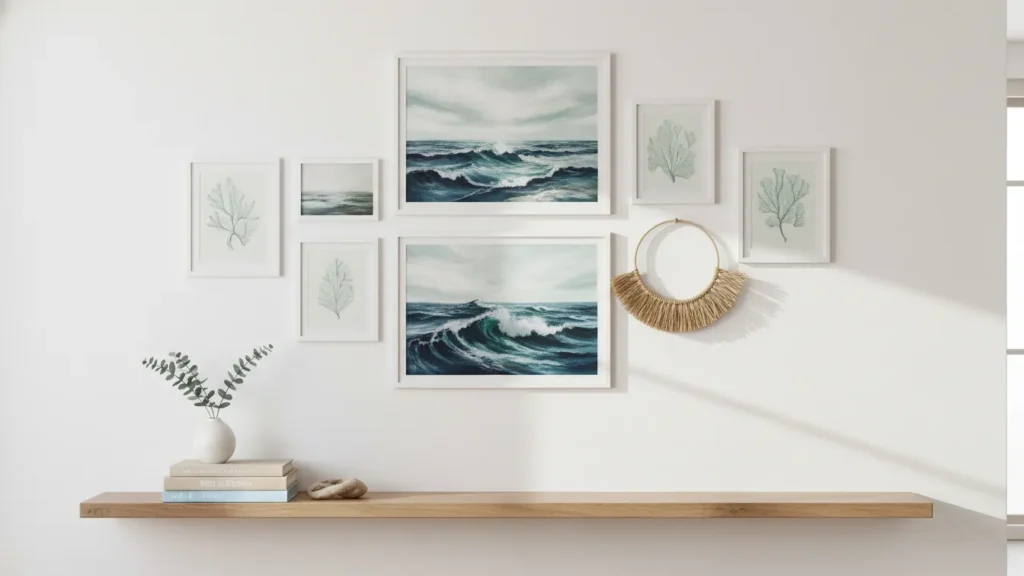
Coastal wall decor sets the tone for your entire room. The key is choosing pieces that reference the beach without being too literal or kitschy.
Abstract art in ocean colors works beautifully. Black and white photography of seascapes. Minimalist line drawings of waves or coastlines. Botanical prints of coastal plants. These all contribute to the contemporary coastal vibe without screaming “beach house.”
I always recommend going larger rather than smaller with artwork. One substantial piece makes more impact than a gallery wall of tiny frames. But if you do want multiple pieces, keep frames simple and consistent.
Consider incorporating three-dimensional wall art too. Woven wall hangings. Driftwood sculptures. Floating shelves displaying coastal finds. These add texture and depth to your walls.
Accessories and Styling
Here’s where you can really have fun. Coastal living room accessories are those small touches that pull everything together and make the space feel personal.
Natural elements work wonderfully as decor. Fill a bowl with smooth stones or shells you’ve collected. Display driftwood pieces on shelves. Use coral (faux, please – protect our reefs!) as sculptural elements.
Throw pillows are an easy way to introduce color and pattern. Mix solids with subtle patterns – think stripes, geometric prints, or abstract designs in your coastal color palette. Avoid anything too busy or loud.
Plants bring life to any contemporary coastal living room. Choose varieties that thrive indoors and complement the aesthetic. Snake plants, pothos, or fiddle leaf figs all work well. Place them in simple white or natural ceramic pots.
Books are both functional and decorative. Style them on coffee tables and shelves. Choose books with covers in your color scheme, or face them backward for a neutral look.
Rugs: Grounding Your Space
The right rug anchors your furniture and defines your space. For a contemporary coastal living room, natural fiber rugs work beautifully.
Jute rugs are incredibly popular in coastal interiors – they’re durable, affordable, and have that perfect beachy texture. Seagrass offers similar benefits. Sisal works too, though it can be scratchy underfoot.
If natural fibers feel too rough, layer a softer rug on top. A plush white or cream rug over jute creates comfort while maintaining the coastal aesthetic. Or choose a low-pile rug in blue and white stripes for a classic coastal look.
Size matters with rugs. In a living room, your rug should be large enough that at least the front legs of all furniture pieces sit on it. This creates cohesion and makes the room feel larger.
Contemporary Coastal Living Room Styles: Finding Your Perfect Match
Contemporary coastal design isn’t one-size-fits-all. There are several sub-styles, each with its own character. Finding the right one for you depends on your personal taste and existing home style.
Modern Coastal Minimalism
This approach strips coastal living down to its essentials. Clean lines dominate. Colors stay neutral with just hints of blue or green. Decor is minimal and highly curated.
If you love simplicity and hate clutter, modern coastal minimalism might be your style. Keep surfaces clear. Choose furniture with sleek silhouettes. Let architectural elements and natural light be the stars.
Casual Beach House Vibes
This version feels more relaxed and lived-in. Think comfortable slipcovered sofas, plenty of throw pillows, and layered textures everywhere. Colors can be bolder and more playful.
Casual coastal living rooms embrace imperfection. Furniture doesn’t need to match perfectly. Decor can be more eclectic. The overall feeling is “come in, kick off your shoes, and stay awhile.”
Coastal Transitional Style
This blends contemporary coastal elements with slightly more traditional pieces. You might have modern art on the walls but a classic roll-arm sofa. Or contemporary lighting paired with a vintage coffee table.
Transitional coastal design works well if you want the coastal feeling without going full beach house. It’s sophisticated and timeless while still feeling relaxed and approachable.
Step-by-Step Guide to Designing Your Contemporary Coastal Living Room
Ready to create your own coastal living space? Here’s exactly how to approach it, step by step. I’ve used this process countless times, and it works.
Step 1: Assess Your Space
Start by really looking at what you’re working with. Measure your room carefully. Note where windows are located and how much natural light you get. Identify any architectural features to highlight or challenges to work around.
Take photos of your space from multiple angles. Sometimes issues you don’t notice in person become obvious in pictures.
Step 2: Define Your Style
Decide which version of contemporary coastal living room design speaks to you. Look at inspiration photos online. Save images that make you say “yes, that!” Notice commonalities – are you drawn to all-white spaces or more colorful rooms? Modern furniture or casual pieces?
Create a mood board, even if it’s just a Pinterest board. This helps clarify your vision and keeps you focused while shopping.
Step 3: Choose Your Color Palette
Based on your style preferences, select your colors. Remember the 60-30-10 rule: 60% dominant neutral, 30% secondary neutral, 10% accent colors.
Get paint samples and test them on your walls. Colors look different in various lights throughout the day, so live with them for at least 24 hours before deciding.
Step 4: Plan Your Layout
Before buying anything, plan where furniture will go. Use painter’s tape on the floor to mark furniture outlines. This helps you visualize the space and ensure everything fits properly.
Consider flow and function. Where do people naturally walk? Where will you watch TV? Where’s the best reading spot? Let these practical considerations guide your layout.
Step 5: Select Major Furniture Pieces
Start with the big stuff: sofa, chairs, coffee table. These are your largest investments and biggest visual elements. Choose quality pieces in neutral colors – they’re easier to update with accessories than bold colored furniture.
Measure everything carefully. Know doorway widths and ceiling heights. Nothing’s worse than buying a perfect sofa that won’t fit through your door.
Step 6: Layer in Lighting
Install or update lighting fixtures. Add table lamps and floor lamps. Make sure every area of the room has adequate light for its intended use.
Consider installing dimmer switches if you don’t have them. They let you adjust ambiance easily – essential for creating that relaxed coastal living room atmosphere.
Step 7: Add Rugs and Window Treatments
These elements warm up the space and add softness. Choose window treatments that maximize light while providing privacy. Select rugs that ground your furniture arrangement.
Don’t rush these decisions. Living with the space for a few weeks helps you understand what’s needed.
Step 8: Decorate and Accessorize
Now comes the fun part! Add artwork, throw pillows, plants, and decorative objects. But go slowly. Add a few items, live with them, then add more if needed.
It’s easier to add more later than to remove clutter. Contemporary coastal design errs on the side of less is more.
Step 9: Edit and Refine
Once everything’s in place, step back and assess honestly. Does anything feel out of place? Is there too much of one color? Not enough texture?
Remove anything that doesn’t serve the overall vision. Sometimes the best decorating decision is what you take away, not what you add.
Step 10: Maintain the Look
Keep your contemporary coastal living room looking fresh by maintaining it. Fluff pillows daily. Keep surfaces clutter-free. Refresh flowers or plants regularly.
Seasonal updates keep things interesting. Switch out throw pillows or add different accessories. But keep the foundation consistent for a cohesive look year-round.
Common Mistakes to Avoid in Contemporary Coastal Living Room Design
Let me save you some headaches by sharing the mistakes I see most often. Learn from others’ errors and skip straight to success.
Going Too Literal with the Theme
The biggest mistake? Turning your coastal living room into a nautical museum. Anchors, ships wheels, “beach” signs everywhere – it’s too much. Contemporary coastal design suggests the beach rather than screaming it.
Use restraint. One or two literal coastal elements are fine. Beyond that, stick to colors, textures, and feelings rather than obvious symbols.
Choosing the Wrong White
Not all whites work for coastal style. Stark, cool whites can feel sterile rather than beachy. Overly yellow whites look dingy. Test several whites in your actual space before committing.
The best whites for coastal living rooms have subtle warm undertones without going yellow. They should feel clean but inviting.
Neglecting Texture
A contemporary coastal living room done entirely in smooth, flat materials falls completely flat. You need texture to create depth and interest.
Mix rough and smooth, soft and hard, natural and refined. This layering is what makes coastal interiors feel rich and complete rather than sparse.
Overcrowding the Space
Coastal style needs breathing room. Don’t pack your room full of furniture and accessories. Leave empty space. Let each piece shine.
If your room feels cramped, remove things rather than rearranging them. Sometimes less really is more.
Forgetting About Comfort
Your contemporary coastal living room should be beautiful, yes, but also comfortable. Don’t sacrifice livability for looks.
Choose seating that’s actually comfortable to sit on for extended periods. Make sure there are surfaces for drinks and snacks. Include storage for everyday items. A beautiful room you can’t use isn’t worth having.
Ignoring Your Climate and Location
Coastal living room design looks different in sunny California versus stormy Maine. Consider your actual environment. If you have limited natural light, adjust your color choices accordingly. If you deal with humidity, choose mold-resistant materials.
The best coastal interiors work with their location, not against it.
Contemporary Coastal Living Room on a Budget
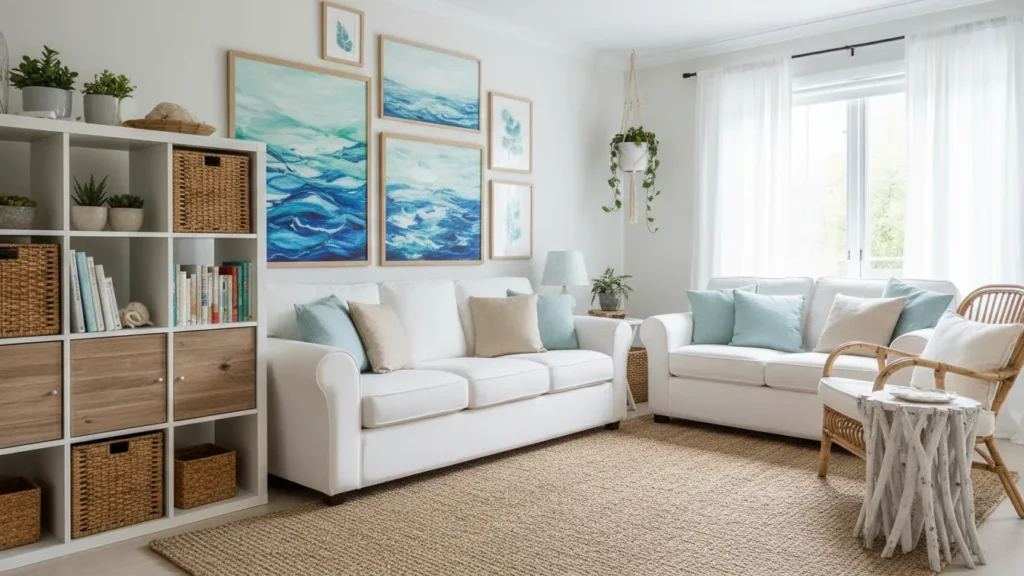
You don’t need unlimited funds to create a stunning contemporary coastal living room. Smart choices and strategic spending can give you the look for less.
Where to Splurge
Invest in your sofa. You use it daily, and it’s the room’s largest furniture piece. A quality sofa in a neutral color will last years and adapt to changing styles.
Spend more on rugs too. Cheap rugs look and feel cheap. A good quality natural fiber rug elevates the entire space.
Good lighting makes everything look better. Invest in at least one statement fixture and quality lamps.
Where to Save
Coastal living room decor items are perfect for budget shopping. Thrift stores, yard sales, and discount retailers all carry items you can style into your space.
DIY your artwork. Frame fabric samples, create your own abstract pieces, or mat and frame pages from old books.
Paint is incredibly affordable and makes huge impact. You can completely transform a room with a few gallons of paint.
Budget-Friendly Sources
Here are my favorite places for affordable coastal living room items:
HomeGoods and TJ Maxx for pillows, throws, and accessories. IKEA for basic furniture pieces you can style with coastal accessories. Target for budget-friendly decor in on-trend styles. Facebook Marketplace for secondhand furniture you can update. Thrift stores for unique finds and DIY projects.
Remember, contemporary coastal design is about feeling rather than expensive items. You can absolutely achieve the look on any budget.
Comparison: Contemporary Coastal vs. Other Coastal Styles
Let’s clear up some confusion. Contemporary coastal living rooms differ from other beach-inspired styles. Understanding these differences helps you achieve the exact look you want.
| Style | Color Palette | Furniture Style | Decor Approach | Overall Feel |
|---|---|---|---|---|
| Contemporary Coastal | Neutrals with soft blues/greens | Clean lines, modern silhouettes | Minimal, curated pieces | Sophisticated, relaxed |
| Traditional Coastal | Navy, white, red accents | Classic shapes, upholstered pieces | Nautical symbols, more formal | Timeless, established |
| Cottage Coastal | Pastels, whites, soft colors | Vintage, distressed furniture | Shabby chic, romantic details | Cozy, nostalgic |
| Tropical Coastal | Bright colors, bold patterns | Rattan, wicker, bamboo | Lush plants, exotic elements | Vibrant, vacation-like |
| Modern Farmhouse Coastal | White, gray, natural wood | Rustic meets refined | Mix of old and new | Comfortable, lived-in |
Contemporary coastal living rooms take the best elements of beach house style and filter them through a modern lens. The result is fresh, current, and sophisticated while maintaining that essential coastal ease.
Seasonal Updates for Your Contemporary Coastal Living Room
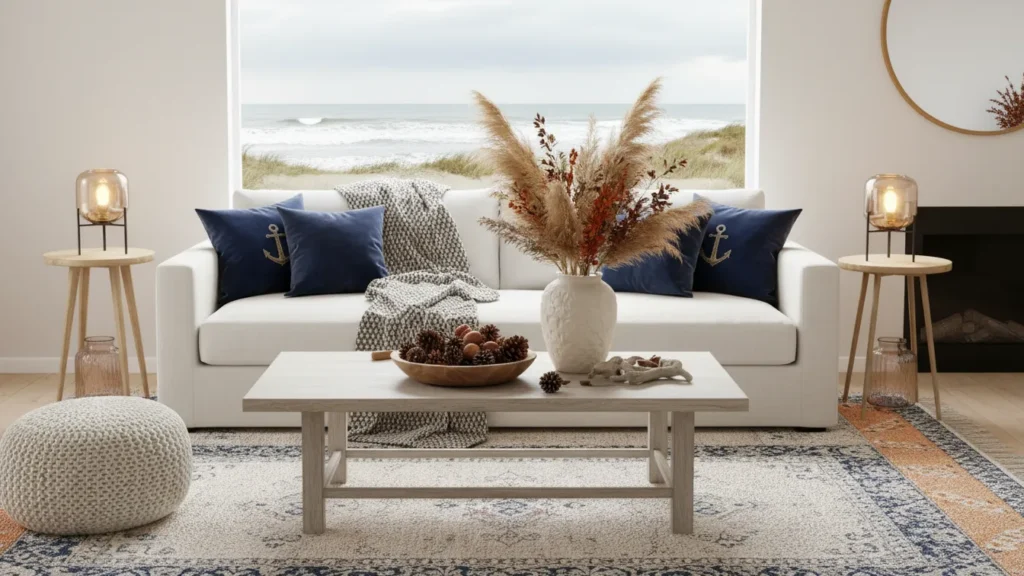
One thing I love about coastal living room design is how easily it transitions through seasons. You don’t need to completely redecorate – just make small shifts.
Summer Styling
In warmer months, lighten everything up. Switch to lightweight linen throw blankets. Add more white and bright colors. Bring in fresh flowers or greenery.
Open curtains wide to maximize natural light and views. Remove heavy layering. Keep the space feeling open and breezy.
Fall and Winter Adjustments
As temperatures drop, add warmth without losing the coastal aesthetic. Layer in cozy throws in neutral colors. Add extra pillows for comfort. Incorporate warmer metals like brass or copper.
You can even add deeper colors – maybe a rich navy throw or some charcoal gray pillows. But keep the overall palette light.
The beauty of contemporary coastal style is its adaptability. Small changes create seasonal interest while maintaining your core design.
Maintaining Your Contemporary Coastal Living Room
Creating a beautiful coastal living room is one thing. Keeping it looking great requires some ongoing care. Here’s how to maintain that fresh, pristine appearance.
Daily Maintenance
Fluff and rotate cushions daily to prevent permanent indentations. Quickly wipe down surfaces to prevent dust buildup. Keep throws folded neatly or draped artfully.
Return items to their homes immediately rather than letting clutter accumulate. In a contemporary coastal space, clear surfaces are essential to the aesthetic.
Weekly Care
Vacuum rugs and upholstery weekly. Dust all surfaces, including shelves and decor items. Wash windows to maximize natural light. Water plants and remove dead leaves.
Rotate decorative objects occasionally to prevent sun fading. Shake out and fluff throw pillows.
Seasonal Deep Cleaning
A few times a year, give your coastal living room a thorough cleaning. Wash all throw pillows and blankets. Deep clean upholstery. Move furniture to vacuum underneath.
Clean light fixtures and replace bulbs as needed. Check for any repairs needed and address them promptly.
Proper maintenance keeps your contemporary coastal living room looking magazine-worthy year after year.
Frequently Asked Questions About Contemporary Coastal Living Rooms
What’s the difference between coastal and nautical design?
Coastal design draws inspiration from beach landscapes and seaside living – think sand, sea, and sky. Nautical design specifically references sailing and boats with anchors, rope, and navy stripes. Contemporary coastal is much more subtle and sophisticated than nautical.
Can I do coastal style if I don’t live near the beach?
Absolutely! Contemporary coastal living rooms work anywhere. The style is about creating a feeling of relaxation and connection to nature. You don’t need ocean views to achieve that.
What colors work best in coastal living rooms?
Whites, creams, soft grays, and beiges form your foundation. Add blues (from pale aqua to deep navy), soft greens, and sandy taupes. The key is keeping the overall palette light and airy.
How do I make my coastal living room feel modern, not dated?
Stick to clean lines, avoid literal beach symbols, and keep decor minimal. Choose contemporary furniture silhouettes. Use a neutral foundation with carefully chosen accents rather than themed everything.
What type of flooring works best?
Light wood floors are ideal for coastal living rooms – think white oak, light maple, or pale pine. If you have dark floors, don’t worry. Large light-colored rugs can balance them out beautifully.
How can I incorporate coastal style with my existing furniture?
Start with paint, textiles, and accessories. Repaint walls in coastal colors. Add slipcovers to existing furniture. Switch out pillows, throws, and artwork. These changes create coastal feeling without replacing major pieces.
Bringing It All Together: Your Dream Contemporary Coastal Living Room Awaits
Creating a contemporary coastal living room is a journey, not a destination. It’s about crafting a space that feels like a breath of fresh air every time you walk in. A room that helps you unwind, connects you to nature, and brings a little vacation vibes into everyday life.
Remember, the most successful coastal living rooms balance sophistication with relaxation. They’re beautiful but never fussy. Stylish but always comfortable. They reference the beach without hitting you over the head with seashells and starfish.
Start with your foundation: light walls, neutral furniture, and natural textures. Layer in your coastal colors through accessories and accents. Keep things simple and curated. Let natural light flood your space. Add those personal touches that make it uniquely yours.
You don’t need to do everything at once. Start with one area and build from there. Maybe begin with paint and window treatments. Add a new rug next month. Slowly accumulate the perfect accessories. The process itself is part of the fun.
Your contemporary coastal living room should reflect who you are and how you live. Don’t follow trends that don’t speak to you. Trust your instincts. If something doesn’t feel right, it probably isn’t – at least not for your space.
Now here’s where I encourage you to take action. Choose one thing from this guide – maybe it’s selecting your paint color or rearranging your furniture layout – and do it this week. Small steps lead to big transformations.
Ready to start your coastal living room transformation? Grab some paint samples, make a mood board, or simply rearrange what you already have. Your perfect beach-inspired retreat is closer than you think.
What element of contemporary coastal design excites you most? Which room will you tackle first? The journey to your dream coastal living space starts now. Let’s make it happen!