Modern Colorful Living Room Design: The Ultimate Guide to Creating Vibrant Spaces
Introduction:
Let’s be honest—walking into a modern colorful living room should feel like a breath of fresh air. You know that feeling when you step into a space and immediately feel energized? That’s what we’re after here.
Gone are the days when living rooms had to be boring beige boxes. Today’s colorful living room design is all about expressing yourself while keeping things sophisticated and, well, modern. I’ve seen countless homeowners transform their bland spaces into vibrant havens, and I’m here to show you exactly how to do it.
In my experience, creating a modern living room with bold colors isn’t about throwing random bright things together and hoping for the best. It’s actually a thoughtful process that balances contemporary design with personal style. And here’s the good news: it’s easier than you think.
Whether you’re starting from scratch or just want to inject some life into your current space, this guide will walk you through everything you need. We’ll cover color theory, furniture selection, lighting tricks, and those finishing touches that make people stop and say, “Wow, who designed this?”
Ready to ditch the neutral nightmare and embrace some serious color? Let’s dive in.
Understanding Modern Colorful Living Room Design
So what exactly makes a living room “modern” and “colorful” at the same time? It’s a question I get asked all the time.
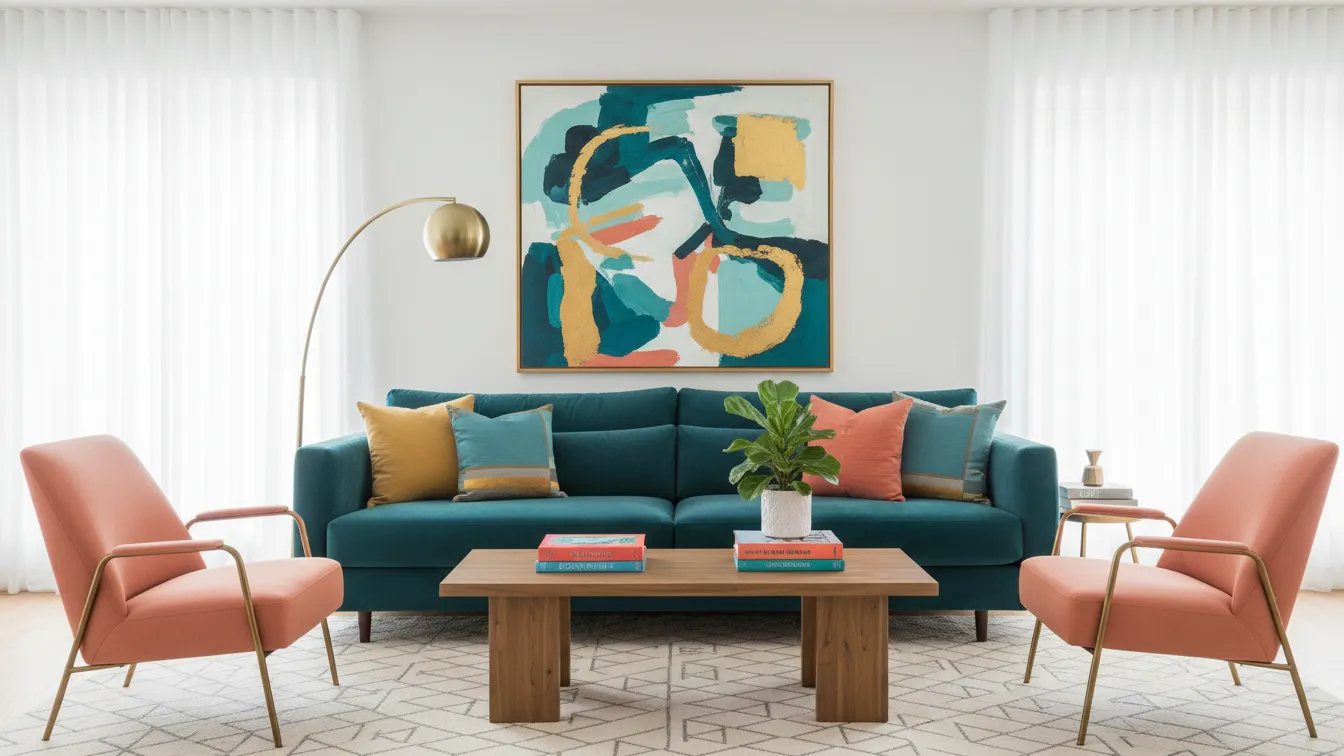
A modern colorful living room combines the clean lines and minimalist principles of contemporary interior design with bold, saturated hues. Think sleek furniture silhouettes paired with jewel-toned accent walls or vibrant artwork. The key word here is balance.
Core Principles of Modern Design
Modern design isn’t just a trend—it’s a philosophy. Here’s what defines it:
Minimalism meets function. In a modern living room, every piece serves a purpose. You won’t find unnecessary clutter or purely decorative items that don’t earn their keep. This principle becomes even more important when you’re working with bold colors because you don’t want visual chaos.
Clean lines and geometric shapes. Modern furniture typically features straight edges, smooth surfaces, and simple forms. This creates a structured foundation that can handle colorful elements without feeling overwhelming.
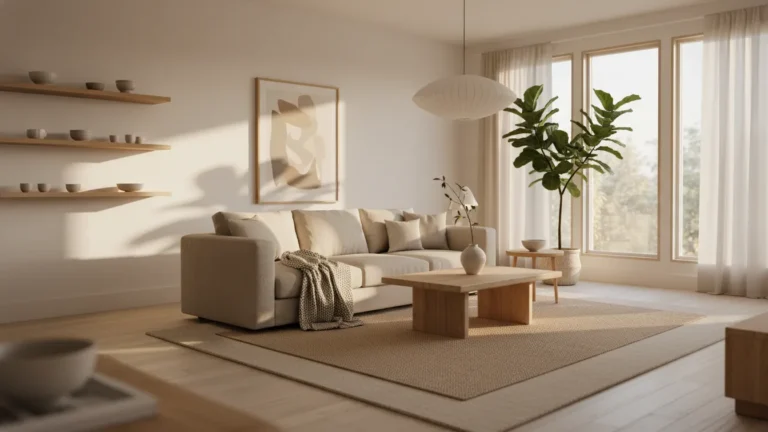
Open spaces and natural light. Modern design loves breathing room. Large windows, open floor plans, and strategic furniture placement all contribute to that airy, uncluttered feel that defines contemporary living spaces.
The Psychology Behind Colorful Interiors
Now here’s where it gets interesting. Colors aren’t just pretty—they actually affect how we feel.
Research from institutions like Color Psychology Today shows that vibrant colors can boost mood, increase energy, and even improve productivity. That’s why colorful living room ideas have become so popular in recent years.
Warm colors (reds, oranges, yellows) create energy and warmth. They’re perfect for social spaces where you want conversation and activity. Cool colors (blues, greens, purples) tend to calm and relax. Many successful modern colorful living rooms mix both palettes for balance.
What I love about this approach is how customizable it is. Feeling stressed? Add more blues. Need energy? Pump up those warm tones. Your living room color scheme can literally shape your daily mood.
Why Colorful Living Rooms Are Trending in 2026
Let me tell you—colorful home decor is having a major moment right now.
After years of grey-everything and Scandinavian minimalism, people are craving personality. The pandemic changed how we view our homes. They’re not just places to sleep anymore—they’re our offices, gyms, entertainment centers, and sanctuaries. We want them to feel special.
Architectural Digest reports that searches for “colorful interior design” have increased by over 300% since 2023. Designers are embracing maximalist elements within modern frameworks. It’s like we’re giving ourselves permission to be bold again.
Plus, social media platforms like Instagram and Pinterest have shown us what’s possible. We’re seeing stunning modern living room designs from around the world, and they’re inspiring us to take risks with our own spaces.
Choosing Your Color Palette for a Modern Colorful Living Room
Alright, this is where things get really fun—but also where people get nervous. Choosing colors can feel overwhelming, but I promise it doesn’t have to be.
Popular Color Schemes for 2026
Let’s talk about what’s actually working in homes right now.
Jewel tone combinations are absolutely dominating. Think emerald green paired with sapphire blue, or ruby red with amethyst purple. These rich, saturated colors bring luxury and depth to modern living spaces without feeling childish.
Terracotta and teal has become the power couple of colorful living room design. The warm, earthy terracotta grounds the cool, refreshing teal. Together, they create this perfectly balanced, sophisticated vibe that works in virtually any style of home.
Mustard yellow and charcoal grey is another winner. The mustard adds energy and warmth, while the charcoal keeps things grounded and modern. Add some white walls and natural wood tones, and you’ve got yourself a magazine-worthy space.
You might be wondering about pastels. Here’s my take: soft pastels can work in a modern colorful living room, but they need to be used boldly. Instead of wimpy baby pink, go for a saturated coral. Instead of pale mint, choose a vibrant seafoam. The saturation level is what keeps it modern rather than cottage-core.
The 60-30-10 Color Rule
This rule is your best friend. Seriously, it’s like a cheat code for interior design.
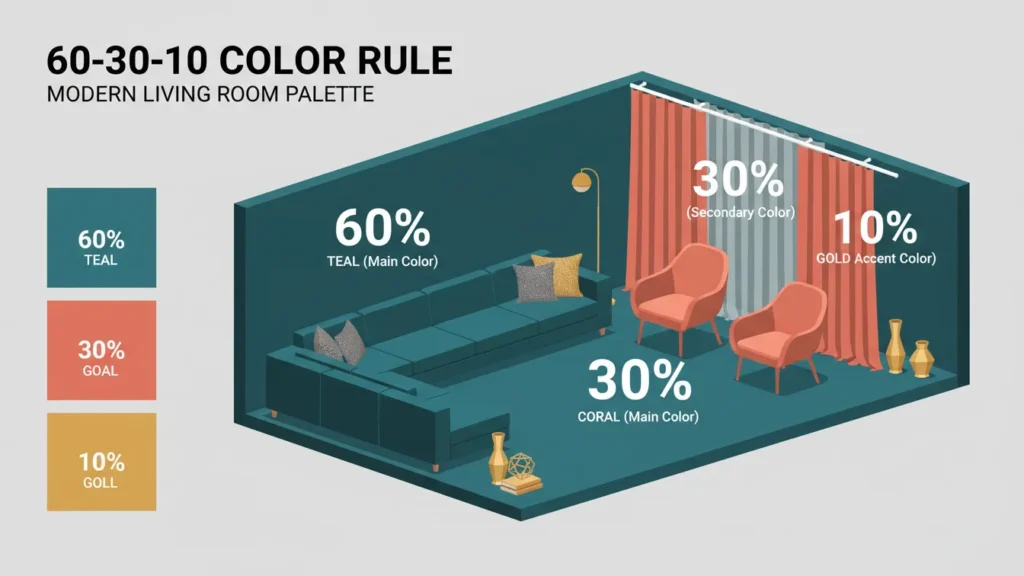
Here’s how it works: 60% dominant color, 30% secondary color, and 10% accent color. This ratio creates visual balance and keeps your living room design from feeling chaotic.
Let’s break it down with an example. Say you’re designing a modern colorful living room with a teal, coral, and gold palette:
- 60% Teal: This might be your walls, large sofa, or area rug
- 30% Coral: Perhaps accent chairs, curtains, or a gallery wall
- 10% Gold: Throw pillows, picture frames, lamp bases, decorative objects
The dominant color creates cohesion. The secondary color adds interest. The accent color provides those pop moments that make your eyes dance around the room.
In my experience, people often mess this up by trying to use too many colors equally. That creates visual noise rather than a cohesive color scheme. Stick to the rule, at least initially, and you’ll be amazed at how professional your space looks.
Complementary vs. Analogous Color Schemes
Time for a quick color theory lesson—but I’ll keep it simple.
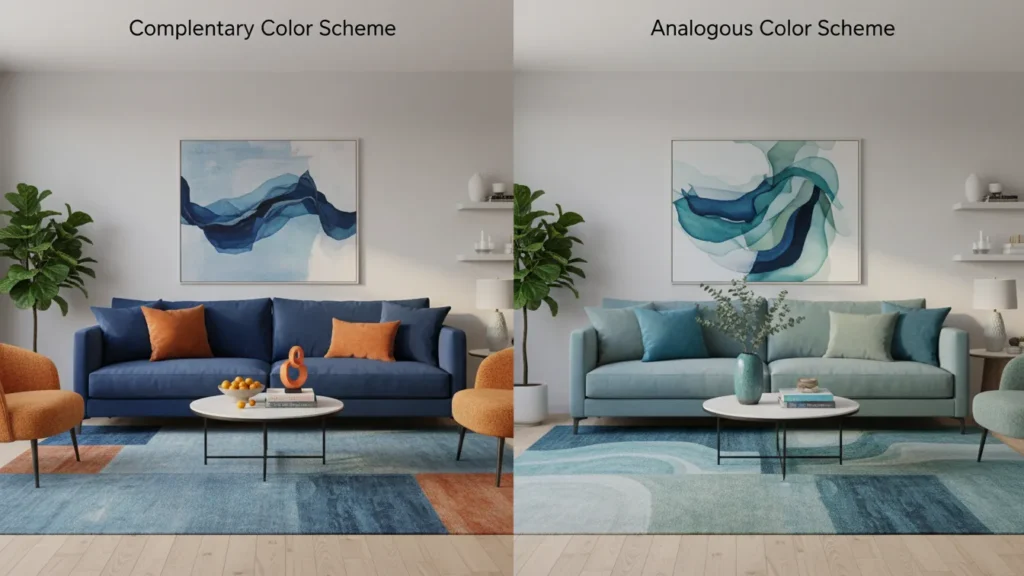
Complementary colors sit opposite each other on the color wheel. Think blue and orange, or red and green. These combinations create high contrast and visual excitement. They’re perfect for bold living room designs where you want drama.
Analogous colors sit next to each other on the color wheel. Think blue, blue-green, and green. These schemes feel more harmonious and relaxing. They’re ideal if you want a colorful living room that still feels cohesive and calm.
Which should you choose? Honestly, it depends on your personality and how you use the space. High-energy household with lots of entertaining? Go complementary. Prefer a calming retreat after work? Choose analogous.
Many successful modern colorful living rooms actually combine both approaches. You might use an analogous scheme as your base (say, various shades of blue and green) then add complementary accents (pops of orange or red) for interest.
Incorporating Neutral Tones
Now here’s something important: neutral colors aren’t the enemy of colorful design—they’re the foundation.
White walls remain incredibly popular in modern living rooms because they let your colorful furniture and accessories shine. They also maximize natural light and make spaces feel larger.
Grey tones add sophistication and prevent colors from feeling too primary or childish. A charcoal grey sofa in a colorful living room acts as a grounding element that makes those bright throw pillows pop even more.
Natural wood tones bring warmth and texture. Whether it’s a wooden coffee table, flooring, or shelving, wood elements connect your modern colorful living room to nature and add organic balance.
The trick is using neutrals strategically. They should support your colors, not compete with them. In my experience, aiming for about 40-50% neutral tones in a colorful living room design creates the perfect balance between bold and livable.
Furniture Selection for a Modern Colorful Living Room
Let’s talk furniture—because this is where your color palette really comes to life.
Choosing the Perfect Modern Sofa
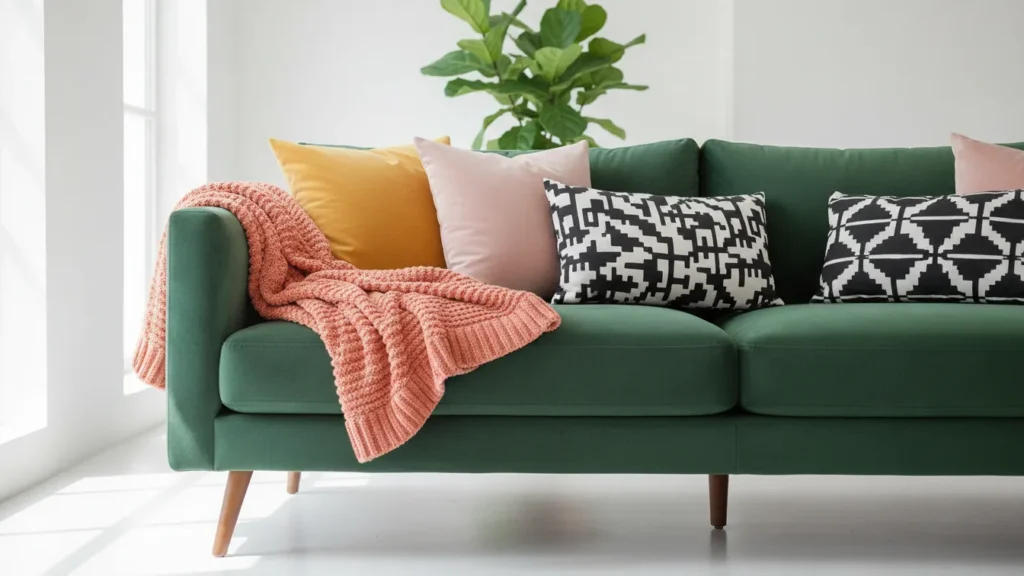
Your sofa is the anchor of any living room, and in a modern colorful space, it’s a major decision.
Bold colored sofas make powerful statements. A emerald green velvet sofa or a mustard yellow mid-century piece becomes the room’s focal point. This approach works beautifully if you’re keeping walls neutral and want one knockout piece.
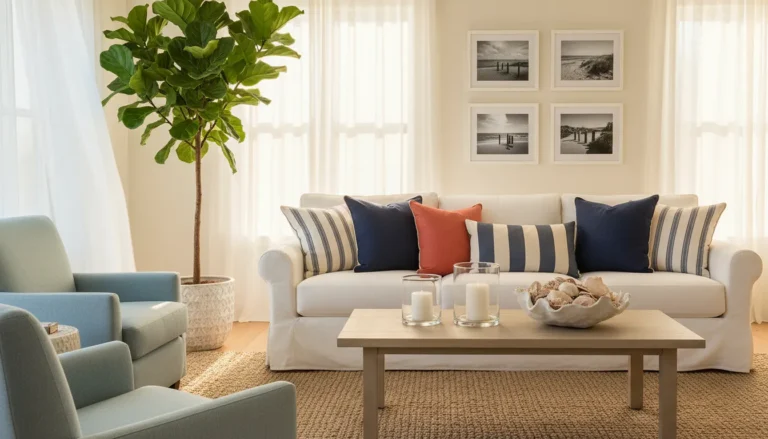
Neutral sofas with colorful accents offer more flexibility. A grey, beige, or even white sofa lets you change your color scheme seasonally with different throw pillows and blankets. This is the safer route if you’re commitment-phobic about color.
For modern design, look for clean lines, minimal ornamentation, and quality construction. Popular styles include:
- Mid-century modern sofas with tapered legs and button tufting
- Contemporary sectionals with low profiles and modular designs
- Scandinavian-inspired pieces with simple silhouettes and natural materials
Material matters too. Velvet upholstery adds luxury and depth to colors. Linen feels casual and breathable. Leather brings sophistication and ages beautifully. Choose based on your lifestyle and maintenance preferences.
Accent Chairs That Pop
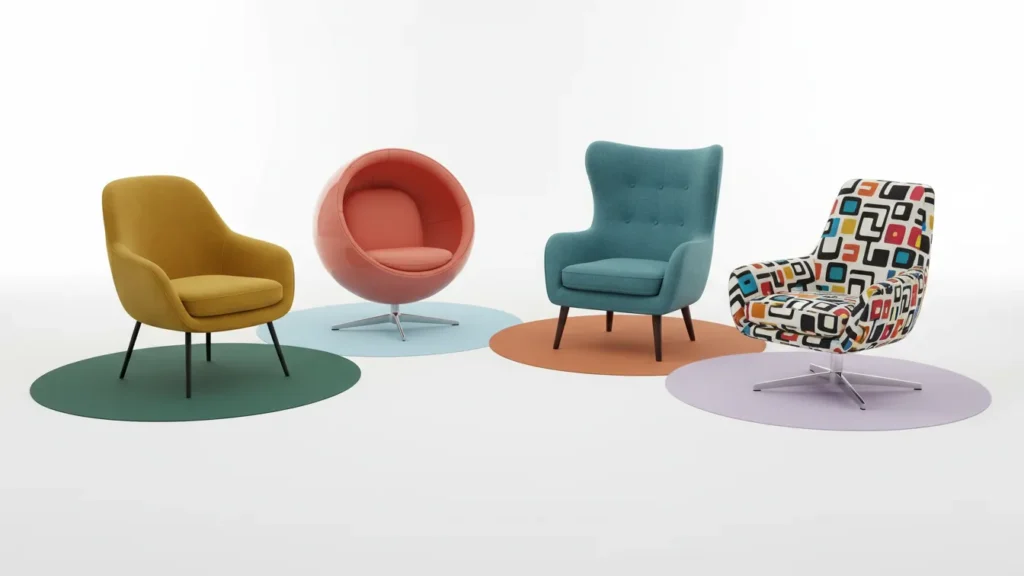
This is where you can really have fun. Accent chairs are perfect for injecting personality into your modern colorful living room.
I love mixing and matching styles and colors. Pair a bright orange accent chair with a teal one for a playful, eclectic vibe. Or go monochromatic with two chairs in different shades of the same color family for subtle sophistication.
Statement chairs to consider:
- Egg chairs or pod chairs in bold hues
- Vintage-inspired armchairs reupholstered in vibrant fabrics
- Modern wingback chairs with geometric patterns
- Lucite or acrylic chairs with colorful cushions
Position your accent chairs strategically. They should facilitate conversation but also stand out as design elements. Angle them slightly toward the sofa to create an intimate seating arrangement.
Coffee Tables and Storage Solutions
Your coffee table might seem like a minor detail, but it significantly impacts your living room’s overall feel.
For modern colorful living rooms, I typically recommend keeping coffee tables neutral or minimal. A simple glass coffee table, white marble table, or natural wood piece won’t compete with your colorful elements. That said, a brightly painted vintage trunk or a lacquered table in a bold hue can work if the rest of your furniture is more subdued.
Storage solutions need to be both functional and beautiful. Modern shelving units in white or wood provide display space for colorful books, art objects, and plants. Media consoles with clean lines can handle your TV and electronics while maintaining the sleek aesthetic.
What I love about this approach is how it keeps your living room feeling organized. Colorful spaces can quickly look cluttered if you don’t have adequate storage. Built-in shelving, floating cabinets, and multi-functional furniture pieces all help maintain that modern cleanliness.
Wall Treatments and Color Application
Your walls are the biggest canvas in your modern colorful living room. Let’s explore how to make them work for you.
Accent Walls vs. Full Room Color
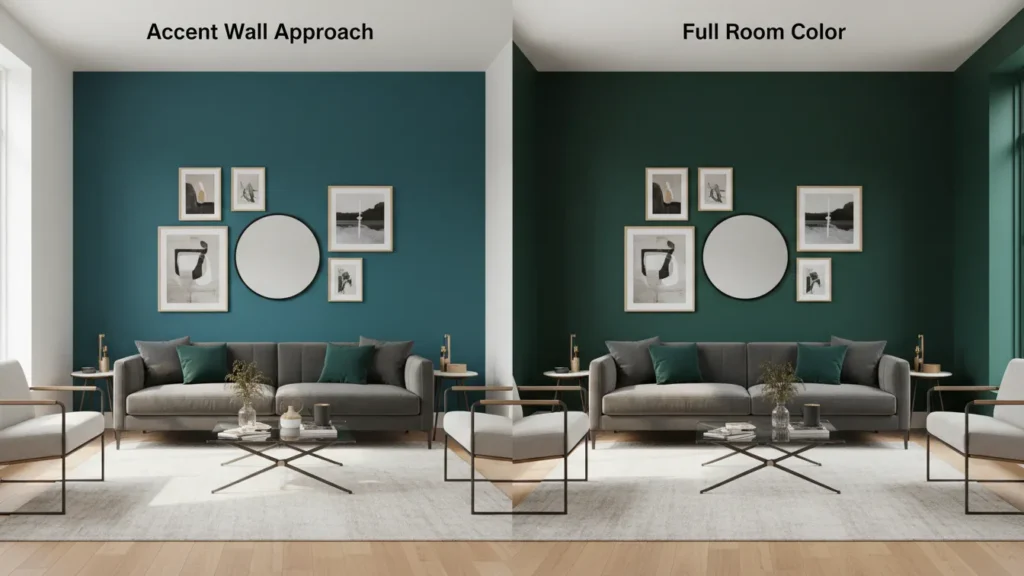
The eternal debate: one accent wall or go all in?
Accent walls are the gateway drug to colorful design. They let you experiment with bold hues without overwhelming the space. Paint one wall in a saturated color—maybe behind your sofa or your TV—and keep the other walls neutral. This approach works especially well in smaller living rooms where too much color might feel claustrophobic.
Full room color makes a bolder statement. Painting all four walls in a rich, saturated tone creates an enveloping, cocoon-like effect. It’s dramatic and can actually make rooms feel more intimate and cozy. Just make sure you have enough natural light to prevent the space from feeling cave-like.
In my experience, the best choice depends on your ceiling height and room size. High ceilings and spacious rooms can handle full color better. Smaller spaces often benefit from the accent wall approach with white or light-colored remaining walls.
Wallpaper and Wall Art Options
Wallpaper has made a serious comeback, and it’s perfect for modern colorful living rooms.
Geometric wallpaper patterns align perfectly with modern design principles. Think bold triangles, hexagons, or abstract shapes in multiple colors. These add visual interest without feeling overly traditional or dated.
Botanical prints bring nature indoors while adding color. Large-scale leaf patterns or tropical motifs work beautifully in contemporary spaces, especially when paired with real plants.
Abstract or artistic wallpaper can serve as a statement piece. Some designs look like original paintings and become instant conversation starters.
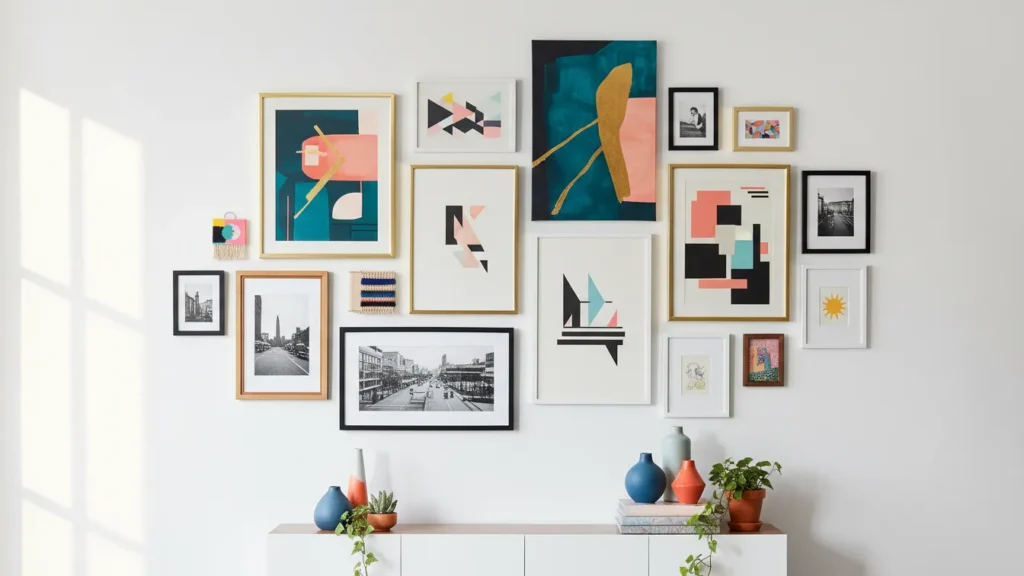
Now, wall art is where you can really showcase your personality. Gallery walls with colorful artwork, photographs, and prints add depth and character. Mix frame colors and sizes for an eclectic, collected-over-time look that feels authentic rather than staged.
Large-scale art pieces make powerful focal points. A single oversized abstract painting in complementary colors can anchor your entire color scheme. Saatchi Art and Artsy offer incredible options for original and print artwork.
Textured Wall Treatments
Texture adds dimension to colorful walls and keeps them from feeling flat.
Shiplap or board and batten painted in bold colors creates architectural interest. These treatments add a subtle pattern that catches light differently throughout the day.
3D wall panels come in various geometric designs and can be painted any color. They create dramatic shadows and depth, especially when paired with strategic lighting.
Plaster finishes or Venetian plaster in colorful hues add organic texture and sophistication. These techniques create subtle color variations that make walls feel alive and dynamic.
Don’t overlook fabric wall coverings either. Stretched canvas, felt panels, or textile hangings can soften a modern space while adding color and sound absorption—perfect for living rooms that do double duty as home theaters.
Lighting Design for Colorful Modern Spaces
Lighting can make or break your modern colorful living room. It’s that important.
Natural Light Maximization
Natural light is your best friend when working with bold colors. It shows true color values and keeps vibrant hues from feeling oppressive.
Window treatments matter. Sheer curtains in white or light colors allow maximum light while providing privacy. For a colorful touch, try sheer panels in soft pastels or use bold colored drapes that you can tie back during the day.
Mirrors strategically placed across from windows amplify natural light. A large mirror with a colorful frame can serve double duty—reflecting light and contributing to your color palette.
Keep windows unobstructed when possible. In modern design, less is more. If you need privacy, consider top-down bottom-up shades that let you control light without bulky treatments.
Statement Light Fixtures
Lighting fixtures are jewelry for your living room, and in a colorful modern space, they can be absolute showstoppers.
Pendant lights in bold colors or unique shapes draw the eye upward and add vertical interest. A cluster of colored glass pendants or a single large drum shade in a vibrant hue can anchor your entire design scheme.
Floor lamps with colorful shades or bases provide task lighting while contributing to your color palette. Arc floor lamps with colored shades can illuminate specific areas while making a sculptural statement.
Table lamps offer flexibility. You can easily swap them out to refresh your look seasonally. Mix lamp base colors, shapes, and materials for an eclectic, collected feel that’s very modern.
Don’t forget about ceiling fixtures. A colorful chandelier or a modern flush-mount in an unexpected color can surprise guests and add personality to an often-overlooked surface.
Layered Lighting Strategies
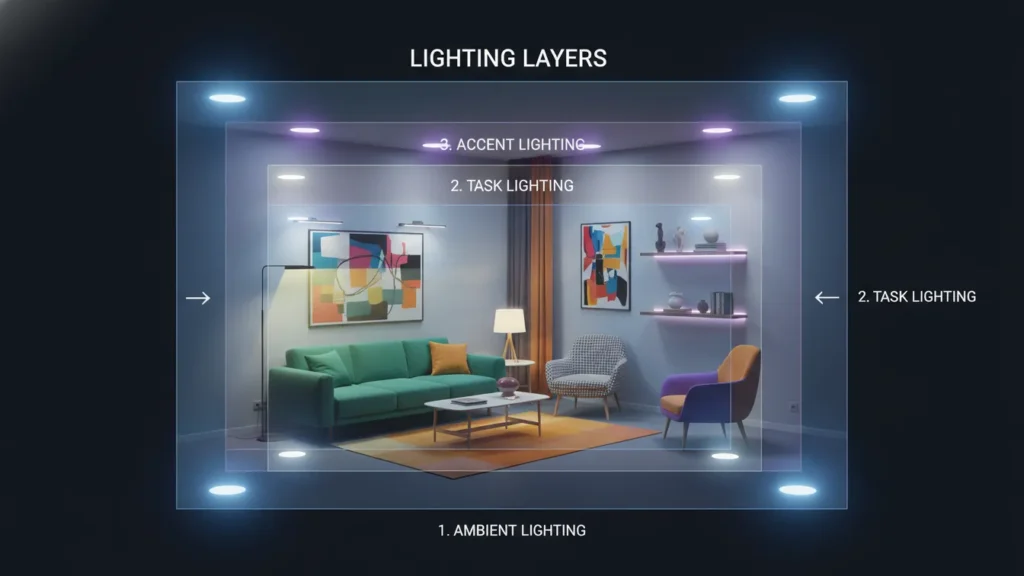
Professional designers always use layered lighting—and you should too.
Ambient lighting provides overall illumination. This comes from ceiling fixtures, recessed lights, or cove lighting. Keep this neutral and functional so it doesn’t compete with your colorful elements.
Task lighting handles specific activities like reading or working. Floor lamps, table lamps, and under-cabinet lighting fall into this category. This is where you can introduce colorful fixtures.
Accent lighting highlights specific features—artwork, architectural details, or colorful walls. Track lighting, picture lights, and LED strips all serve this purpose.
The key is controlling each layer independently. Dimmer switches are essential in a modern colorful living room because they let you adjust the mood and how colors appear throughout the day and night.
Textiles and Soft Furnishings
Textiles are the easiest and most affordable way to add color to your living room. Plus, you can change them seasonally!
Throw Pillows and Cushions
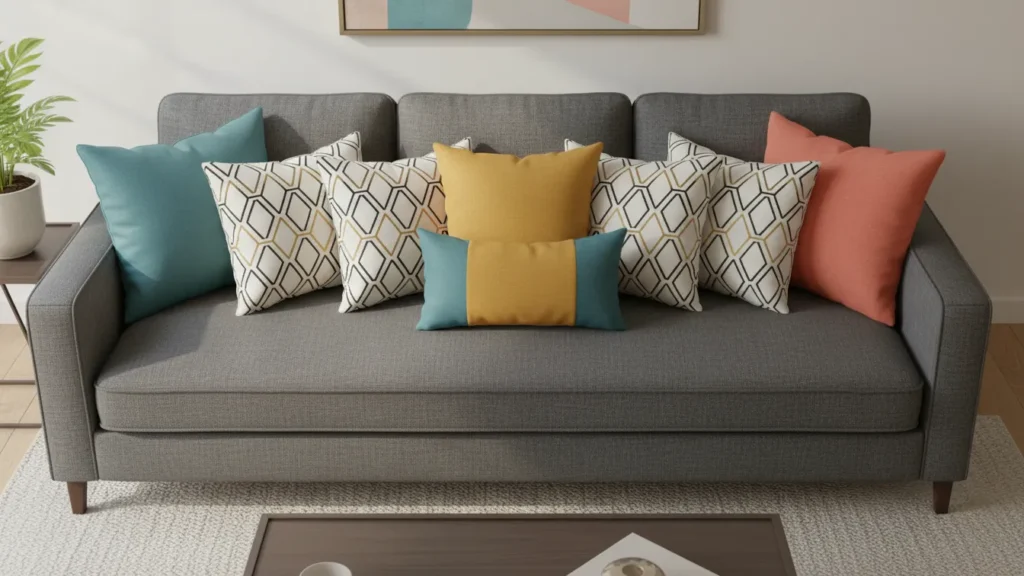
Throw pillows are color powerhouses. They’re small, relatively inexpensive, and completely changeable.
For a modern colorful living room, I recommend having at least 5-7 pillows on your sofa in varying sizes. Mix solid colors with patterns, and don’t be afraid to combine different textures—velvet, linen, wool, silk—all in your chosen color palette.
The “three-color rule” works well here: choose three colors from your color scheme and distribute them across your pillows. Maybe four pillows in your dominant color, two in your secondary color, and one in your accent color.
Geometric patterns, abstract designs, and color-blocked pillows all work beautifully in modern spaces. Avoid overly traditional patterns like florals unless they’re very stylized and contemporary.
Area Rugs and Curtains
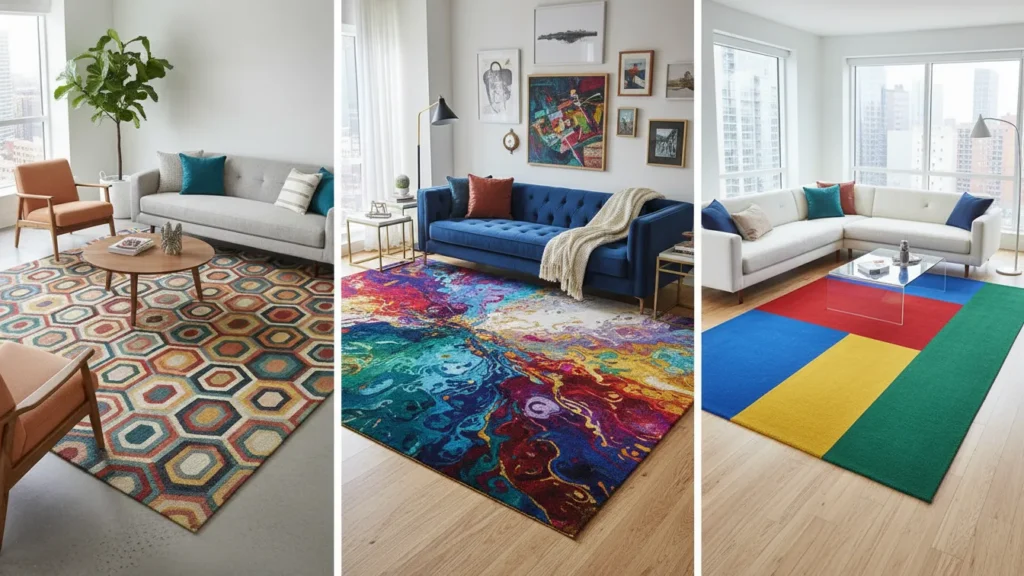
Your area rug is like the foundation of your furniture arrangement—and it’s a perfect opportunity for color.
A colorful rug can either tie your entire color scheme together (if it includes multiple colors from your palette) or serve as your main color statement (if you’ve kept furniture more neutral). Modern rugs often feature geometric patterns, abstract designs, or bold color blocking.
Size matters. Your rug should be large enough that at least the front legs of your furniture sit on it. This creates a cohesive seating area and makes the space feel intentional rather than haphazard.
Curtains frame your space and can add significant color impact. Floor-to-ceiling drapes in a bold hue make rooms feel taller and more elegant. If you’re nervous about commitment, start with neutral curtains and add colorful tiebacks or trim.
Blankets and Throws
Throws add both function and style. Draped casually over a sofa arm or folded neatly on an accent chair, they introduce texture and color while inviting coziness.
Layer different materials: a chunky knit throw in one color, a velvet blanket in another, and a lightweight cotton throw in a third. This creates visual interest and gives you options for different temperatures and moods.
Don’t match too perfectly. The most interesting modern colorful living rooms feel collected and personal, not like everything came from the same store on the same day.
Incorporating Patterns in Modern Colorful Design
Patterns add depth and visual interest—but they need to be handled carefully in modern spaces.
Mixing Patterns Successfully
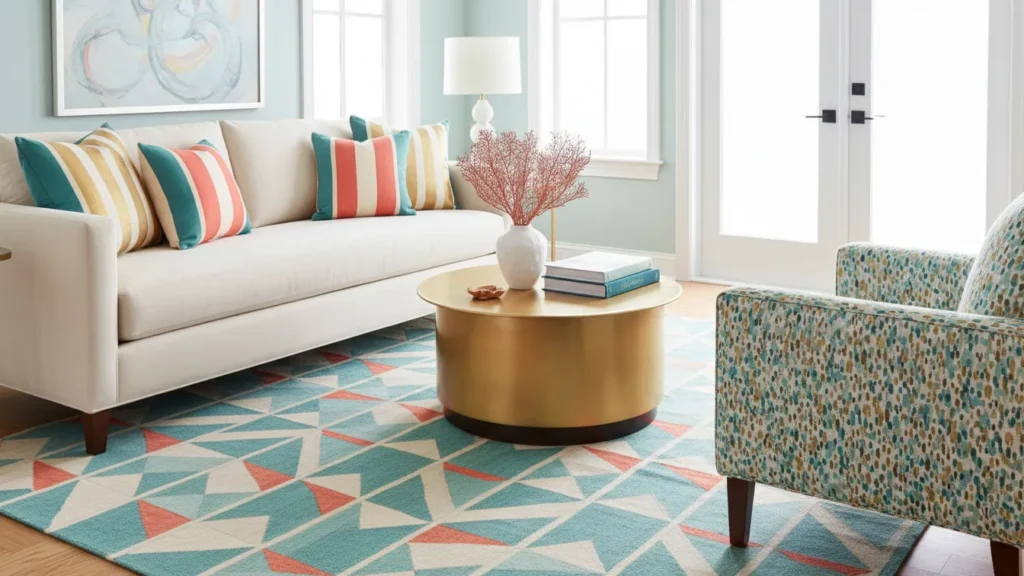
The key to mixing patterns is varying the scale and type.
Large-scale patterns should be your anchor. Maybe a big geometric print on your rug or a large floral on your curtains. This establishes your pattern palette.
Medium-scale patterns add variety. These might appear on your throw pillows or an accent chair. Think stripes, smaller geometrics, or abstract designs.
Small-scale patterns provide detail and texture. These work well on smaller accessories like cushions, table runners, or decorative objects.
The rule of thumb: mix one large, one medium, and one small-scale pattern in your living room. Keep them in your established color scheme to maintain cohesion.
Geometric vs. Organic Patterns
Geometric patterns—stripes, chevrons, hexagons, triangles—align perfectly with modern design principles. They’re clean, structural, and contemporary. Use them on rugs, pillows, wallpaper, or artwork.
Organic patterns—florals, botanicals, abstract brushstrokes—add softness and movement. They prevent modern colorful living rooms from feeling too rigid or cold. The key is choosing stylized, contemporary versions rather than traditional chintz-style prints.
In my experience, a modern colorful living room works best with a 70/30 split favoring geometric over organic patterns. This maintains the modern aesthetic while adding enough variety to keep things interesting.
Plants and Natural Elements
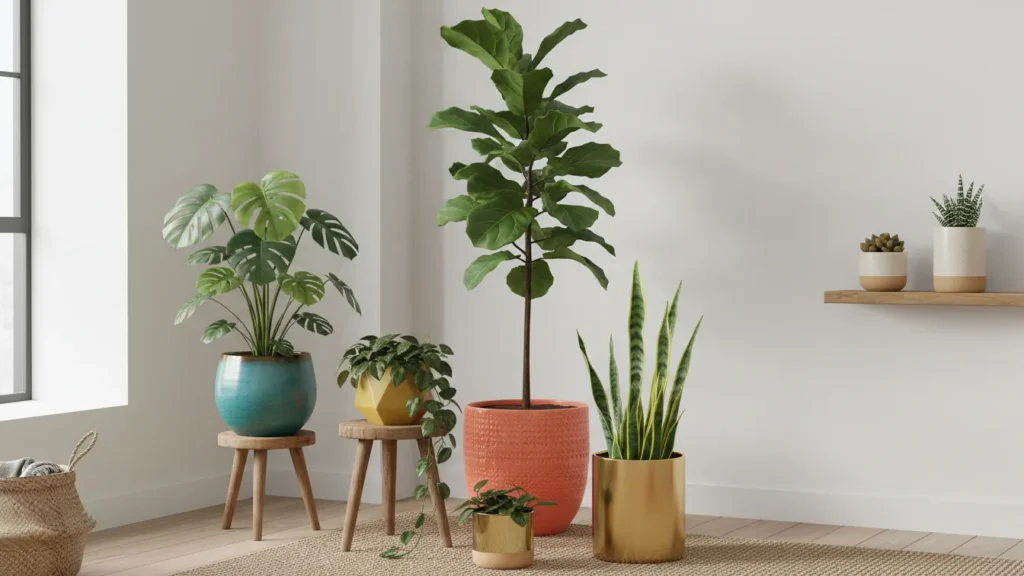
Plants are essential in modern colorful living rooms. They add life, improve air quality, and provide organic green tones that complement virtually any color palette.
Best Plants for Colorful Living Rooms
Large statement plants anchor corners and empty spaces. Consider:
- Fiddle leaf fig trees with their dramatic, sculptural leaves
- Monstera deliciosa for tropical vibes
- Bird of paradise plants that add height and drama
- Rubber plants with burgundy or variegated leaves
Medium plants work on side tables, shelves, or plant stands:
- Pothos in various colors (golden, marble, neon)
- Philodendrons with heart-shaped or split leaves
- Snake plants for low-maintenance vertical interest
- Prayer plants with colorful, patterned foliage
Small plants fill spaces on coffee tables and bookcases:
- Succulents in colorful containers
- Air plants displayed in unique holders
- Peperomia varieties with interesting colors and textures
Colorful Planters and Pots
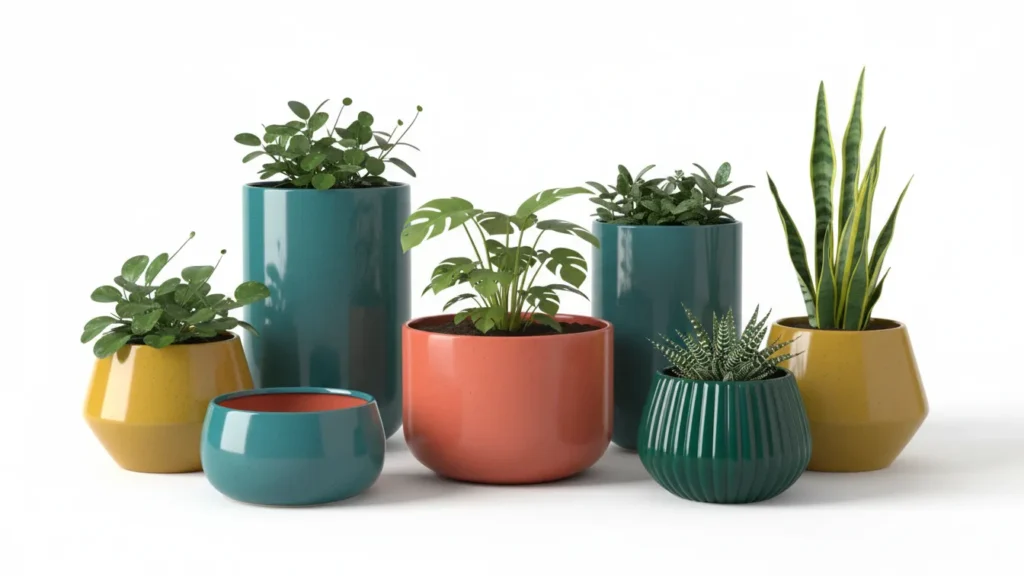
Your planters can contribute significantly to your color scheme.
Ceramic pots in bold, saturated colors look stunning with green plants. A cobalt blue planter with a trailing pothos? Perfection. A coral-colored pot with a snake plant? Yes, please.
Painted terracotta offers a more budget-friendly option. You can DIY these in any color to perfectly match your palette. Plus, terracotta breathes, which many plants prefer.
Modern geometric planters in various colors create a collected, curated look. Mix shapes, sizes, and colors while keeping the style consistent for a cohesive modern feel.
Group plants in odd numbers (3, 5, 7) at varying heights. This creates visual interest and makes even a small plant collection feel intentional and designed.
Styling and Decorative Accessories
This is where your modern colorful living room gets its personality. Accessories are the final layer that makes a space feel complete and personal.
Books and Magazines as Decor
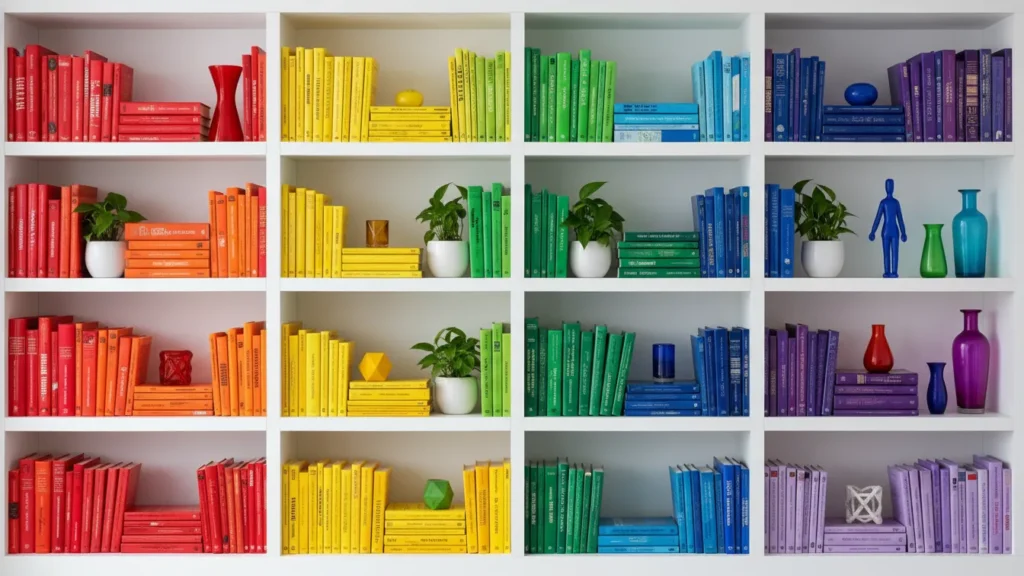
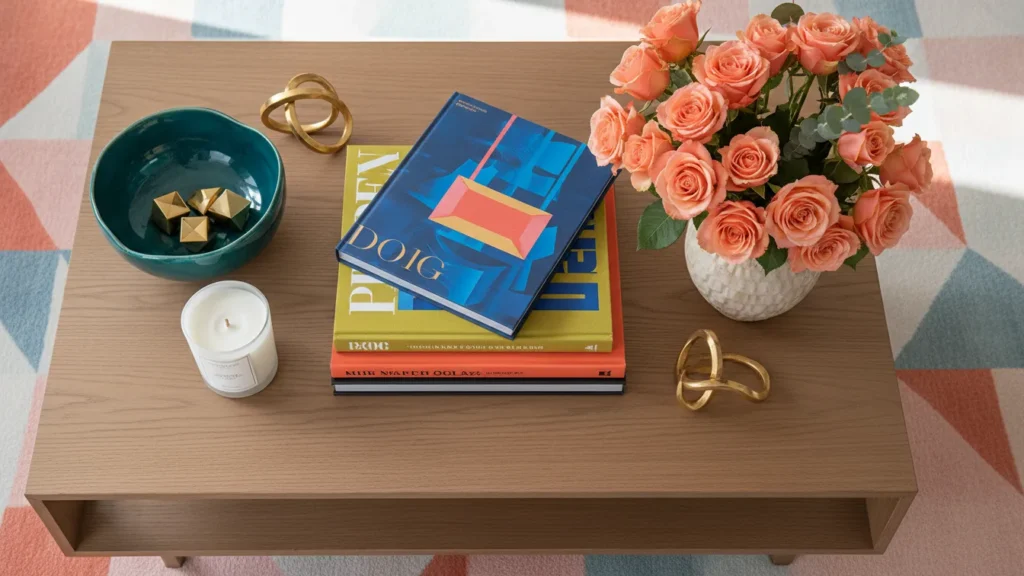
Colorful books are functional art. Coffee table books with vibrant covers add instant sophistication and color. Stack them on your coffee table, shelves, or side tables.
Arrange books by color on your shelving for a “rainbow bookshelf” effect. This looks stunning in modern colorful living rooms and has become hugely popular on social media. It’s practical too—you’ll actually remember where books are based on their color.
Display magazine covers that complement your color scheme. Frame particularly beautiful covers as artwork, or use a magazine rack that shows off the colorful spines and covers.
Vases, Sculptures, and Art Objects
Decorative objects in your color palette tie everything together.
Vases in various shapes, sizes, and colors create visual interest on shelves and tables. You don’t always need to fill them with flowers—empty colorful vases are sculptural in their own right.
Art glass pieces add luminosity and sophistication. Colored glass bowls, paperweights, or abstract sculptures catch light beautifully and add jewel-like pops of color.
Sculptural objects in metals, wood, or ceramic provide textural variety. Look for pieces in your accent colors to reinforce your color scheme without being too matchy-matchy.
The rule of three works magic with accessories. Group items in threes of varying heights for balanced, professional-looking vignettes.
Personal Collections and Display Ideas
Your modern colorful living room should reflect your interests and travels.
Gallery walls can include anything: colorful plates, textile art, vintage posters, family photos in colorful frames, or mixed media collections. The key is using your color scheme to create cohesion among diverse elements.
Open shelving displays colorful collections—pottery, glassware, vintage cameras, vinyl records, or any objects you love. Mix books with decorative items, plants, and personal treasures for shelves that tell your story.
Shadow boxes and display cases work for smaller collections—enamel pins, vintage toys, or ephemera—while keeping them dust-free and organized.
Common Mistakes to Avoid
Let’s talk about what NOT to do. I’ve seen these mistakes in countless homes, and they’re all easily avoidable.
Overdoing the Color
The biggest mistake? Thinking “colorful” means “everything bright all at once.”
Too many colors create visual chaos. Stick to your 60-30-10 rule and your chosen color palette. Just because you love purple doesn’t mean it has to fight with your orange and teal scheme.
Give your eyes rest. Every colorful element needs neutral space around it to breathe. This is why white walls remain popular even in colorful living rooms—they provide that essential visual break.
Remember: impactful doesn’t mean overwhelming. Some of the most stunning modern colorful living rooms I’ve seen use just 2-3 colors, repeated strategically throughout the space.
Ignoring Scale and Proportion
Furniture that’s too large or too small throws off your entire design.
Your sofa should be proportional to your room size. A massive sectional in a small space feels oppressive, while a tiny loveseat in a large room looks lost.
Art needs appropriate scale too. A tiny painting on a huge wall feels like an afterthought. Either group smaller pieces together or invest in larger-scale art that commands the space.
Accessories follow the same rule. Oversized decorative objects on a small coffee table create clutter, while tiny objects on a large shelf disappear.
Poor Lighting Choices
Lighting mistakes kill even the best color schemes.
Single overhead lights create harsh shadows and don’t do colors justice. You need layered lighting from multiple sources at different heights.
Wrong color temperature matters too. Cool-toned bulbs can make warm colors look muddy, while warm bulbs can make cool colors look dingy. Use bulbs with high CRI (Color Rendering Index) above 90 to show your colors accurately.
Insufficient lighting makes colorful rooms feel dark and cave-like rather than vibrant and energizing. When in doubt, add more light sources.
Budget-Friendly Tips for Creating a Colorful Living Room
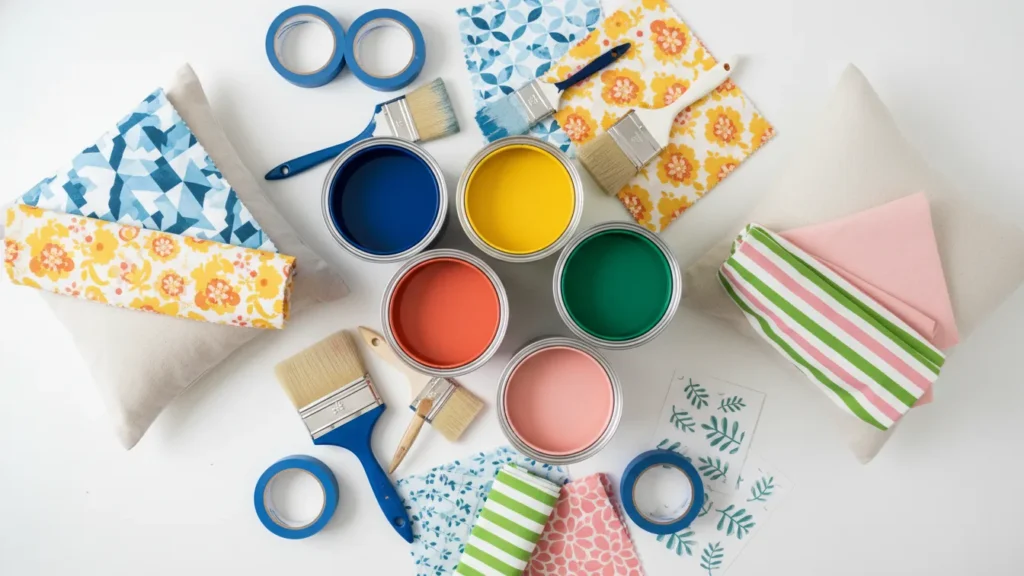
You don’t need a designer budget to create a stunning modern colorful living room. Here’s how to do it smart.
DIY Projects and Upcycling
Paint is your cheapest transformation tool. A few cans of quality paint can completely change your space.
- Paint furniture you already own in bold colors
- DIY artwork using canvas, paint, and painter’s tape
- Reupholster dining chairs or ottomans with colorful fabric
- Paint planters in your color scheme
- Create throw pillow covers from fabric remnants
Thrift stores and estate sales are goldmines for furniture bones. That dated chair with good structure? Reupholster it. That solid wood side table? Sand and paint it in your accent color.
Where to Splurge vs. Save
Splurge on:
- Quality sofa (you’ll have it for years)
- Paint (cheap paint looks cheap)
- Lighting fixtures (they’re statement pieces)
- One area rug (anchors your room)
Save on:
- Throw pillows (easily swapped seasonally)
- Accessories (mix high and low)
- Curtains (affordable options look great)
- Artwork (prints vs. originals)
Many affordable brands now offer excellent modern furniture in colorful options. IKEA, Target, and Wayfair all have stylish pieces at reasonable prices.
Shopping Smart for Colorful Décor
Sales and seasonal clearances are your friends. Buy end-of-season items (like throw blankets in spring or summer cushions in fall) at significant discounts.
Online marketplaces like Facebook Marketplace, Craigslist, and OfferUp often have beautiful furniture for a fraction of retail prices. People moving or redecorating frequently sell barely-used pieces.
Discount retailers like HomeGoods, TJ Maxx, and Marshalls constantly rotate inventory with colorful home decor at great prices. Visit frequently to find unique pieces.
Outlet stores from major brands offer deep discounts on discontinued colors and styles—perfect for colorful living room enthusiasts looking for deals.
Room Size Considerations
Not all living rooms are created equal. Let’s talk about adapting colorful design to different spaces.
Small Living Room Color Strategies
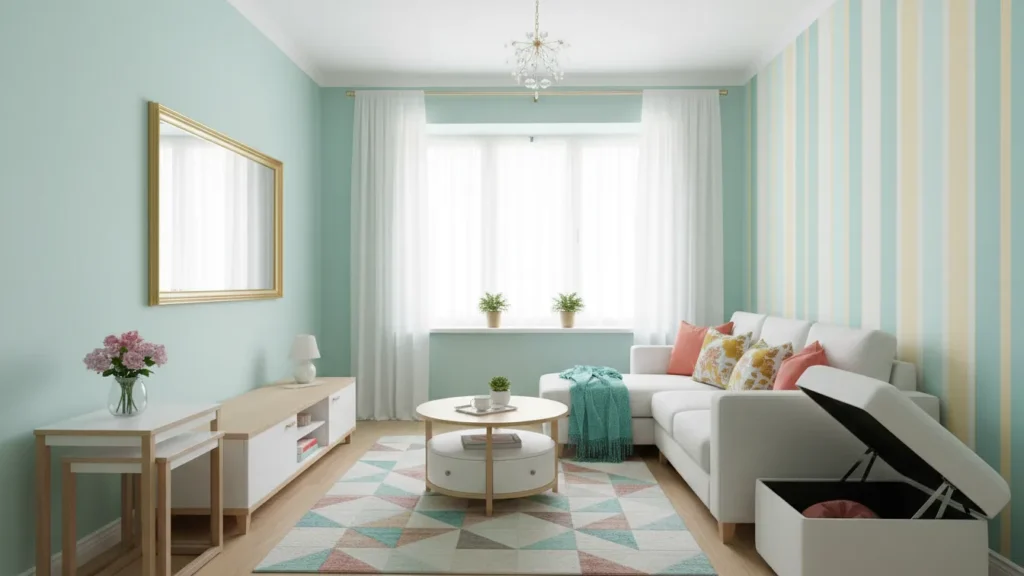
Small living rooms can absolutely handle color—you just need to be strategic.
Light, saturated colors make small spaces feel larger. Think bright coral, sunny yellow, or light teal rather than deep, dark hues. These reflect more light and create an airy feeling.
Vertical stripes on one accent wall draw eyes upward, making ceilings feel higher. Use two or three colors from your palette in a striped pattern.
Multifunctional furniture in bold colors serves double duty without cluttering. A colorful ottoman that provides seating, storage, and a coffee table? Perfect.
Mirrors with colorful frames expand the space visually while contributing to your color scheme. Place them strategically to reflect windows and light.
Less is more in small spaces. Choose fewer, more impactful colorful pieces rather than lots of small accessories that create visual clutter.
Large Living Room Design Tips
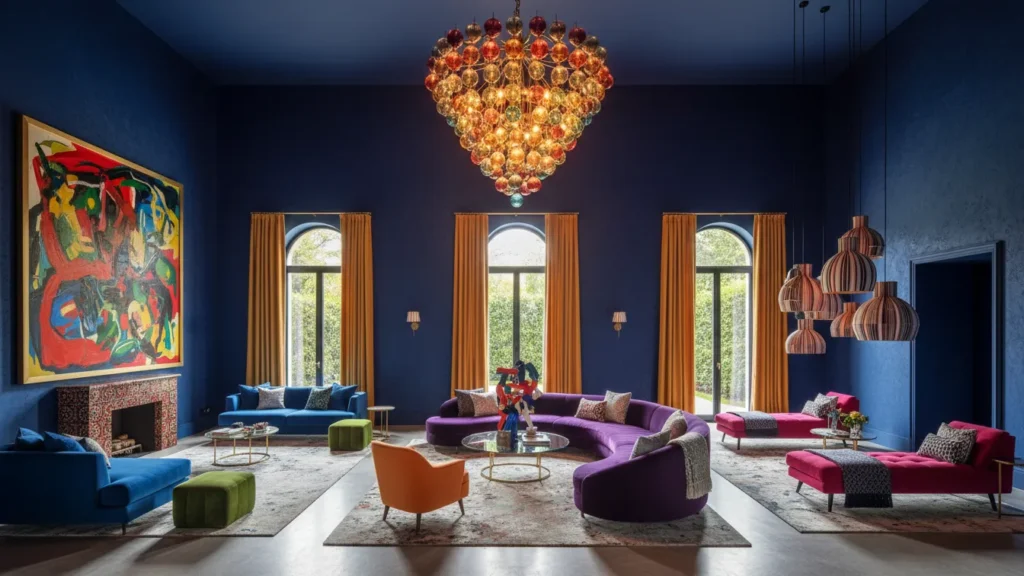
Large living rooms give you permission to go bold—really bold.
Dark, saturated colors create intimacy in vast spaces. Deep emerald, navy, or burgundy walls can actually make oversized rooms feel cozier without claustrophobia.
Multiple seating areas in different color schemes define zones. Maybe a bright conversation area near windows and a calmer reading nook in a corner—both tied together by repeated colors.
Large-scale art and furniture anchor big spaces. That oversized sectional in a bold color? It works here. That 6-foot abstract painting? Perfect.
Statement light fixtures make sense in large living rooms where they won’t overwhelm. A dramatic colorful chandelier or a cluster of pendant lights becomes a focal point.
Don’t leave walls bare. In large rooms, empty walls feel unfinished. Use colorful art, wallpaper, or architectural elements to add interest.
Maintaining Your Colorful Living Room
Creating a beautiful space is one thing. Keeping it that way requires some thought.
Cleaning Colorful Fabrics and Furniture

Bold colored fabrics show wear differently than neutrals.
Velvet upholstery requires gentle brushing in the direction of the pile to maintain its look. Blot spills immediately—don’t rub—and consider professional cleaning annually.
Linen is more forgiving and often machine-washable (check tags). It naturally wrinkles, which is part of its charm, but you can steam it if you prefer a crisp look.
Leather in colors needs conditioning every 6-12 months to prevent fading and cracking. Use color-matched products to maintain vibrancy.
Sunlight is color’s enemy. UV-protective window film prevents fading without blocking light. Rotate throw pillows and cushions periodically so they wear evenly.
Seasonal Color Updates
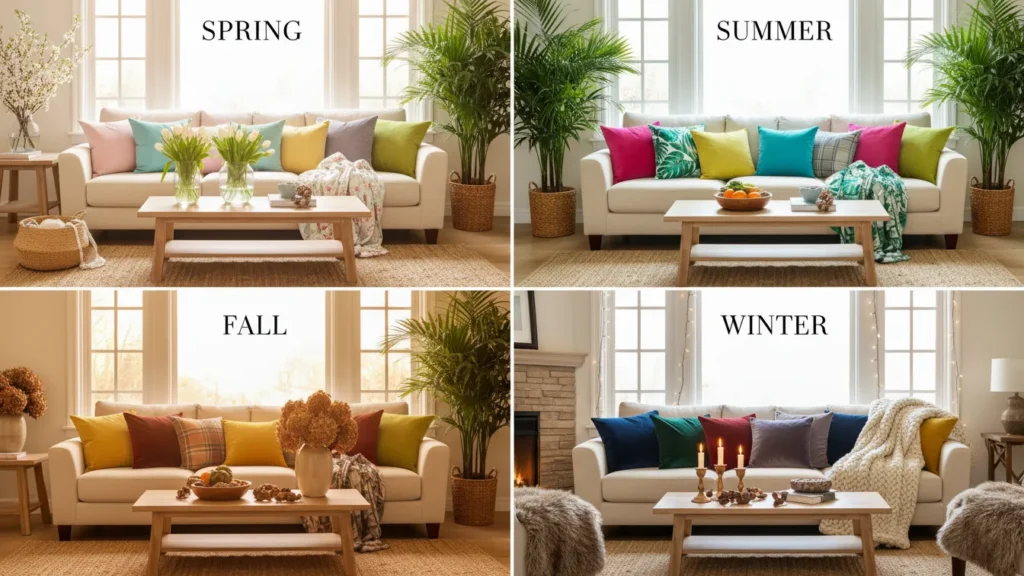
One benefit of colorful design? Easy seasonal refreshes.
Summer: Swap in lighter, brighter accessories—coral, yellow, turquoise. Add lightweight throws and sheer curtains.
Fall: Introduce
Continue
Dec 18, 2026
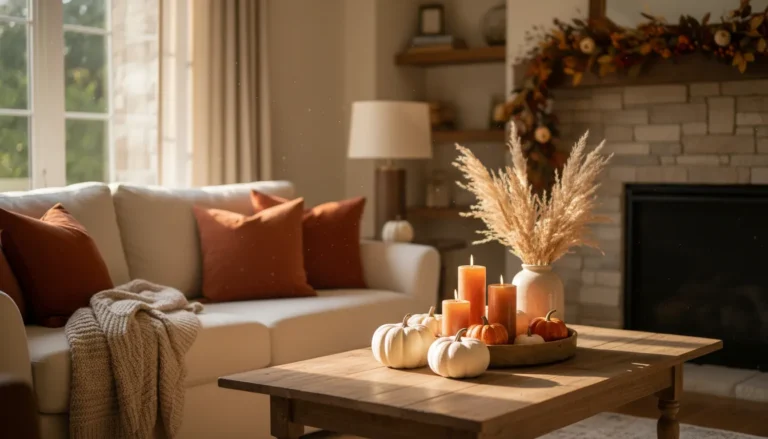
deeper tones—burnt orange, burgundy, mustard. Add textured throws and swap pillow covers.
Winter: Layer warm colors—deep reds, rich purples, forest greens. Add cozy blankets and heavier curtains.
Spring: Brighten up with pastels and fresh colors—mint, lilac, soft pink. Swap heavy textiles for lighter ones.
This approach keeps your living room feeling fresh without major overhauls. You’re just swapping out 20% of your accessories seasonally, not redoing everything.
Step-by-Step Guide to Designing Your Modern Colorful Living Room
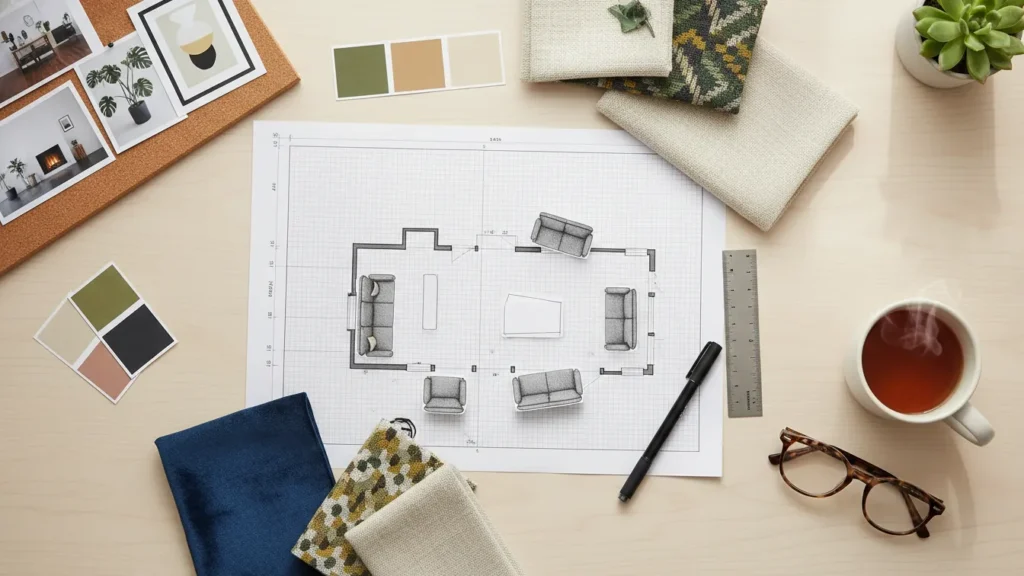
Ready to actually do this? Here’s your action plan.
Planning and Preparation
Step 1: Measure your space accurately. Know your room dimensions, ceiling height, and window locations. This prevents expensive furniture mistakes.
Step 2: Assess existing elements you’re keeping. Maybe you already have a sofa or rug you love. Build your color scheme around these anchors.
Step 3: Create a mood board. Use Pinterest, magazine clippings, or apps like Canva to collect inspiration images. Look for patterns in what you’re drawn to—these reveal your color preferences.
Step 4: Choose your color palette using the principles we discussed. Write it down: dominant color, secondary color, accent color, and neutrals.
Step 5: Set your budget realistically. Allocate the highest percentage to items you’ll keep longest (sofa, rug, lighting), and save on easily changed accessories.
Implementation Steps
Step 6: Start with the biggest elements—paint or wallpaper your walls first. This transforms the space dramatically and gives you a foundation to build on.
Step 7: Position your major furniture pieces. Start with your sofa, then add accent chairs and coffee table. Ensure good traffic flow and conversation groupings.
Step 8: Layer in your lighting. Install or replace light fixtures before smaller accessories. Remember ambient, task, and accent lighting.
Step 9: Add textiles—area rug, curtains, throw pillows, and blankets. These bring your color palette to life and add comfort.
Step 10: Style with accessories. Add plants, books, art objects, and personal items. Step back frequently to assess balance and adjust as needed.
Final Touches and Adjustment
Step 11: Live with your space for a week before making final adjustments. You’ll notice what works and what doesn’t in different lighting and times of day.
Step 12: Fine-tune your color distribution. Does one area feel too heavy with color? Does another need more? Move or swap accessories until the balance feels right.
Step 13: Add personal elements—photos, souvenirs, collections. These make your modern colorful living room uniquely yours rather than showroom-perfect but soulless.
Step 14: Take photos from various angles. Not just for social media—these help you see your space objectively and spot any remaining issues.
Step 15: Establish a maintenance routine. Quick daily tidying keeps colorful spaces from looking chaotic, and regular cleaning maintains your fabrics and furniture.
Real-Life Examples and Case Studies
Let’s look at how real people have created stunning modern colorful living rooms.
Small Apartment Transformation
The Challenge: A 200-square-foot living room in a rental apartment with white walls and minimal natural light.
The Solution: The homeowner chose a teal and coral color palette with gold accents. Instead of painting (not allowed), they used:
- A large colorful area rug as the foundation
- A neutral grey sofa with abundant teal and coral throw pillows
- Floor-to-ceiling curtains in coral to add height
- Multiple lighting sources to brighten the space
- Gold-framed mirrors to reflect light and add space
- Teal painted bookshelf (easily changed back when moving)
The Result: A vibrant, energetic space that feels much larger and more personal. Total investment: under $1,500.
Family-Friendly Colorful Design
The Challenge: A large living room that needed to work for young children, entertaining, and daily family life.
The Solution: The family chose durable, washable fabrics in a mustard, navy, and emerald color scheme:
- Performance fabric sofa in navy (stain-resistant)
- Washable area rug with geometric pattern
- Leather accent chairs in mustard (easy to wipe clean)
- Lower shelves with closed storage for toys in colorful bins
- Higher shelves displaying colorful books and adult decor
- Indoor-outdoor fabric pillows that can handle spills
The Result: A colorful, modern space that’s both sophisticated and kid-proof. The family regularly entertains without worrying about damage.
Expert Tips from Professional Interior Designers
Professional designers have shared these insights about colorful living room design.
Color Psychology in Practice
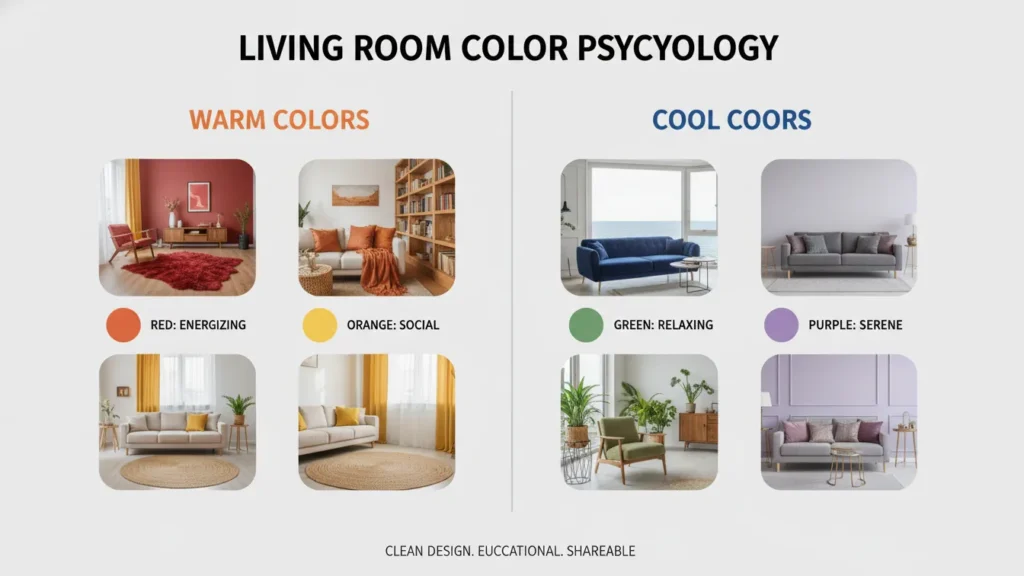
Interior designer Sarah Richardson explains that color choices should reflect how you want to feel in the space. “Active families need energizing colors like oranges and yellows in living rooms where they gather. Homes focused on relaxation benefit from cooler tones like blues and greens.”
She recommends testing paint samples for at least a week, observing them in morning, afternoon, and evening light. Colors shift dramatically based on lighting conditions.
Balancing Trends with Timelessness
Designer Bobby Berk advises: “Trends are fun, but your living room should outlast Instagram’s latest obsession. Choose colorful elements you genuinely love, not just what’s trending. You’ll live with this longer than the trend lasts.”
His strategy: invest in timeless furniture silhouettes in neutral or classic colors, then add trendy colorful accessories you can swap out affordably as your taste evolves.
The Importance of Quality
Designer Nate Berkus emphasizes quality over quantity: “Better to have one spectacular colorful piece—an amazing sofa or a stunning area rug—than a room full of cheap colorful accessories. Quality pieces become more beautiful with age; cheap ones just look shabby.”
He notes that quality fabrics and furniture maintain their color better over time, making them more economical long-term despite higher upfront costs.
Helpful Comparison Table: Color Palette Options
| Color Scheme | Best For | Mood Created | Difficulty Level | Recommended Neutrals |
|---|---|---|---|---|
| Teal & Coral | Modern homes seeking energy | Energetic, coastal, fresh | Beginner | White, grey, natural wood |
| Mustard & Navy | Sophisticated, mature spaces | Confident, grounded, warm | Beginner | Charcoal, cream, brass |
| Emerald & Blush | Luxurious, feminine aesthetics | Elegant, romantic, rich | Intermediate | White, gold, soft grey |
| Terracotta & Teal | Bohemian-modern fusion | Earthy, balanced, organic | Intermediate | Cream, natural wood, black |
| Jewel Tones Mixed | Bold, eclectic personalities | Dramatic, luxurious, rich | Advanced | Black, white, gold accents |
| Primary Colors | Playful, artistic homes | Energetic, creative, bold | Advanced | White, black, grey |
| Monochromatic | Minimalists who want color | Sophisticated, cohesive, calm | Beginner | Same color family in lighter/darker tones |
Conclusion: Creating Your Perfect Modern Colorful Living Room
Here’s what I want you to remember: creating a modern colorful living room isn’t about following rigid rules—it’s about expressing yourself while maintaining balance and intention.
We’ve covered everything from color theory and furniture selection to lighting strategies and styling tips. You now have the knowledge to transform your living room from bland to breathtaking.
The beauty of colorful design is that it evolves with you. Start with one bold element—maybe an accent wall or a colorful sofa—and build from there. You don’t have to do everything at once. In fact, rooms that develop gradually often feel more authentic and collected.
Don’t be afraid to experiment. Paint can be changed. Accessories can be swapped. Furniture can be rearranged. The worst thing you can do is stay stuck in a space that doesn’t inspire you because you’re afraid of making a mistake.
Your living room should make you happy every time you walk into it. It should reflect who you are and how you want to live. If bold colors do that for you, embrace them confidently.
Ready to Transform Your Space?
Start small if you’re nervous. Add a few colorful throw pillows this week. Paint that one wall next month. Replace your area rug when you’ve saved up. Each step forward creates momentum and confidence.
Share your modern colorful living room journey with others. The design community is incredibly supportive, and you’ll find inspiration and encouragement from people making similar transformations. Tag your photos with #ModernColorfulLiving to connect with others.
And remember—this is your home, your sanctuary, your creative canvas. Make it as colorful, as modern, and as uniquely you as possible. Life’s too short for boring rooms.
Now get out there and add some serious color to your life! Your modern colorful living room is waiting to happen. 🎨
Want more design inspiration? Bookmark this guide, follow leading interior design blogs like Apartment Therapy, Design*Sponge, and The Spruce, and don’t be afraid to trust your instincts. Your colorful living room transformation starts today!