Creating Your Dream Fantasy Medieval Bedroom: A Complete Guide to Castle-Worthy Sleep Spaces
Introduction
Ever dreamed of falling asleep in a castle tower, surrounded by tapestries and candlelight? You’re not alone. There’s something magical about fantasy medieval bedrooms that captures our imagination—maybe it’s all those hours we’ve spent watching Game of Thrones or reading fantasy novels. Here’s the thing: you don’t need a castle to create that enchanting medieval atmosphere.
I’ve spent years helping people transform ordinary bedrooms into extraordinary medieval-inspired retreats, and I’m going to show you exactly how to do it. Whether you’re working with a small apartment bedroom or a spacious master suite, this guide will walk you through everything you need to know about creating an authentic fantasy medieval bedroom that feels both magical and comfortable.
Let’s dive into the world of Gothic architecture, medieval furniture, and Renaissance décor to create your perfect sleeping sanctuary.
Understanding the Fantasy Medieval Aesthetic
Before we start hanging tapestries and buying four-poster beds, it’s important to understand what actually makes a bedroom feel medieval. The medieval period spanned roughly from the 5th to the 15th century, and bedroom styles varied wildly across different regions and social classes.
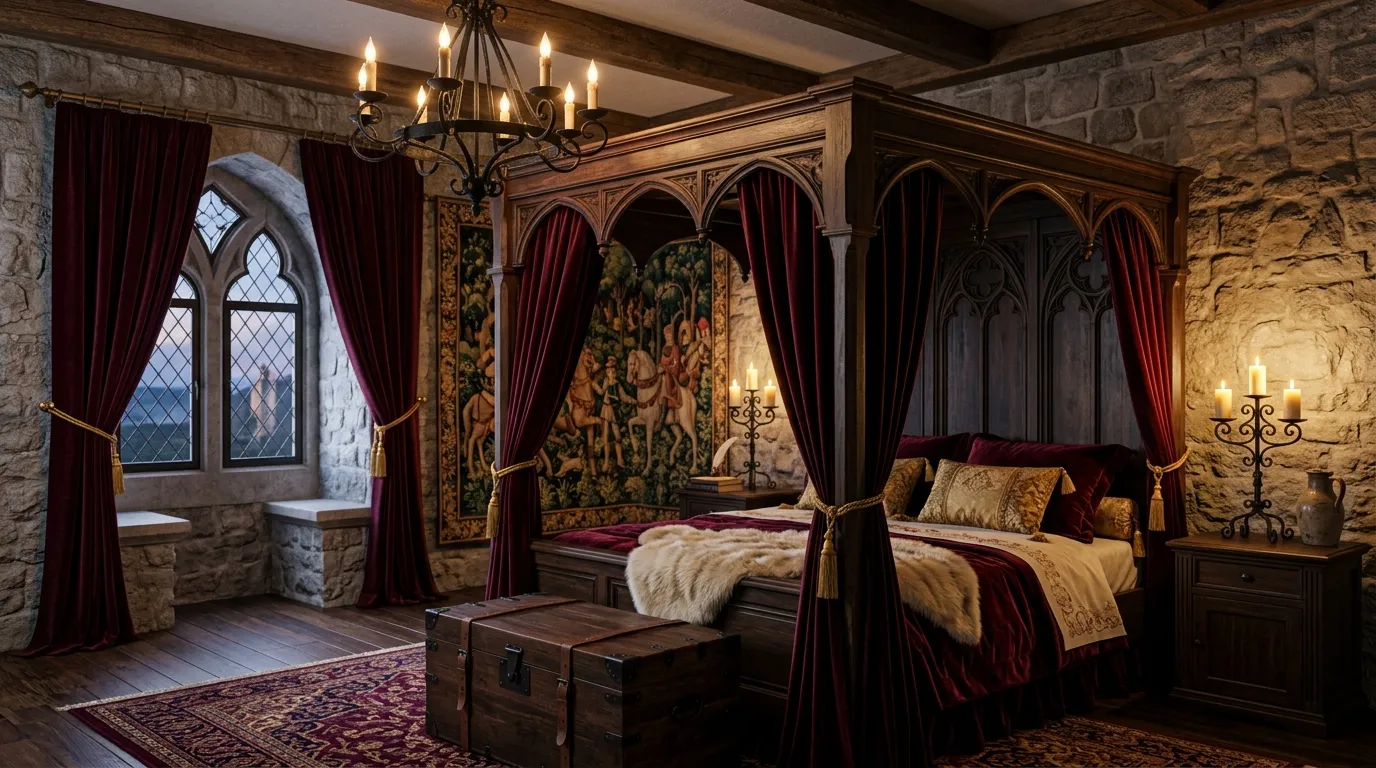
What I love about this style is its versatility. You can go full castle chamber with stone walls and heavy velvet curtains, or you can incorporate subtle medieval touches into a modern space. The key is understanding the core elements that define this aesthetic.
Key Elements of Medieval Design
Medieval bedrooms typically featured:
- Heavy, dark wood furniture
- Stone walls or wood paneling
- Rich, deep colors like burgundy, forest green, and royal blue
- Minimal lighting (they didn’t have electricity, after all)
- Functional pieces that served multiple purposes
- Hand-crafted details and ornate carvings
Now here’s where it gets interesting—medieval nobles actually had pretty sparse bedrooms compared to what we might imagine. The bed was often the most important and expensive piece in the room, sometimes worth more than the entire house!
Choosing the Right Color Palette for Your Medieval Bedroom
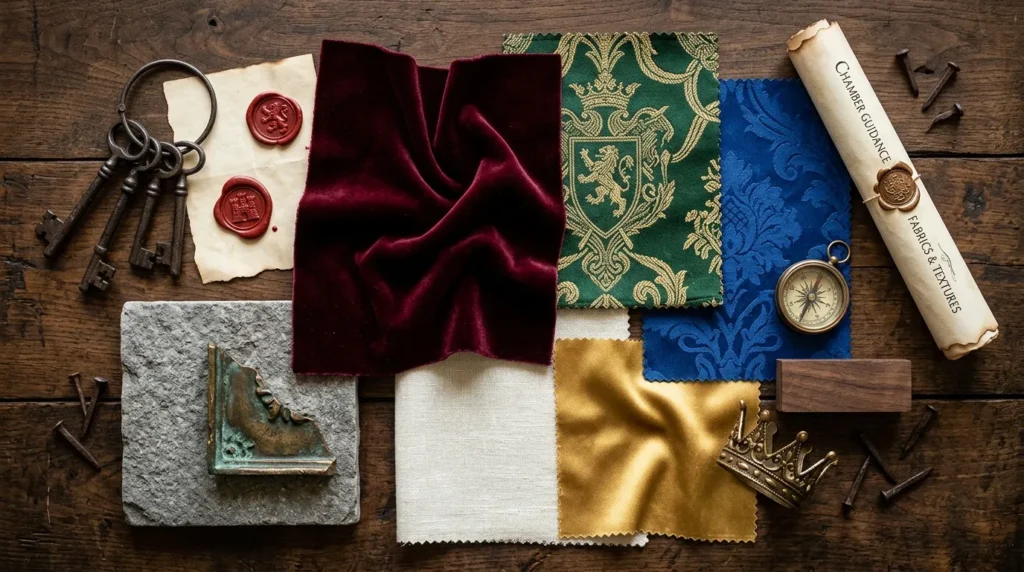
Color is absolutely crucial when you’re creating a fantasy medieval bedroom. You might be wondering what colors actually feel authentically medieval without making your room feel dark and depressing.
In my experience, the best approach is to use rich, saturated colors as your base and layer in metallic accents. Think jewel tones—the kind of colors you’d see in medieval stained glass windows or illuminated manuscripts.
Primary Color Options
Deep reds and burgundies create that royal chamber feel. These were expensive dyes in medieval times, so they signified wealth and power. Pair burgundy walls with gold accents and dark wood furniture for an instantly regal atmosphere.
Forest greens and emeralds bring in that connection to nature that was so important in medieval life. Green was actually one of the more common colors in medieval décor because natural green dyes were relatively accessible.
Royal blues and navy evoke the night sky and create a calming, contemplative space. Blue was incredibly expensive in the medieval period, making it perfect for a luxury bedroom design.
Accent Colors That Work
Don’t forget about your accent colors. Gold, bronze, and silver work beautifully as metallic accents. You can incorporate these through candle holders, wall sconces, picture frames, and decorative objects.
Cream and off-white work well for bedding and curtains, creating contrast against darker walls. Medieval bedrooms often had white linens, so this keeps things historically inspired while preventing the room from feeling too dark.
Selecting Medieval-Style Furniture
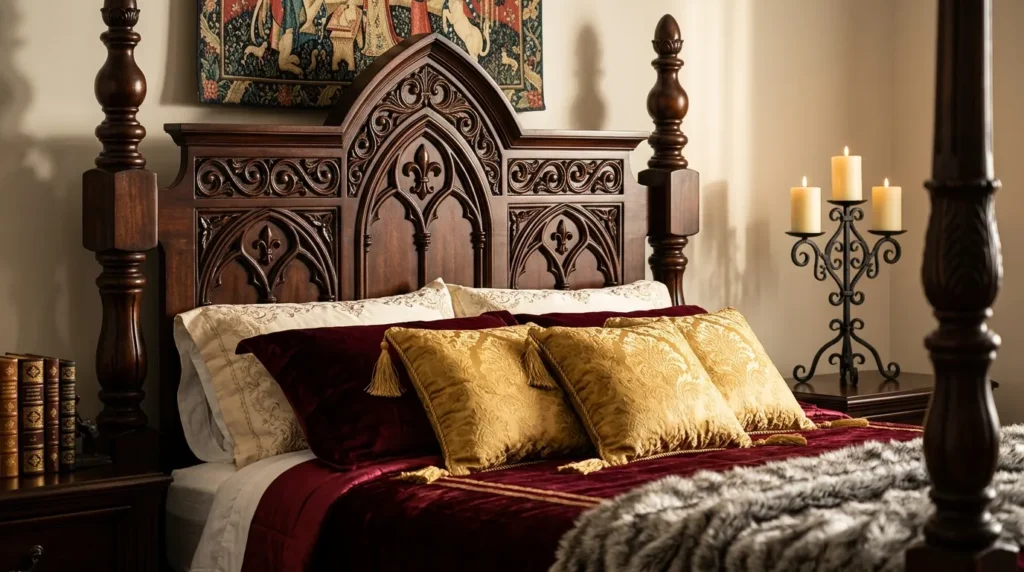
Here’s where your fantasy medieval bedroom really starts to take shape. Medieval furniture was built to last—we’re talking solid wood construction, hand-carved details, and pieces that could survive generations.
The Bed: Your Room’s Centerpiece
The four-poster bed is the ultimate medieval bedroom statement piece. In medieval times, beds were enclosed with heavy curtains for warmth and privacy. You don’t have to go full canopy, but a substantial wooden bed frame with tall posts instantly creates that castle chamber vibe.
What I love about modern four-poster beds is that you can find them in various sizes and price points. Look for beds made from dark wood like walnut, mahogany, or stained oak. Hand-carved details on the headboard and posts add authenticity.
If a full four-poster feels too overwhelming for your space, consider a bed with just a substantial wooden headboard featuring Gothic arches or carved details.
Storage Solutions: Chests and Trunks
Medieval folks didn’t have closets—they used wooden chests and trunks for storage. These pieces are incredibly practical for a fantasy medieval bedroom because they provide storage while reinforcing your theme.
Place a large wooden trunk at the foot of your bed for blanket storage. Use smaller chests as nightstands or arrange them in a corner for a functional reading nook with built-in storage.
Seating and Additional Furniture
A wooden bench with carved details works perfectly at the foot of the bed or under a window. In medieval castles, window seats were common gathering spots—they caught the limited daylight available.
Consider adding a high-backed wooden chair, especially if you’re creating a reading corner. Medieval chairs often featured leather or velvet upholstery in rich colors, secured with decorative nails.
A writing desk adds functionality while maintaining the period aesthetic. Look for pieces with iron hardware, dovetail joints, and substantial construction.
Wall Treatments and Architectural Details
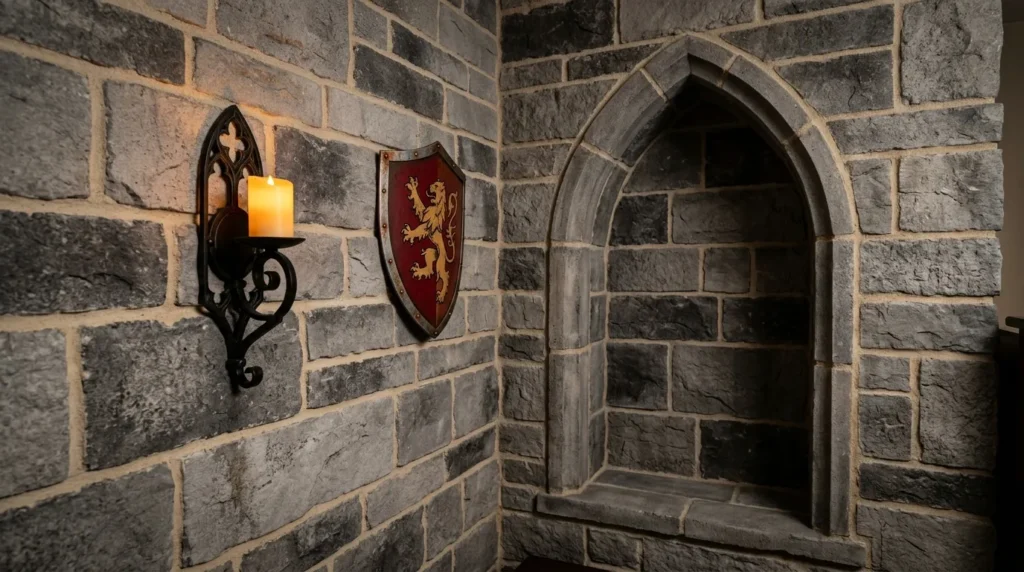
Now here’s where it gets really fun—transforming your walls to look like they belong in a medieval castle. You’ve got several options depending on your budget and commitment level.
Creating Stone Walls
Faux stone walls are the holy grail of medieval bedroom design. You can achieve this look several ways:
Stone veneer panels are the most realistic option but require installation. They’re worth it if you’re committed to the look long-term.
Textured wallpaper that mimics stone is easier to install and remove. Modern stone-look wallpapers are surprisingly convincing, especially in softer lighting.
Faux stone painting techniques work if you’re handy with a paintbrush. There are excellent tutorials available for creating realistic stone textures with paint and sponges.
You don’t need to cover every wall in stone—even one accent wall creates a strong medieval atmosphere.
Wood Paneling and Wainscoting
Dark wood paneling was common in medieval manor houses and castles. You can install actual wood paneling or use paintable wainscoting in a dark stain.
Board and batten walls painted in deep colors create vertical interest while nodding to medieval construction techniques. This is more affordable than full paneling but still delivers visual impact.
Exposed Beams
If you’re lucky enough to have exposed ceiling beams, play them up! If not, you can add faux wood beams that look surprisingly authentic. Dark-stained beams against a lighter ceiling create architectural interest and that castle hall feeling.
Textiles and Fabrics: Layering for Authenticity
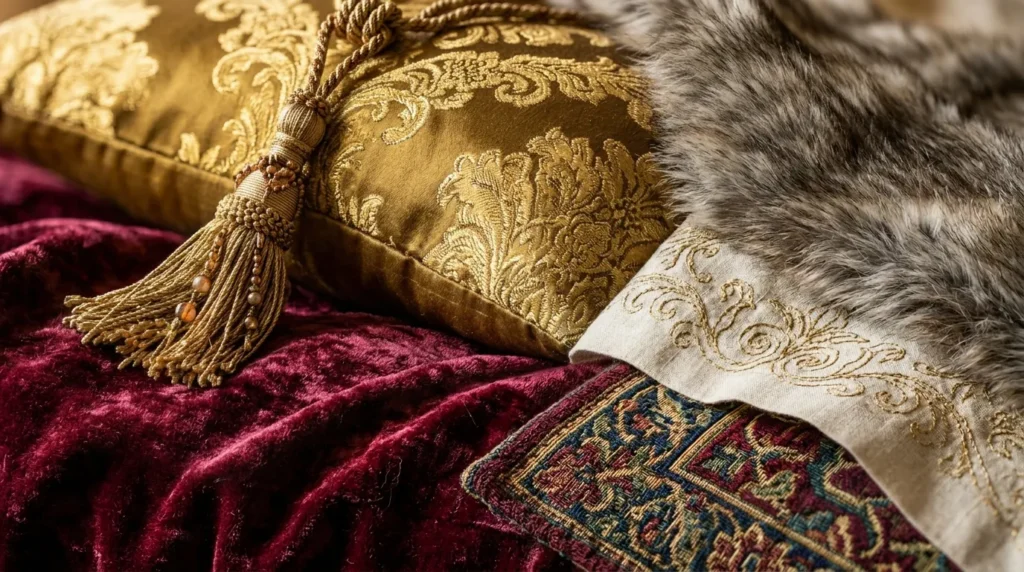
Medieval rooms were drafty, so people layered textiles for warmth and comfort. This layering also creates visual richness that’s essential for an authentic fantasy medieval bedroom.
Tapestries and Wall Hangings
Tapestries are absolutely essential for this style. In medieval times, they weren’t just decorative—they provided insulation and showcased wealth. Look for tapestries featuring:
- Medieval hunting scenes
- Heraldic designs and coat of arms
- Nature scenes with medieval styling
- Castle and landscape imagery
- Gothic or Celtic patterns
Hang a large tapestry behind your bed as an alternative to a traditional headboard, or use smaller pieces throughout the room.
Bedding Selections
Layer your bedding for that luxurious medieval look. Start with a heavy coverlet or velvet bedspread in a rich color. Add decorative pillows in complementary shades with embroidered details or brocade fabrics.
Fur throws—real or faux—add texture and were common in medieval bedrooms for warmth. Drape one across the foot of your bed or over a chair.
Curtains and Drapes
Heavy velvet curtains or brocade drapes in deep colors frame windows beautifully while blocking light and drafts. If you have a canopy bed, consider fabric draping around the posts. You can use curtain tie-backs with rope or tassels for added detail.
Lighting: Creating Medieval Ambiance
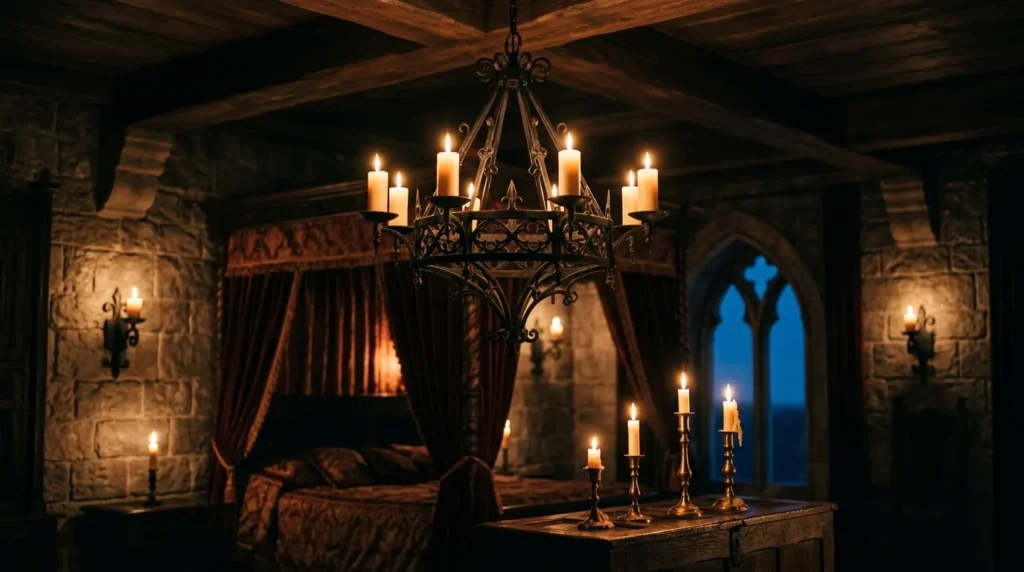
Medieval bedrooms relied on candlelight, oil lamps, and firelight for illumination. Obviously, we want our rooms functional for modern life, but you can create authentic-feeling lighting with strategic choices.
Ambient Lighting
Iron chandeliers with candle-style bulbs work beautifully as overhead lighting. Look for fixtures with Gothic or medieval-inspired designs—think black iron with curving arms.
Wall sconces flanking your bed or placed throughout the room create that castle lighting effect. Choose designs that mimic torch holders or candle sconces.
Task Lighting
For reading and functional lighting, table lamps with wrought iron bases and parchment-style shades maintain the theme while providing necessary light.
Decorative Lighting
Here’s my favorite trick: use actual candles for ambiance. Pillar candles in iron candelabras, wooden candlesticks, or grouped on trays create authentic medieval atmosphere. Battery-operated candles offer the look without the fire hazard.
Lanterns with LED candles work wonderfully on side tables, chests, or hung from hooks.
Decorative Elements and Accessories

The finishing touches transform a themed bedroom into a truly immersive fantasy medieval bedroom. These details tell the story and create authenticity.
Medieval-Inspired Art and Décor
Framed medieval maps, illuminated manuscript prints, and Renaissance art reproductions work beautifully on walls. Look for pieces featuring:
- Medieval castle scenes
- Knights and heraldry
- Botanical illustrations in medieval style
- Astrological charts and celestial maps
- Medieval weaponry and armor imagery
Weapons and Armor Displays
Decorative swords, shields, and armor pieces make bold statement décor. You can find affordable replica pieces online. Mount a shield with your chosen heraldic design above your bed, or display crossed swords on a wall.
A standing suit of armor—even a partial one—creates an incredible focal point if you have the space and budget.
Books and Manuscripts
Stack leather-bound books on side tables or shelves. Vintage-looking books with ornate covers reinforce the period aesthetic even if they’re modern editions.
Display a replica medieval manuscript or scroll on your writing desk or mounted on the wall.
Mirrors and Frames
Ornate mirrors with carved wooden frames or wrought iron frames add both function and style. Medieval mirrors were small and precious—a large ornate mirror suggests wealth and importance.
Containers and Storage
Ceramic pitchers, wooden bowls, and metal containers displayed on surfaces add authentic touches. These items were daily-use objects in medieval times and ground your design in practical reality.
Creating Themed Zones Within Your Medieval Bedroom
A fantasy medieval bedroom works best when you create distinct areas for different activities. Medieval castle chambers often served multiple purposes, and you can recreate this functionality.
The Sleeping Area
Obviously, your bed is the star here. Frame it with heavy curtains if you have a canopy bed, or use a dramatic tapestry backdrop. Flank the bed with matching side tables—wooden chests or small carved tables work perfectly.
A Reading Nook
Position a comfortable high-backed chair near a window or in a corner. Add a small side table for books and a drink, and place a floor lamp or table lamp nearby. A fur throw over the chair and a stack of leather-bound books complete the scene.
A Writing or Vanity Area
A wooden desk or vanity table creates a practical space that fits the theme. Add a carved wooden chair, an ornate mirror (for a vanity), and period-appropriate accessories like a letter opener, inkwell replica, or candle holders.
A Dressing Area
If space allows, create a dedicated dressing area with a standing mirror, a clothing rack or armoire, and perhaps a wooden bench for sitting while you dress. Medieval nobility had servants to help them dress, but we’ll make do with good furniture placement!
Flooring Options for Medieval Authenticity
What’s beneath your feet matters for creating that complete castle chamber experience. Medieval flooring varied by region and social class, giving you several authentic options.
Stone Flooring
Stone floors are the most authentic choice for recreating a castle bedroom. If you’re renovating, slate tiles or stone-look porcelain tiles in grey or brown tones work beautifully.
For renters or those not ready for permanent changes, stone-look vinyl planks offer a surprisingly convincing alternative that’s easier to install and remove.
Hardwood Floors
Wide-plank hardwood in dark stains looks appropriately medieval. Oak, walnut, or chestnut planks with visible grain and character marks add authenticity.
If you have existing hardwood, consider refinishing in a darker stain to match your medieval aesthetic.
Rugs and Floor Coverings
Layer area rugs over hard flooring for warmth and comfort. Look for:
- Persian-style rugs in rich colors
- Turkish rugs with geometric patterns
- Tapestry-style rugs with medieval imagery
- Faux fur rugs near the bed
Rush matting was common in medieval times and adds interesting texture, though it’s less common today. You might find this in specialty stores or online.
Adding Architectural Features
If you’re really committed to your fantasy medieval bedroom, consider adding architectural elements that create permanent character.
Window Treatments
Gothic arch windows are the ultimate medieval architectural feature, but they’re not practical for most of us. Instead, create the illusion:
Install window frames with pointed arch tops over existing windows. You can build these from wood or buy ready-made Gothic arch frames.
Add decorative iron grillwork over windows for that castle security feel—even if it’s just decorative, it creates the right atmosphere.
Doorways and Alcoves
Arched doorways or doorway surrounds with carved details transform ordinary entries. You can add architectural molding around doors to create Gothic arch shapes.
If you have or can create an alcove, this becomes the perfect spot for your bed, a reading nook, or a vanity area. Medieval chambers often had sleeping alcoves for warmth and privacy.
Ceiling Details
Coffered ceilings or decorative ceiling tiles add architectural interest above. Faux wood beams we mentioned earlier can be arranged in herringbone patterns or grid patterns for added visual impact.
Incorporating Modern Amenities Discreetly
Here’s a challenge with fantasy medieval bedrooms—we want the medieval aesthetic but need modern comfort and technology. The key is clever integration.
Hiding Electronics
Medieval-style cabinets can conceal TVs when not in use. Carved wooden armoires work perfectly for this—close the doors and your TV disappears.
Charge devices inside decorative boxes or wooden chests to keep cords and modern tech hidden. Run cords behind furniture or use cable management systems in colors that blend with your walls.
Climate Control
Wrought iron vent covers replace standard plastic ones without breaking the theme. You can find decorative vent covers online in Gothic and medieval-inspired designs.
Position humidifiers and fans inside wooden cabinets or behind decorative screens when possible.
Modern Lighting Integration
Install dimmer switches on all lighting so you can control the mood—medieval chambers were dimly lit, and you’ll want that flexibility.
Use smart bulbs that look like candle flames in your chandeliers and wall sconces. You can control brightness and even flame flicker effects with your phone while maintaining the illusion.
Budget-Friendly Medieval Bedroom Ideas
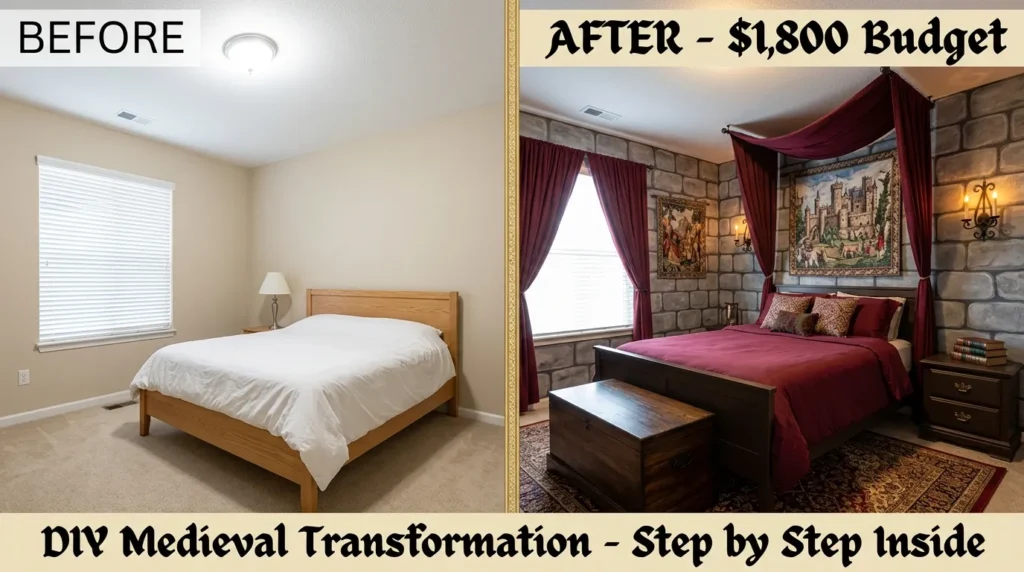
You don’t need a castle-sized budget to create a fantasy medieval bedroom. I’ve helped people create stunning medieval spaces at various price points—here’s how to do it affordably.
DIY Projects That Save Money
Paint existing furniture in dark stains or colors instead of buying new. Chalk paint in deep browns and blacks transforms modern furniture into medieval-looking pieces.
Create your own tapestries by printing medieval artwork on fabric or using fabric panels with medieval patterns. Hang them on curtain rods or dowels.
Make faux stone walls with paint and sponges—this costs only the price of paint and some elbow grease.
Build your own bed canopy using curtain rods mounted to the ceiling and fabric from fabric stores. This creates the four-poster effect without buying an expensive bed.
Shopping Smart
Thrift stores and antique shops are goldmines for medieval bedroom pieces. Look for:
- Wooden chests and trunks
- Dark wood furniture that needs refinishing
- Ornate mirrors and picture frames
- Candle holders and metal décor
- Heavy curtains and fabric
Online marketplaces often have people selling medieval-themed décor from costume parties or themed events at great prices.
Craft stores carry supplies for making your own medieval décor—iron paint, metallic finishes, fabric, and craft foam for creating faux stone or wood elements.
Prioritizing Your Purchases
Start with the biggest impact items:
- Paint your walls in a deep medieval color
- Get heavy curtains in a rich fabric
- Add wall sconces or a chandelier for ambiance
- Invest in one or two tapestries
- Layer in smaller decorative elements over time
Medieval Bedroom Styles: Finding Your Perfect Variation
Fantasy medieval bedrooms can take different directions depending on which period or region inspires you. Understanding these variations helps you create a more cohesive design.
Gothic Medieval
Gothic medieval style emphasizes pointed arches, stained glass, dark colors, and ornate details. Think Notre Dame Cathedral translated into bedroom form. This style works beautifully if you love drama and intricate details.
Key elements: Black iron fixtures, purple and black color schemes, Gothic arch details everywhere, gargoyle décor, stained glass panels or window film.
Renaissance Revival
Renaissance style brings in more gold, luxury fabrics, and Italian influences. It’s slightly later than medieval but shares many elements. This approach works if you want something a bit more refined and luxurious.
Key elements: Gold accents, brocade fabrics, Renaissance art, ornate carved furniture, jewel tones with metallics.
Celtic Medieval
Celtic medieval design incorporates Celtic knotwork, natural elements, and green color palettes. This style connects medieval design with nature and Celtic heritage.
Key elements: Celtic knot patterns, green and brown palettes, natural wood, stone accents, Celtic cross imagery.
Tudor Style
Tudor design features dark wood, white plaster, and timber frame aesthetics. Think English manor houses from the late medieval period.
Key elements: Dark wood beams, white walls, leaded glass windows, tapestries with heraldic designs, rich reds and golds.
Maintenance and Practicality Tips
A fantasy medieval bedroom needs to work for daily life, not just look good in photos. Here’s how to keep your medieval chamber both beautiful and functional.
Cleaning Considerations
Heavy fabrics like velvet and brocade require regular vacuuming to prevent dust buildup. Use upholstery attachments on curtains, bed coverings, and upholstered furniture.
Tapestries should be vacuumed gently or taken down and shaken outdoors periodically. Avoid washing unless absolutely necessary—professional cleaning is best for valuable pieces.
Wood furniture needs regular dusting with appropriate wood cleaners. Dark wood shows dust more easily, so weekly maintenance keeps things looking their best.
Stone or faux stone walls just need occasional wiping with a damp cloth.
Seasonal Adjustments
Medieval bedrooms naturally work well for cooler months, but summer requires adjustments. Swap heavy velvet for lighter brocades or tapestry fabrics in summer.
Remove fur throws during warm months and replace with lighter throws in medieval-appropriate colors and patterns.
Adjust lighting—use fewer candles and ambient lighting in summer when you want the room cooler.
Longevity of Design
Choose quality pieces you truly love rather than trendy items. Medieval design is timeless because it references history—a well-designed medieval bedroom won’t feel dated.
Invest in neutral foundations (walls, flooring, major furniture) and swap decorative elements as your tastes evolve. This approach lets you refresh the look without complete redesigns.
Common Mistakes to Avoid
I’ve seen plenty of medieval bedroom attempts go wrong. Here are the pitfalls to avoid:
Overdoing the Theme
Theme overload happens when every single element screams medieval. Your bedroom needs breathing room. Mix in some subtle modern comforts and not every piece needs obvious medieval styling.
You don’t need swords on every wall, tapestries covering every surface, and iron everything. Select meaningful pieces that create the atmosphere without overwhelming the space.
Ignoring Comfort
Medieval authenticity can’t come at the expense of sleep quality. A gorgeous four-poster bed with an uncomfortable mattress defeats the purpose. Prioritize a quality mattress and bedding that helps you sleep well.
Add adequate lighting for reading and daily tasks—medieval folks made do with candles, but we don’t have to.
Wrong Scale Furniture
Medieval furniture tends to be substantial and heavy-looking. Cramming oversized pieces into a small room creates a claustrophobic feel rather than a castle chamber vibe.
Measure carefully and choose furniture appropriately scaled for your space. One large piece (like the bed) can anchor the room, but surrounding furniture should balance rather than compete.
Mismatched Periods
Mixing medieval, Renaissance, Gothic, and Victorian elements randomly creates confusion. While some overlap is fine, stay primarily within your chosen style direction for coherence.
Neglecting the Ceiling
People forget to look up! A plain white ceiling with a modern fan conflicts with your carefully curated medieval space below. Address ceiling elements—add beams, paint in a complementary color, or install period-appropriate light fixtures.
Step-by-Step Guide: Transforming Your Bedroom
Ready to actually do this? Here’s your roadmap for creating your fantasy medieval bedroom from start to finish.
Step 1: Planning and Vision (Week 1)
Create a vision board with images of medieval bedrooms you love. Identify common elements and decide which medieval style direction you’re taking.
Measure your room and create a floor plan. Note window locations, door swings, and architectural features.
Set your budget and prioritize purchases. List must-haves versus nice-to-haves.
Step 2: Paint and Walls (Week 2-3)
Paint walls in your chosen medieval color palette. If doing faux stone or wood paneling, complete this before bringing in furniture.
Install any architectural elements like beams, molding, or Gothic arch details.
This is messy work, so complete it before bringing in fabrics and decorative items.
Step 3: Flooring (Week 3-4)
Install or update flooring if this is part of your plan. This is another messy step that’s easier without furniture in the room.
If keeping existing flooring, give it a deep clean before moving forward.
Step 4: Major Furniture (Week 4-5)
Bring in your bed first—it’s the foundation of the room. Position it and build around it.
Add storage pieces like chests and trunks.
Position any seating and desk or vanity items.
Arrange everything according to your floor plan, but be willing to adjust as you see how pieces work together.
Step 5: Window Treatments (Week 5)
Hang curtains and drapes. This transforms the space dramatically and starts creating that enclosed, intimate feeling.
Add any decorative iron grillwork or window treatments you’ve planned.
Step 6: Bedding and Textiles (Week 6)
Layer your bedding—mattress pad, sheets, coverlet, throws, and pillows.
Hang tapestries on walls. Start with the largest piece behind the bed, then fill in other areas.
Add any rugs or floor coverings.
Step 7: Lighting (Week 6-7)
Install overhead lighting if replacing existing fixtures.
Add wall sconces and table lamps.
Position candles and lanterns for ambiance.
Test lighting at different times of day and adjust as needed.
Step 8: Decorative Details (Week 7-8)
Now comes the fun part—adding all those finishing touches.
Hang artwork, weapons displays, shields, and decorative items.
Arrange books, candles, containers, and accessories on surfaces.
Style shelves and display areas with medieval-inspired objects.
Step 9: Final Touches and Adjustments (Week 8+)
Live in the space for a few days and see what works and what doesn’t.
Adjust furniture positions for better flow.
Add or remove decorative elements until the balance feels right.
Take photos to see how the room photographs—sometimes this reveals aspects you didn’t notice in person.
Comparison Table: Medieval Bedroom Styles
| Style | Color Palette | Key Features | Best For | Difficulty Level |
|---|---|---|---|---|
| Gothic Medieval | Black, purple, deep red, silver | Pointed arches, dark iron, dramatic | Those who love gothic romance | Moderate-High |
| Renaissance Revival | Gold, burgundy, deep blue, cream | Ornate carvings, luxury fabrics, Italian influence | Luxury and opulence lovers | High |
| Celtic Medieval | Forest green, brown, cream, copper | Celtic knotwork, natural elements, earthiness | Nature enthusiasts | Moderate |
| Tudor Style | Brown, cream, red, gold | Timber beams, heraldry, English manor feel | Traditional tastes | Moderate |
| Castle Chamber | Stone grey, burgundy, navy, iron | Stone walls, heavy wood, fortress feel | Ultimate authenticity seekers | High |
Resources and Where to Shop
Finding medieval bedroom furniture and décor requires knowing where to look. Here are my go-to resources:
Online Retailers
Design Toscano specializes in medieval and Gothic furniture and décor, including replica armor, Gothic mirrors, and medieval-style furniture.
Wayfair and Overstock carry surprisingly good medieval-inspired furniture at various price points. Search for terms like “medieval bed,” “Gothic furniture,” or “castle décor.”
Etsy is fantastic for handmade medieval items—tapestries, hand-forged iron pieces, leather goods, and custom heraldic designs.
Amazon has a massive selection of medieval décor items, though quality varies. Read reviews carefully.
Specialty Stores
Medieval Collectibles offers swords, armor, shields, and medieval home décor.
Museum replica stores carry high-quality medieval art prints and decorative objects based on authentic museum pieces.
Local antique shops and architectural salvage yards sometimes have Gothic and medieval-inspired pieces, especially iron fixtures and carved wood elements.
Custom Options
Local craftspeople can create custom iron work, carved furniture, and tapestries. Check craft fairs and artisan marketplaces.
Upholsterers can reupholster existing furniture in medieval-appropriate fabrics, transforming modern pieces into period-appropriate ones.
Woodworkers can build custom four-poster beds, chests, and other furniture pieces to your specifications.
Frequently Asked Questions
How much does a medieval bedroom cost?
You can create a basic medieval bedroom for $1,000-$2,000 with paint, curtains, bedding, and decorative elements. A mid-range transformation with quality furniture might run $3,000-$7,000. High-end castle chamber recreations with custom furniture, stone walls, and architectural elements can exceed $15,000.
Can I create a medieval bedroom in a small space?
Absolutely! Focus on vertical elements like tapestries, wall sconces, and tall headboards. Use one statement piece (like a carved headboard) rather than multiple large furniture items. Dark colors actually work well in small spaces if you add adequate lighting.
Is medieval style good for sleep?
Yes! The dark colors, heavy fabrics, and dim lighting create an excellent sleep environment. Medieval bedrooms naturally encourage good sleep hygiene because they’re designed to be calm, dark, and comfortable.
How do I make it feel medieval without feeling old-fashioned?
Mix medieval elements with modern comfort. Use medieval-inspired colors and textures on contemporary furniture shapes. Choose pieces that reference medieval design without being literal reproductions. Incorporate modern amenities discreetly.
What’s the easiest way to start?
Begin with paint and textiles—these create the biggest impact for the least money. A deep burgundy wall, heavy curtains, and a tapestry will transform the feel immediately. Add furniture and decorative elements gradually.
Conclusion: Your Medieval Dream Awaits
Creating a fantasy medieval bedroom isn’t just about décor—it’s about crafting a personal retreat that transports you away from modern stress into a timeless, magical space. Whether you go full castle chamber or incorporate subtle medieval touches, the goal is creating a bedroom that feels special and uniquely yours.
Start with one area—maybe painting a wall or hanging a tapestry—and build from there. You don’t need to transform everything overnight. In my experience, the best medieval bedrooms evolve over time as you find perfect pieces and develop your vision.
Remember, there’s no single “right way” to create a medieval bedroom. Trust your instincts, prioritize what matters most to you, and create a space that makes you excited to retreat to at the end of each day.
Ready to transform your bedroom into a medieval masterpiece? Start planning today! Create your vision board, set your budget, and take that first step toward the fantasy medieval bedroom you’ve been dreaming about. Your castle chamber awaits—now go claim your throne.