Fall Wreaths for Front Door: Your Complete Guide to Stunning Autumn Entrances
Introduction:
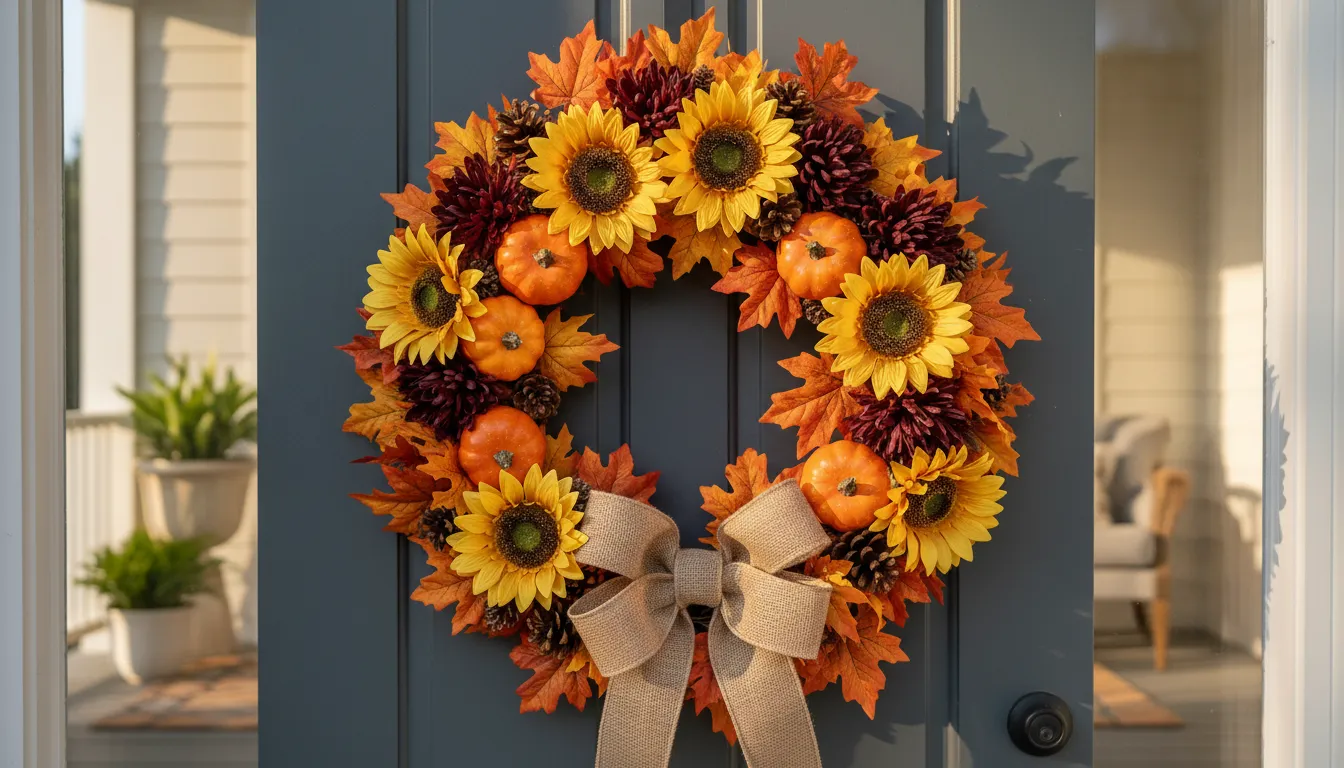
Picture this: you’re walking up to someone’s house on a crisp October morning, and the first thing that catches your eye is a gorgeous fall wreath bursting with burnt orange leaves, mini pumpkins, and rustic berries. It instantly makes you smile, right?
That’s the magic of fall wreaths for front door displays. They’re not just decorations—they’re the first handshake between your home and anyone who visits. And here’s the thing: choosing the right one doesn’t have to be complicated or expensive.
I’ve spent years experimenting with autumn wreaths, from the budget-friendly craft store finds to the custom-made beauties that cost a small fortune. What I’ve learned might surprise you. The best fall door wreaths aren’t always the priciest ones, and making your own can be easier than you
In this guide, I’ll walk you through everything you need to know about fall wreaths for front door decoration. We’ll cover which materials actually survive the weather, how to hang them without damaging your door, and even some insider tips on making them look expensive without breaking the bank. Whether you’re a minimalist who loves simple elegance or someone who goes all-out for fall decor, you’ll find something here that works for you.
Why Fall Wreaths for Front Door Make Such a Big Impact
You might be wondering why fall wreaths have become such a staple of autumn decorating. The answer is simpler than you’d think.
Your front door gets seen by everyone—mail carriers, neighbors, delivery drivers, and of course, your guests. It’s prime real estate for making a statement. And unlike elaborate yard displays that require hours of setup, a fall wreath for front door takes minutes to hang but delivers maximum visual impact.
The Psychology Behind Seasonal Door Decor
There’s actually some interesting psychology at play here. When people see seasonal wreaths, it triggers positive associations with home, warmth, and celebration. Fall door wreaths specifically evoke feelings of coziness and harvest abundance. They signal to visitors that your home is a welcoming space where traditions matter.
In my experience, homes with fall wreaths for front door displays just feel more inviting. It’s like the house is smiling at you. And that first impression? It sets the tone for everything that follows.
Curb Appeal That Actually Increases Home Value
Now here’s where it gets interesting. Real estate experts have noticed that homes with well-maintained seasonal decor, including fall wreaths, tend to photograph better and attract more interest from potential buyers. While a wreath alone won’t sell your house, it contributes to that overall sense that the homeowner cares about their property.
Even if you’re not selling, good curb appeal makes you feel better about coming home each day. There’s something satisfying about pulling into your driveway and seeing that perfect autumn wreath greeting you.
Types of Fall Wreaths for Front Door (and Which One Suits Your Style)
The fall wreath market has exploded in recent years. Walk into any craft store between August and November, and you’ll find hundreds of options. But they generally fall into a few main categories.
Traditional Autumn Wreaths with Natural Elements
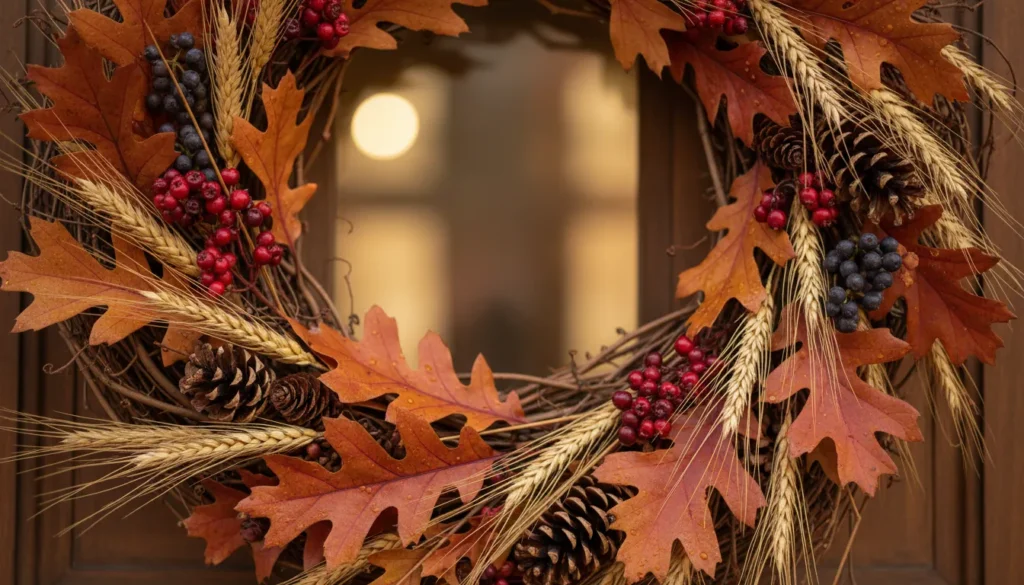
These are the classics—fall wreaths made primarily from natural materials like dried leaves, twigs, berries, and pinecones. What I love about this style is how organic it feels. The textures are incredible, and if done right, they look like you gathered materials from your own backyard (even if you didn’t).
Traditional fall wreaths typically feature colors like deep burgundy, burnt orange, golden yellow, and rich brown. They often incorporate elements like:
- Preserved oak or maple leaves
- Dried wheat stalks or corn husks
- Natural grapevine bases
- Real or faux pinecones
- Berry clusters in autumn colors
The downside? Natural materials don’t always hold up well in harsh weather. More on that later.
Modern Farmhouse Fall Door Wreaths
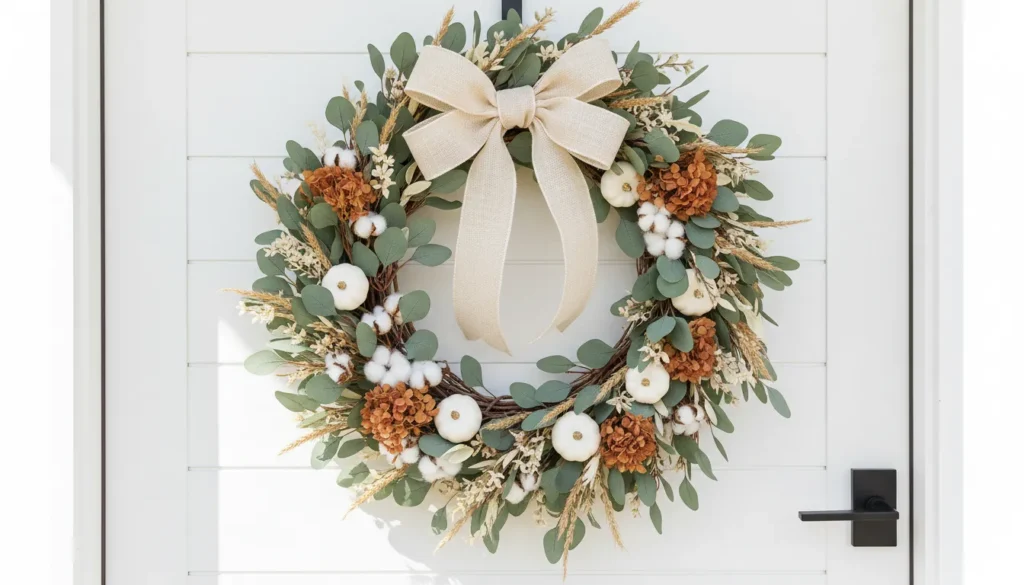
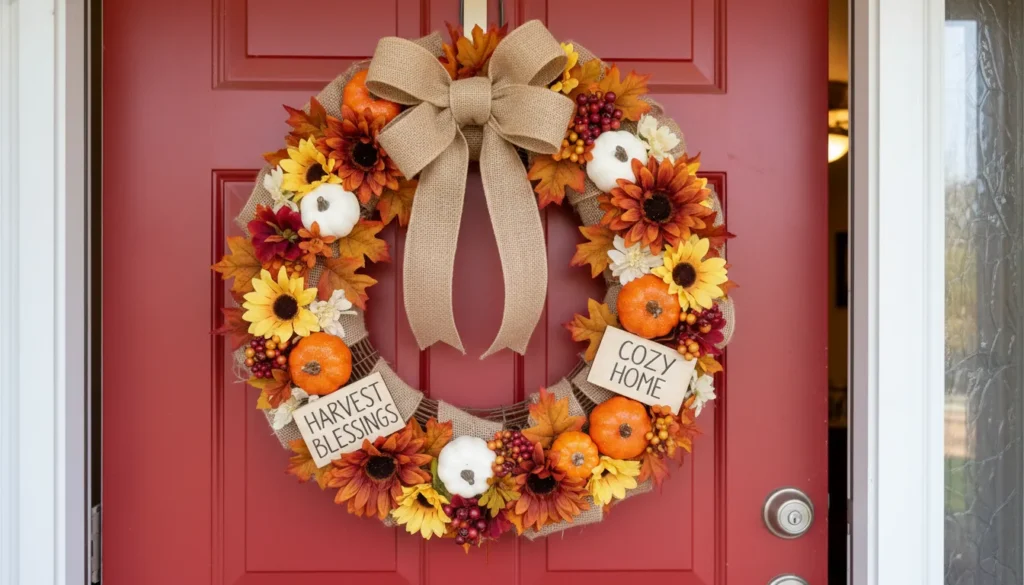
If you’ve spent any time on Pinterest or Instagram, you’ve seen these. Modern farmhouse fall wreaths blend rustic charm with clean, contemporary design. Think burlap ribbons, white pumpkins, eucalyptus sprigs, and neutral color palettes.
These fall wreaths for front door work beautifully if your home has a more modern aesthetic. They’re sophisticated without being stuffy, and they photograph incredibly well. The color scheme usually sticks to whites, creams, grays, and muted greens with just touches of traditional fall colors.
Vibrant and Colorful Autumn Wreaths

On the opposite end of the spectrum, you’ve got the bold and bright fall door wreaths that practically shout autumn from your doorstep. These aren’t shy—they feature saturated oranges, deep purples, bright yellows, and rich reds.
These work particularly well on doors with neutral colors (white, gray, beige) where the wreath can really pop. If your home’s exterior is already colorful, you might want something more subdued.
Minimalist Fall Wreaths
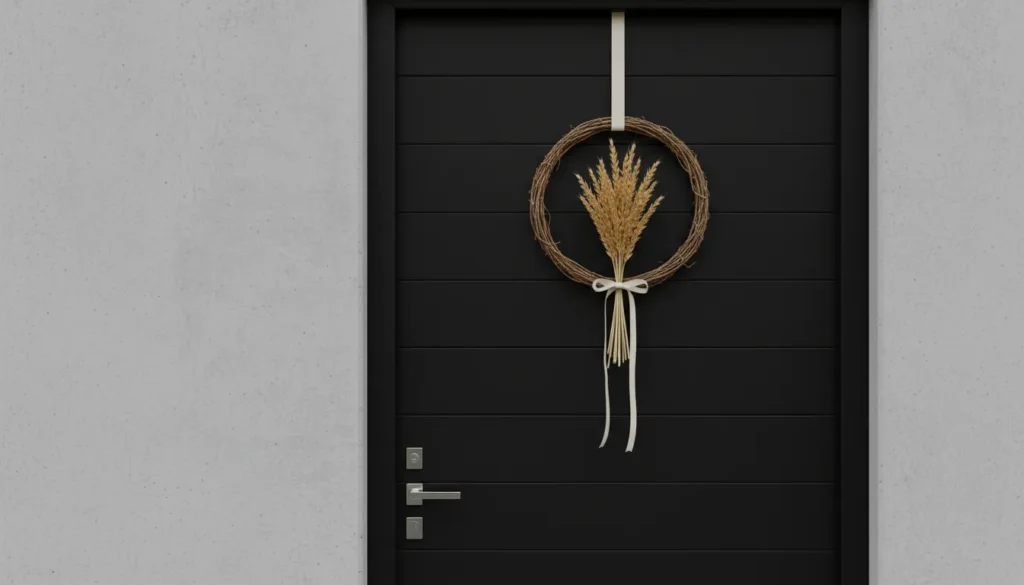
Not everyone wants their front door to look like it’s auditioning for a fall festival. Minimalist fall wreaths offer subtle nods to the season without overwhelming your entrance. These might feature:
- Simple grapevine circles with a single statement element
- Monochromatic designs in one or two colors
- Clean lines and sparse arrangements
- Single-material wreaths (all wheat, all eucalyptus, etc.)
What I appreciate about minimalist autumn wreaths is their longevity. Because they’re not screaming “October,” you can often leave them up from September through early December without anyone thinking you’re behind on your decorating schedule.
Choosing the Best Fall Wreath for Front Door Based on Your Climate
Here’s something most decorating blogs won’t tell you: your climate matters more than your style when choosing fall wreaths for front door displays.
I learned this the hard way after watching a beautiful (and expensive) silk flower wreath basically dissolve during a rainy October. Let’s save you from making the same mistake.
Weather-Resistant Fall Wreaths for Covered Porches
If your front door sits under a covered porch or overhang, you’ve got it made. You can choose pretty much any fall wreath style without worrying too much about weather damage. This protection from direct rain and intense sun means even delicate materials will hold up reasonably well.
For covered doors, consider:
- Silk or fabric autumn wreaths with rich textures
- Wreaths featuring ribbons, which can fade in direct sunlight
- Arrangements with paper or cardboard elements
- Fall wreaths with glitter or metallic finishes
That said, even covered porches get some humidity and temperature fluctuations. You’ll still want to check on your wreath every couple weeks to make sure nothing’s deteriorating.
Outdoor Fall Door Wreaths for Exposed Entrances
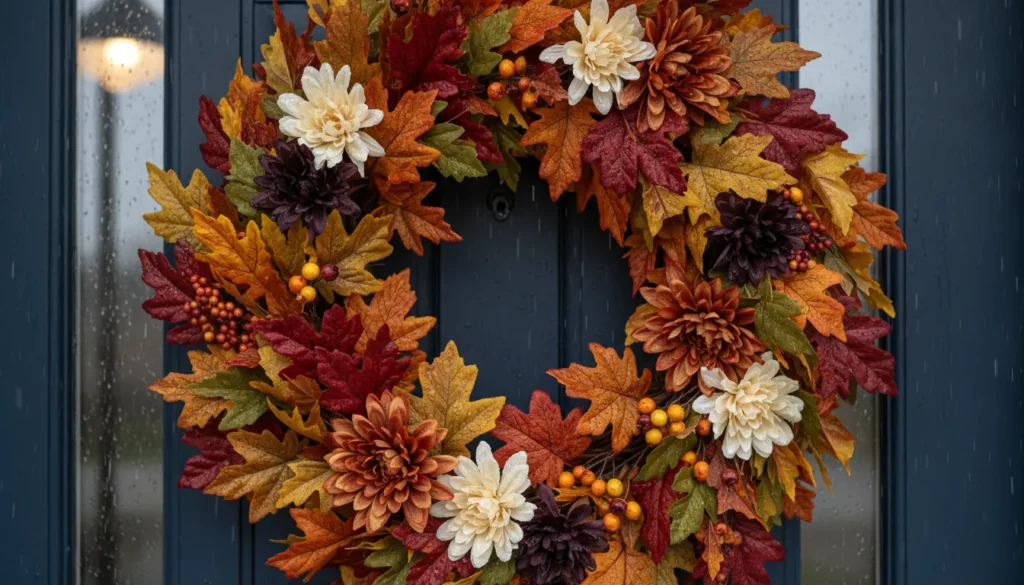
Now, if your door faces the elements head-on, you need fall wreaths built to last. This is where material quality becomes crucial.
Weatherproof fall wreaths typically use:
- High-quality polyester leaves and flowers that resist fading
- Sealed wooden elements treated for outdoor use
- Plastic or resin decorative pieces
- Wire-reinforced stems that won’t droop
- UV-resistant materials
I’ve found that outdoor fall wreaths from reputable brands specifically marketed as “weatherproof” or “outdoor rated” really do perform better. Yes, they cost more upfront, but replacing a cheap wreath three times a season adds up fast.
DIY Weather Protection for Any Fall Wreath
Here’s a pro tip that’s saved many of my favorite fall wreaths: waterproofing spray. If you’ve got a wreath you absolutely love but it’s not rated for outdoor use, a good coat of clear acrylic sealer or fabric protector can extend its life significantly.
Just make sure to:
- Apply the spray in a well-ventilated area (outside is best)
- Hold the can about 12 inches from the wreath
- Use light, even coats rather than one heavy application
- Let it dry completely (usually 24 hours) before hanging
- Reapply every few weeks if you live in a particularly wet climate
This won’t make a delicate silk fall wreath completely weatherproof, but it’ll help repel moisture and prevent some UV damage.
Where to Buy Fall Wreaths for Front Door (From Budget to Luxury)
Let’s talk shopping. The range of prices for fall wreaths for front door can be staggering—from $15 at the discount store to $300+ for designer pieces. Here’s where to find quality wreaths at every price point.
Budget-Friendly Fall Wreath Options
Discount retailers like Dollar General, Dollar Tree, and similar stores actually carry surprisingly decent fall wreaths for $10-25. The key is knowing what to look for. Skip anything that looks obviously plastic or has visible glue marks. Instead, look for simple designs with fewer elements executed well.
Walmart and Target offer extensive fall wreath selections from August through October, typically ranging from $20-50. Target’s Threshold and Studio McGee lines regularly feature on-trend autumn wreaths at reasonable prices. What I appreciate about Target wreaths is that they photograph well—important if you’re the type who likes sharing your seasonal decor on social media.
Craft stores like Michaels, Hobby Lobby, and Joann Fabrics are fall wreath goldmines, especially when you catch their famous 40-50% off sales. Never pay full price at these stores. Seriously, never. Their weekly coupons and rotating sales mean you can score high-quality fall door wreaths for half the listed price.
Mid-Range Quality Fall Wreaths
Kirkland’s and HomeGoods occupy this sweet spot between budget and luxury. You’ll find unique fall wreaths in the $40-80 range that look like they cost twice that. The catch? Selection varies wildly by location and sells out quickly. When you see one you love, grab it—it probably won’t be there next week.
Pottery Barn and Crate & Barrel offer beautiful autumn wreaths that typically run $60-120. The quality is consistently good, and their designs trend toward timeless rather than trendy. These wreaths can easily last several seasons with proper care and storage.
Online marketplaces like Etsy deserve special mention here. You’ll find independent artists creating stunning, unique fall wreaths for front door displays in the $50-150 range. Supporting small businesses feels good, and you’re getting something not everyone on your block will have.
Luxury and Custom Fall Door Wreaths

If you’re looking to splurge on a statement piece, Balsam Hill creates incredibly realistic fall wreaths with prices starting around $100 and going up from there. Their materials are top-notch, and many come with lights built in.
Williams Sonoma and Neiman Marcus carry designer fall wreaths in the $150-300+ range. These are investment pieces featuring premium materials, exceptional craftsmanship, and sophisticated designs.
For the ultimate in personalization, custom wreath designers (found on Etsy or through local florists) can create one-of-a-kind fall wreaths tailored to your exact specifications. Expect to pay $200-500 for a truly custom piece, but you’ll have something nobody else has.
DIY Fall Wreaths for Front Door: Easier Than You Think
Making your own fall wreath isn’t just about saving money (though you definitely can). It’s about creating something that perfectly matches your vision and gives you that satisfying “I made this” feeling every time you come home.
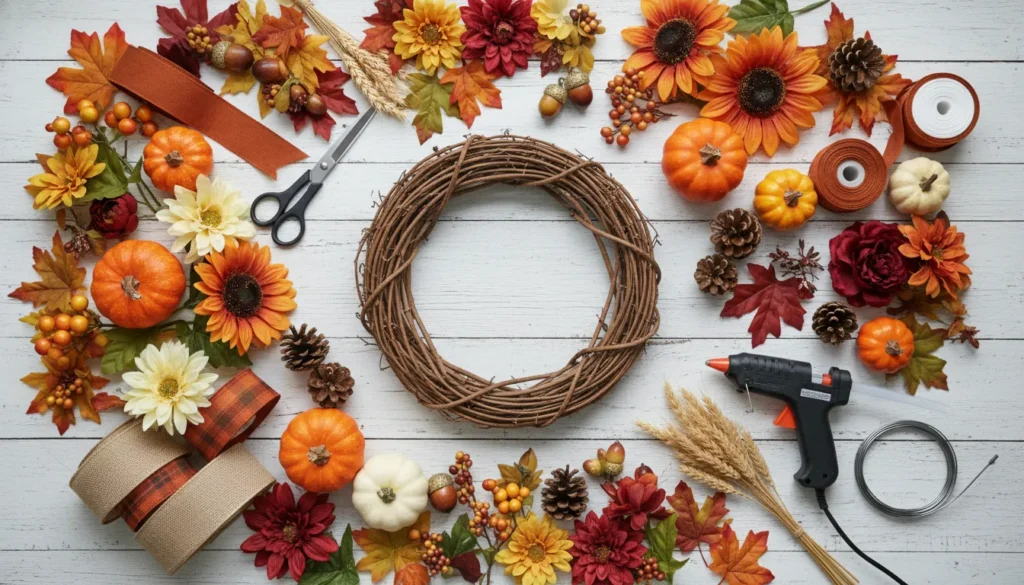
Essential Supplies for Creating Fall Wreaths
Before you start, let’s gather what you’ll need. Here’s the basic toolkit for DIY fall wreaths:
Base options:
- Grapevine wreaths (rustic, forgiving for beginners)
- Straw or hay wreaths (traditional, easy to work with)
- Wire wreath forms (great for fuller, more structured designs)
- Foam wreath rings (best for glued arrangements)
Attachment materials:
- Hot glue gun and plenty of glue sticks (you’ll use more than you think)
- Floral wire in green or brown
- Zip ties in neutral colors (underrated for securing heavy elements)
- Floral picks with wire stems
Decorative elements:
- Faux or preserved fall foliage
- Ribbons (wired ribbon holds shape better)
- Small decorative pumpkins or gourds
- Pinecones, acorns, berries
- Seasonal florals like sunflowers, mums, or dahlias
Step-by-Step Guide to Making a Basic Fall Wreath
Let me walk you through creating a simple but stunning autumn wreath that looks professional. This takes about an hour, even for complete beginners.
Step 1: Prepare Your Base Start with a 16-18 inch grapevine wreath base. If you’re using a foam or straw base, wrap it with burlap ribbon or fall-colored fabric to hide any gaps that’ll show later. Secure with hot glue or pins.
Step 2: Create Your Foundation Layer Add your greenery first—this creates fullness and covers the base. Insert stems of fall foliage (eucalyptus, mixed greens, or autumn leaves) around the wreath, angling them all in the same direction. Secure with hot glue or wire. Overlap stems so there are no bare spots.
Step 3: Add Focal Points Now comes the fun part. Choose 3-5 larger elements as your focal points—these might be big silk sunflowers, decorative pumpkins, or clusters of berries. Arrange them around the wreath, generally following a triangular pattern rather than spacing them evenly. This creates visual interest. Secure firmly with hot glue.
Step 4: Fill in Gaps Look at your wreath from a few feet away (the distance most people will actually see it from). Add smaller elements like pinecones, smaller flowers, or berry clusters to fill any sparse areas. Don’t overfill—leaving some breathing room makes the design more sophisticated.
Step 5: Add Ribbon If you’re using ribbon, now’s the time. Create a simple bow and attach it to the bottom or side of your wreath, or weave ribbon throughout the design. For an easier option, create loops of ribbon and insert them like flowers.
Step 6: Final Check and Reinforcement Give your fall wreath a gentle shake. Anything that moves needs more glue or wire. Better to discover loose elements now than after hanging it on your door. Add extra glue to any questionable attachments.
Creative DIY Fall Wreath Ideas
Once you’ve mastered the basics, try these variations:
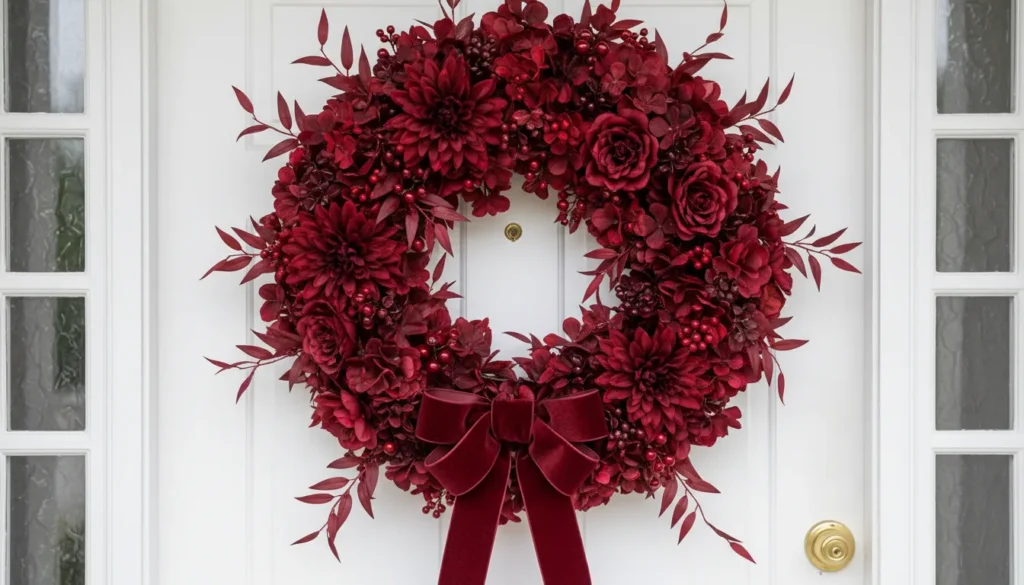
Monochromatic wheat wreath: Use only wheat stalks or dried grasses in natural tones for a sophisticated, minimalist look. Add a simple linen bow in cream or sage green.
Pumpkin explosion: Hot glue mini pumpkins in various sizes all around a foam wreath base until it’s completely covered. Mix in different colors—white, orange, green, and even blue-green for visual interest.
Magnolia and cotton wreath: Combine preserved magnolia leaves with cotton stems for a Southern-inspired fall wreath that works from September through Christmas.
Corn husk wreath: Wrap dried corn husks around a straw base for an ultra-traditional autumn wreath that nods to harvest season.
How to Hang Fall Wreaths for Front Door Without Damage
You’ve got your perfect fall wreath. Now comes the moment of truth—getting it on your door without creating holes, scratches, or damage that’ll haunt you when you move out.
Command Hooks and Wreath Hangers
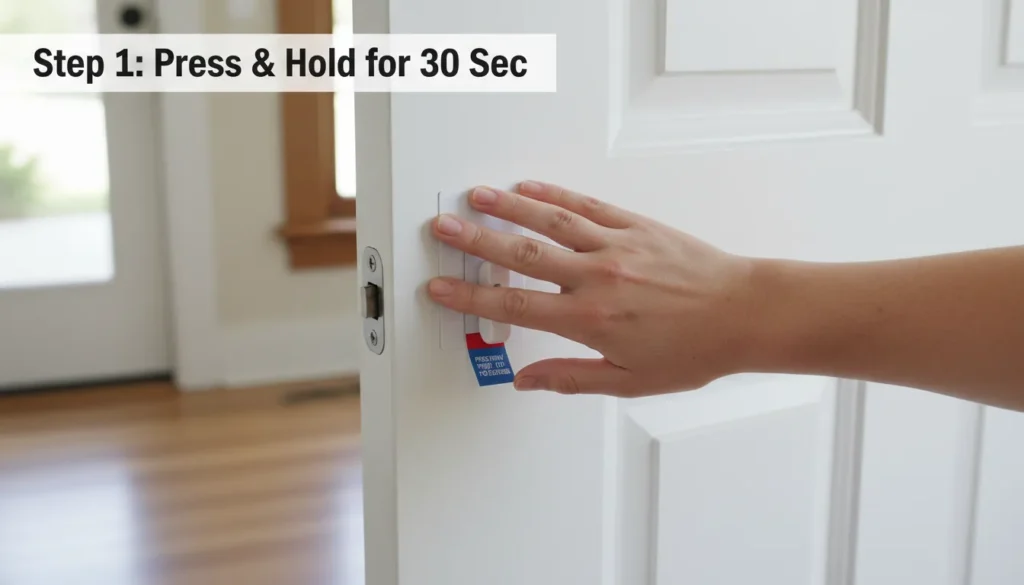
For most people, Command Hooks are the answer. These removable adhesive hooks have gotten so much better in recent years. Here’s how to use them effectively for fall door wreaths:
For doors without glass: Use a large Command hook (rated for at least 5 pounds) on the inside top of your door. Hang your wreath on the outside using fishing line, clear ribbon, or decorative ribbon that coordinates with your wreath.
For doors with glass: Place the Command hook on the glass itself. The smooth surface actually provides better adhesion than textured wood or metal. Just make sure the glass is completely clean before application.
Pro tips for Command Hooks:
- Clean the surface with rubbing alcohol and let it dry completely before applying
- Press firmly for 30 seconds after application
- Wait at least one hour before hanging your wreath
- In cold weather, warm the adhesive with a hairdryer before pressing
Over-the-Door Wreath Hangers
Over-the-door hangers slip over the top of your door and provide a hook on the exterior side. They work great for fall wreaths but have a few considerations:
The metal hook sits between your door and frame, which can prevent proper door closure on tight-fitting doors. Measure your door gap before buying one. Most need at least 1/4 inch clearance.
Some hangers show from the front, which bothers some people. Look for options with decorative front pieces or slim profiles that minimize visibility.
They can scratch your door over time from the metal rubbing against it. Adding felt pads to the parts that touch your door prevents this.
Magnetic Wreath Hangers for Metal Doors
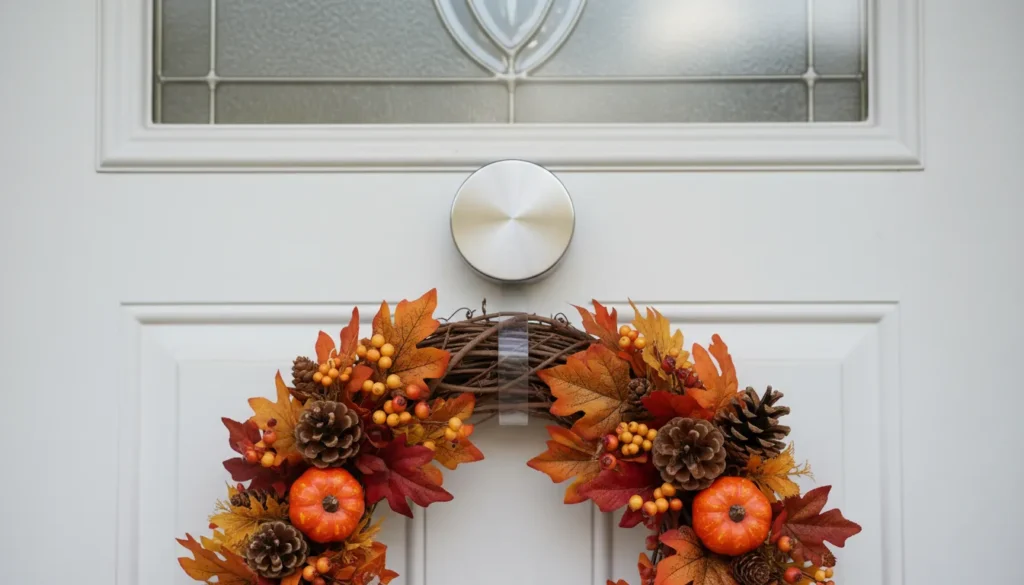
If you have a metal door, magnetic wreath hangers are genius. They use strong magnets—one on the inside, one on the outside—to hold your fall wreath in place without any adhesive or hardware.
The connection between magnets keeps the wreath secure even in windy conditions. Plus, they’re completely reusable season after season. The only downside is they won’t work on wood or fiberglass doors.
Traditional Methods (When You Own Your Home)
If you own your home and don’t mind a small nail hole, a simple brass or clear plastic wreath hanger nailed to your door works perfectly and costs about $3. The hole is tiny and easily filled with wood putty if you decide to remove it later.
For heavy fall wreaths (over 5 pounds), this is actually the most secure option. Wind can’t blow it off, and you don’t have to worry about adhesives failing in extreme temperatures.
Fall Wreath Maintenance and Care Tips
A beautiful fall wreath doesn’t stay beautiful without a little care. Here’s how to keep your autumn wreath looking fresh throughout the season.
Cleaning and Dusting Fall Door Wreaths
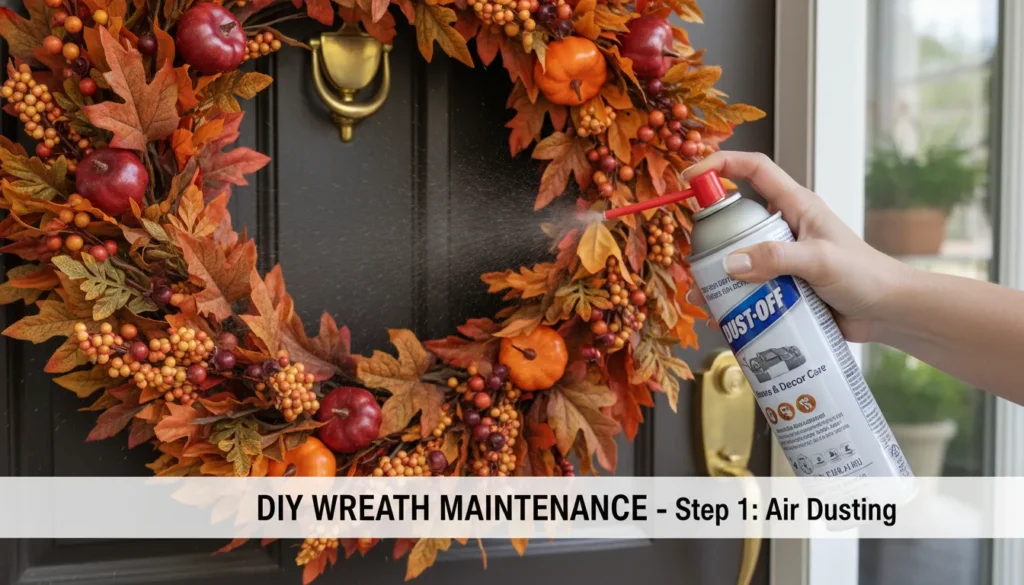
Outdoor wreaths accumulate dust, pollen, cobwebs, and even insect nests surprisingly quickly. Every two weeks, take your fall wreath down and give it a thorough inspection.
For artificial wreaths, use a can of compressed air or a hairdryer on the cool setting to blast away dust and debris. Hold the dryer about 6 inches away and work methodically around the wreath.
For stubborn dirt or stains, lightly mist with water and wipe gently with a soft cloth. Avoid soaking the wreath, especially if it has cardboard or paper elements.
Natural wreaths with dried materials are more delicate. Use a soft-bristled brush to gently dust them, always brushing in the direction of the leaves or petals to avoid breaking elements.
Weather Damage Prevention
Even weatherproof fall wreaths benefit from protection during extreme weather. If you know a major storm is coming, bring your wreath inside temporarily. Those few minutes of effort can add weeks or months to its lifespan.
Sun protection is often overlooked. Direct afternoon sun will fade even high-quality materials over time. If your door faces south or west, consider using a wreath with sun-resistant materials, or plan to replace it mid-season.
Wind damage is another concern. In windy locations, make sure your wreath is very securely attached. Consider adding a second attachment point—maybe a small zip tie at the bottom that connects to your door handle or a Command hook placed lower on the door.
Refreshing Fall Wreaths Midseason
Around mid-October, even the best fall wreaths can start looking tired. Here’s how to refresh them without buying new:
Replace damaged elements: Hot glue new leaves, flowers, or berries over anything that’s faded, broken, or missing.
Add new accents: Tuck in a few fresh elements—maybe small decorative pumpkins or different ribbon—to give it a new look.
Fluff and reshape: Gently bend and reposition elements that have flattened or shifted. Many faux fall wreaths have wire in the stems that you can rebend to restore shape.
Apply refresher spray: Fabric refresher sprays can help remove musty odors from outdoor wreaths and make them look cleaner.
Fall Wreath Color Schemes and Design Principles
Creating or choosing a fall wreath for front door that looks intentionally designed rather than randomly thrown together comes down to understanding a few basic design principles.
Classic Fall Color Combinations
The traditional autumn wreath palette centers around warm colors that echo the changing leaves:
Warm harvest: Orange, burgundy, deep yellow, and brown create that classic autumn feeling everyone recognizes. This combination works with almost any home exterior color and feels immediately seasonal.
Rustic farmhouse: Cream, burlap, muted orange, and sage green deliver that modern farmhouse look that’s been trending for years. This scheme feels softer and more sophisticated than the bold traditional palette.
Wine country elegance: Deep burgundy, plum purple, copper, and dusty pink create a more elegant, wine-inspired fall wreath. This works beautifully on homes with brick or darker siding.
Coordinating Your Fall Wreath with Your Home’s Exterior
Your wreath should complement your home, not fight with it. Here’s a quick reference:
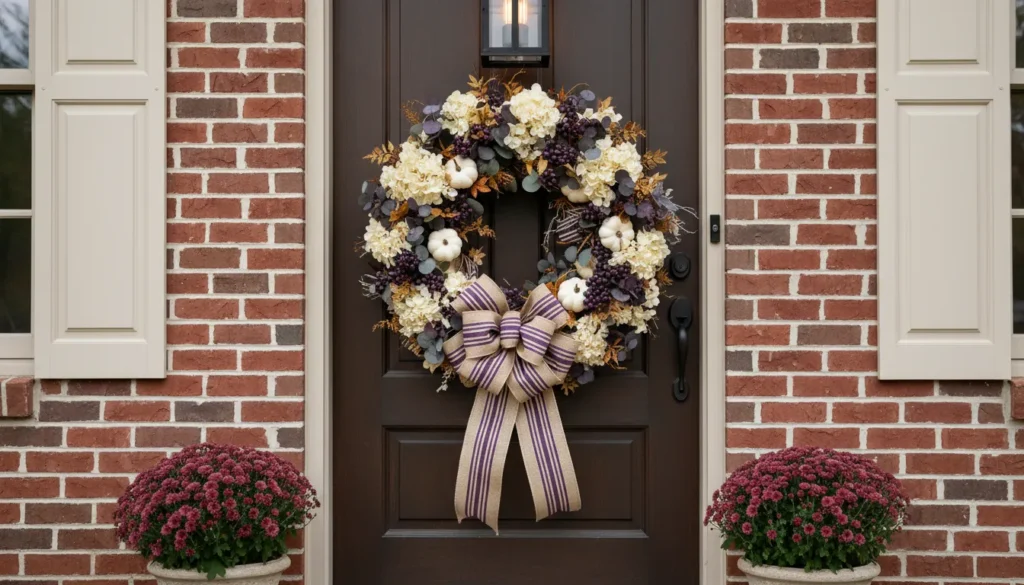
White or cream homes: Lucky you—almost any fall wreath color scheme works. You can go bold or subtle depending on your preference.
Red brick homes: Avoid wreaths heavy on orange and red, which can clash. Instead, choose schemes with cream, yellow, plum, or natural elements.
Gray or blue-gray homes: Modern palettes work best here. Stick with cream, white, eucalyptus green, and touches of copper or dusty orange.
Brown or tan homes: Create contrast with brighter fall wreaths featuring orange, yellow, and red. You want the wreath to pop against the neutral background.
Dark navy or black doors: This is your opportunity to go bold. Bright orange, copper metallics, and rich burgundy all stand out beautifully.
The Rule of Three in Wreath Design
Professional designers use the “rule of three” when creating fall wreaths. This means using three main colors, three different textures, or three types of elements.
For example, a well-designed autumn wreath might include:
- Three colors: burnt orange, cream, and burgundy
- Three textures: smooth pumpkins, fluffy mums, and rough twigs
- Three element types: flowers, foliage, and decorative accents
This creates visual interest without overwhelming the eye. Designs with too many competing elements look cluttered, while those with too few can seem unfinished.
Seasonal Transitions: When to Hang and Remove Fall Wreaths
Timing matters when it comes to fall wreaths for front door displays. Hang them too early and you look overeager. Leave them up too long and you look forgetful.
The Perfect Time to Display Fall Door Wreaths
In most regions, fall wreaths can go up around the first week of September. This coincides with kids going back to school and that first hint of autumn in the air, even if temperatures are still warm.
If you live in a very hot climate where September still feels like summer, consider waiting until late September or early October. The wreath will feel more appropriate once temperatures start dropping.
Some people prefer waiting until after Labor Day, treating it as the unofficial start of fall decorating season. There’s no wrong answer here—go with what feels right for your area and personal preference.
Transitioning from Fall to Winter Wreaths
Here’s where things get tricky. Most fall wreaths can reasonably stay up through Thanksgiving without looking out of place. But after that, they start to feel dated as winter decorating season begins.
I typically remove my autumn wreath right after Thanksgiving and replace it with something more winter-appropriate. If your fall wreath features elements that work for both seasons—like pinecones, evergreen branches, or neutral berries—you might be able to keep it up longer.
Some people “winterize” their fall wreaths by removing the most obviously autumnal elements (bright orange pumpkins, fall leaves) and adding winter touches like white berries, icy branches, or a different ribbon. This extends the life of your base wreath without requiring a complete replacement.
Fall Wreath Sizing Guide for Different Door Types
Not all doors are created equal, and neither are fall wreaths. Choosing the right size makes a huge difference in how your wreath looks.
Standard Single Doors
For a standard 36-inch front door, a fall wreath between 22-26 inches in diameter looks proportional. This size is substantial enough to make an impact without overwhelming the door.
If you have sidelights or windows on either side of your door, you might go slightly smaller (18-22 inches) so the wreath doesn’t compete with the symmetry of the entrance.
Double Doors and Wide Entrances
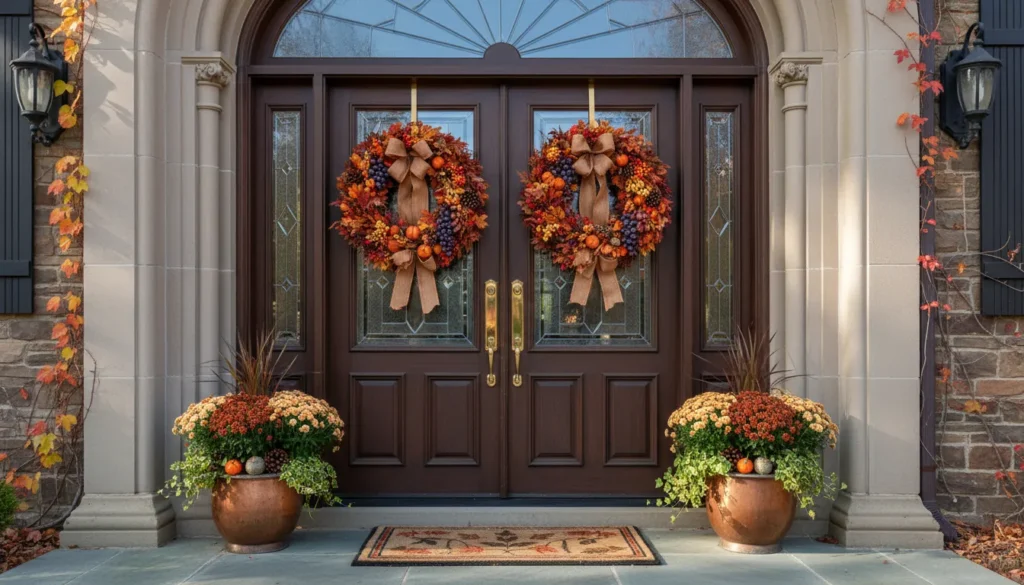
Double doors create a design dilemma: one large wreath or two matching smaller ones? Both approaches work, but they create different looks.
One large wreath (30-36 inches): Centers between the two doors, creating a single focal point. This works best when hung from a portico or overhang above the doors rather than on one door panel.
Two matching wreaths (18-24 inches each): Creates symmetry and balance. Hang one on each door at the same height. This is my preferred approach—it just looks more intentional.
Apartment and Condo Doors
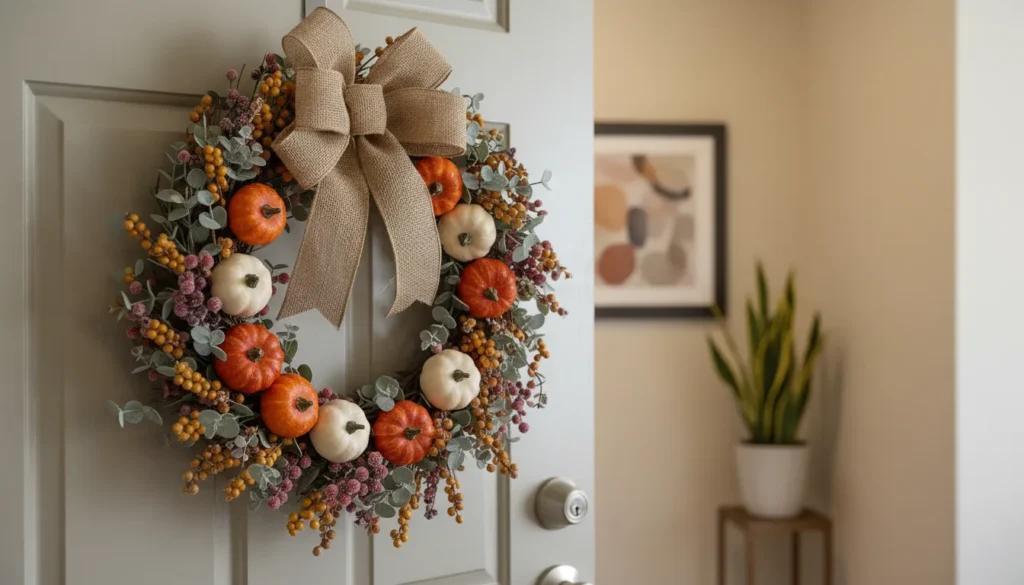
Smaller doors in apartments or condos usually look best with fall wreaths in the 16-20 inch range. Larger wreaths can overwhelm compact entryways and make the space feel cramped.
Consider your hallway width too. In narrow hallways, you want a thinner wreath that doesn’t stick out far from the door and become a hazard for people passing by.
Safety Considerations for Fall Wreaths for Front Door
Let’s talk about something most decorating guides skip: keeping your fall wreath safe for your household and visitors.
Fire Safety with Lighted Fall Wreaths
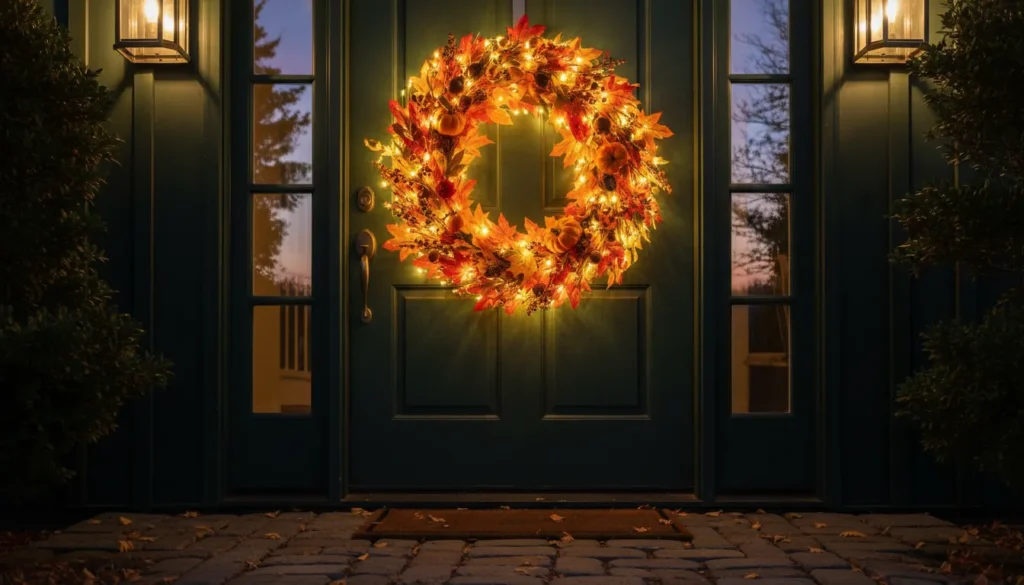
LED-lighted fall wreaths have become incredibly popular, and they’re generally safe when used properly. However:
- Always check that battery packs are secure and rated for outdoor use
- Replace batteries according to manufacturer guidelines
- Never use candles or real flames in or near your wreath
- Keep wreaths away from doorbell transformers and electrical fixtures
- If using plug-in lights, ensure outdoor-rated extension cords and GFCI protection
I’ve seen fall wreaths with built-in lights add a magical touch to evening curb appeal, but safety always comes first.
Allergen Awareness
If anyone in your household has plant allergies, be mindful of natural fall wreaths containing:
- Ragweed or similar allergen-producing plants
- Mold from improperly dried materials
- Pollen from dried flowers
Artificial fall wreaths eliminate these concerns entirely, which is one reason they’ve become so popular beyond just durability.
Pet and Child Safety
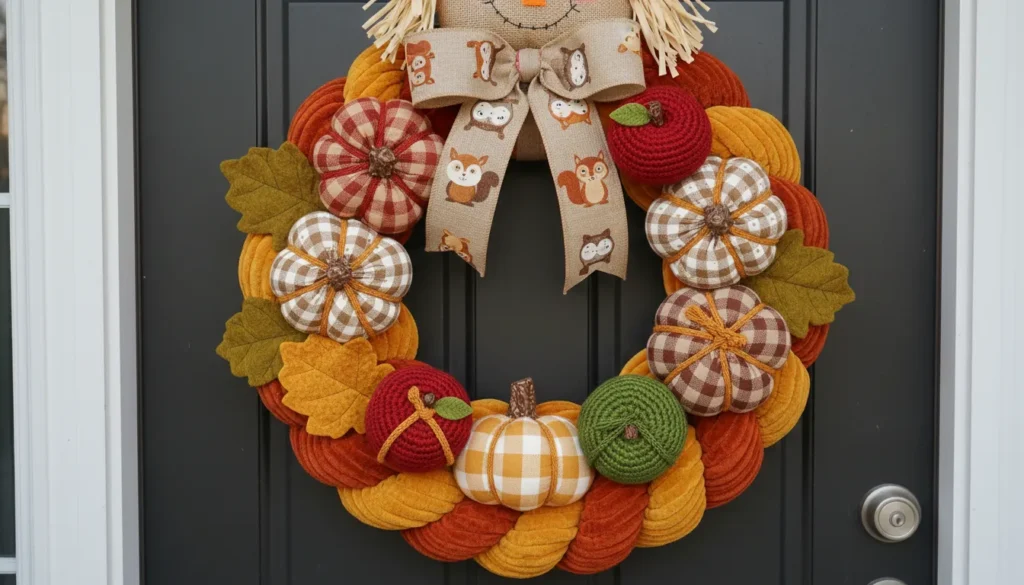
Small elements on fall wreaths—berries, acorns, small decorative pieces—can be choking hazards for young children or curious pets. If your door is easily accessible to toddlers or pets, choose wreaths with larger, securely attached elements.
Some decorative berries and artificial fruits can be toxic if ingested. While most are harmless, it’s better to be safe, especially with pets who might chew on hanging decorations.
When Natural Fall Wreaths Make Sense
Choose natural fall wreaths if you:
- Love the authentic look and feel of real materials
- Enjoy DIY projects and foraging for elements
- Don’t want to deal with storage between seasons
- Have a covered porch that protects from weather
- Appreciate the sustainability of biodegradable materials
- Want each year’s wreath to be unique
When Artificial Fall Wreaths Are the Better Choice
Go with artificial fall wreaths if you:
- Want something that lasts multiple years
- Have an exposed door facing harsh weather
- Don’t have time for regular maintenance
- Prefer the convenience of reusing the same wreath
- Need something that won’t attract insects or mold
- Want a consistent look you can depend on year after year
Honestly? I keep both. I have a high-quality artificial fall wreath as my reliable go-to, but I also make a fresh natural one some years when I’m feeling creative. There’s no rule saying you have to choose just one approach forever.
Troubleshooting Common Fall Wreath Problems
Even the best fall wreaths for front door displays can develop issues. Here’s how to fix the most common problems.
Wreath Won’t Stay Centered on Door
This drives people crazy, and it’s usually caused by uneven weight distribution in the wreath itself. Here’s the fix:
Flip your wreath over and find the heaviest area. Rotate the wreath so this heavy section is at the bottom (the 6 o’clock position). Gravity will naturally pull it straight down, keeping the wreath centered.
For wreaths that are front-heavy (elements stick out far from the base), add a second attachment point at the bottom of the wreath. A small Command hook or clear fishing line connecting to your door handle prevents rotation.
Elements Keep Falling Off
If pieces of your fall wreath keep dropping, you’ve got an adhesion problem. Hot glue can fail in extreme temperatures—it gets brittle in cold and can soften in heat.
Solutions:
- Reinforce with floral wire wrapped around both the element and the base
- Use zip ties for larger, heavier pieces
- Switch to E6000 glue, which remains flexible and strong in temperature extremes
- If using a foam base, insert picks deep enough to truly anchor elements
Wreath Looks Flat or Sparse
Fall wreaths that look flat usually need more depth. Add elements at different heights and angles rather than attaching everything flush to the base. Think of building layers—background layer, middle layer, and accent layer up front.
For sparse wreaths, it’s often better to remove elements and rearrange them more strategically rather than just adding more stuff. Sometimes less is more when thoughtfully placed.
Fading Colors
Even UV-resistant artificial fall wreaths will eventually fade with direct sun exposure. Prevention is easier than cure:
- Apply UV-protective spray before hanging (foun
at craft stores)
- Rotate the wreath quarterly to ensure even exposure
- Bring it in during the hottest part of the day if possible
- Replace the most faded elements rather than the entire wreath
For natural wreaths, fading is inevitable and actually part of their charm. The colors will soften and mute over the season, creating a nice aged patina.
Budget-Friendly Fall Wreath Hacks
You don’t need to spend a fortune to have a gorgeous fall wreath for front door displays. Here are my favorite money-saving strategies.
Dollar Store Fall Wreath Components
Dollar stores are treasure troves for wreath-making supplies. For $10-15, you can gather:
- Foam wreath bases ($1-2)
- Small decorative pumpkins (3 for $1)
- Fall garlands you can disassemble for individual elements
- Ribbon spools
- Floral picks and stems
The quality won’t match craft store items, but for a single-season DIY fall wreath, they work perfectly fine. I’ve made stunning wreaths using 90% dollar store materials that got constant compliments.
Foraging Your Own Materials
If you have access to wooded areas (with permission, of course), foraging for wreath materials costs nothing. Look for:
- Interesting branches and twigs for base structure
- Pinecones in various sizes
- Acorns and their caps
- Colorful fallen leaves (press between books to preserve)
- Seed pods and nuts
- Dried grasses and wheat (often found near fields)
Let everything dry thoroughly before using it in your wreath to prevent mold. Spread materials on newspaper in a warm, dry location for at least a week.
Repurposing Last Year’s Decorations
Before buying new, shop your own storage. That old fall wreath might have salvageable elements you can incorporate into a new design. I’ve dismantled tired wreaths and used the individual pieces to create entirely new ones or enhance basic bases.
Even decorations that seem unrelated to wreaths—like tabletop centerpieces or garlands—can be repurposed. Remove elements and attach them to a wreath base with hot glue or wire.
Expert Tips for Professional-Looking Fall Door Wreaths
Want your fall wreath to look like it came from an expensive boutique? These insider tips make all the difference.
The Floral Designer’s Secret: The Triangle Rule
Professional floral designers rarely space decorative elements evenly around a wreath. Instead, they use triangular placement. Choose three points on your wreath that form a triangle, and place your largest or most eye-catching elements at these points.
This creates dynamic visual flow that keeps the eye moving around the wreath rather than getting stuck in one spot. It looks intentional and sophisticated without being obvious about the technique.
Layering for Depth and Dimension
Flat wreaths scream amateur. Professional-looking fall wreaths have dimension achieved through layering:
Back layer: Your base greenery or filler materials Middle layer: Medium-sized flowers, leaves, or decorative elements Front layer: Your star players—the elements you want to stand out
Each layer should be slightly smaller than the one behind it, creating a graduated effect that draws the eye into the wreath rather than across it.
Color Distribution Strategy
Don’t cluster all of one color together. Distribute colors around the wreath to create balance. If you’re using orange pumpkins, space them evenly (following the triangle rule) rather than grouping them all in one area.
This creates cohesion and keeps the viewer’s eye moving, which is what makes wreaths interesting to look at.
The Odd Number Advantage
Use odd numbers of repeating elements (3, 5, 7) rather than even numbers. Odd groupings feel more organic and less rigid. Three small pumpkins look better than two or four. Five sunflower blooms create better visual balance than six.
This is a design principle that applies across all visual arts, and it absolutely works for fall wreaths for front door displays.
Seasonal Business Ideas: Selling Fall Wreaths
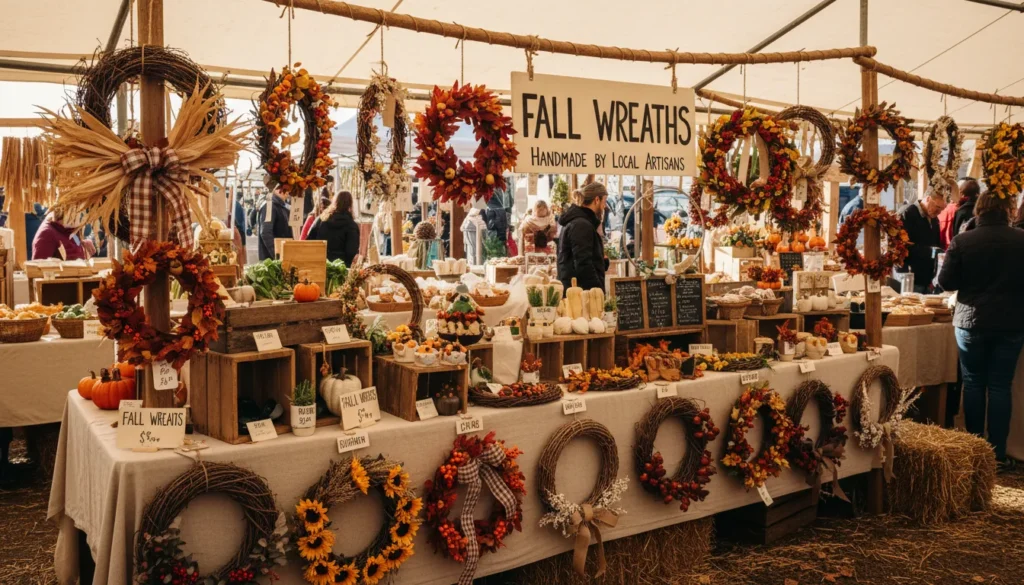
Maybe you’ve gotten so good at making fall wreaths that people keep asking where you bought yours. There’s actually a robust market for handmade autumn wreaths. Here’s what you need to know if you’re considering turning your hobby into income.
Pricing Your Handmade Fall Wreaths
Calculate your costs:
- Materials (base, elements, glue, wire, ribbon)
- Time (how long does it take to create?)
- Packaging (boxes or protective wrapping for shipping or delivery)
- Marketing (photography, listing fees on platforms)
A common pricing formula: (Material cost × 2.5) + (Hours worked × your hourly rate) = Base price
For fall wreaths, most crafters charge $40-150 depending on size and complexity. Don’t undervalue your work—handmade carries premium value.
Where to Sell Fall Door Wreaths
Local markets: Farmers markets and craft fairs in September and October are prime selling opportunities for fall wreaths. Rent a booth and display your work. Bring business cards for custom orders.
Etsy: This platform was made for handmade wreaths. Great photos are crucial—invest time in learning basic product photography. List your wreaths by early August to catch early-season shoppers.
Facebook Marketplace and local selling groups: Zero listing fees and local pickup means higher profits. Join neighborhood groups and post your fall wreaths when guidelines allow.
Instagram: Build a following by posting your creations and tagging them well. Many crafters sell directly through Instagram DMs without needing a formal shop setup.
Legal Considerations
Before selling fall wreaths as a business:
- Check local business license requirements
- Understand sales tax obligations in your state
- Consider liability insurance if selling at markets
- Keep receipts for all materials (tax deductible business expenses)
- Follow platform rules on handmade vs. resold items
Start small. Make a dozen wreaths, see if they sell, and grow from there. The market for handmade fall wreaths for front door displays is strong, especially for unique designs that stand out from mass-produced options.
Fall Wreath Trends for 2026
The world of fall wreaths evolves every year. Here’s what’s trending for the current season.
Unexpected Color Palettes
While traditional orange and burgundy will never go away, 2026 fall wreaths are embracing unexpected colors:
Jewel tones: Emerald green, sapphire blue, and amethyst purple mixed with traditional autumn shades create luxury-looking wreaths.
Muted pastels: Blush pink, dusty blue, and soft sage are showing up in modern farmhouse fall wreaths, creating softer, more romantic looks.
Monochromatic designs: All-white fall wreaths or all-burgundy designs make bold, sophisticated statements.
Oversized Elements
Bigger is better in current fall wreath trends. Oversized pumpkins, huge silk flowers, and dramatically large leaves create statement pieces that photograph beautifully. These wreaths need substantial doors to avoid looking overwhelming, but when proportions work, they’re stunning.
Mixed Textures
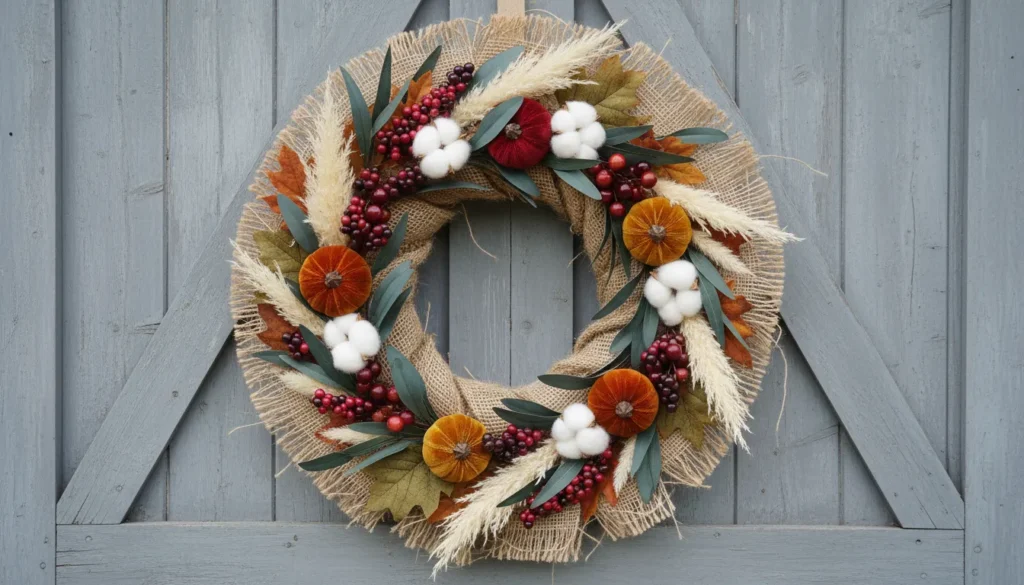
2026 fall door wreaths are all about contrast. Smooth velvet pumpkins next to rough burlap, shiny berries against matte leaves, fuzzy dried flowers with sleek eucalyptus. The more texture variety, the more interesting the wreath.
Sustainable and Natural Materials
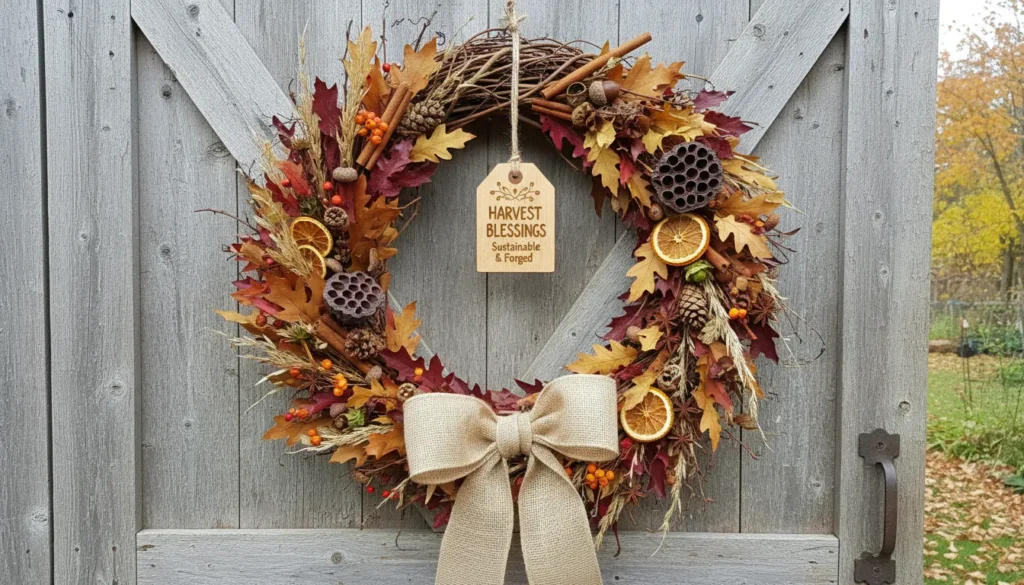
There’s growing interest in fall wreaths made entirely from natural, biodegradable materials. Consumers are seeking out wreaths made from ethically sourced, sustainable materials as environmental awareness increases.
This includes:
- Locally foraged materials
- Preserved (not plastic) plants and flowers
- Natural dyes on fabrics
- Bases made from sustainably harvested vines or grasses
Frequently Asked Questions About Fall Wreaths for Front Door
Let me address some questions I hear all the time about fall wreaths.
How Long Do Fall Wreaths Last Outside?
Artificial fall wreaths rated for outdoor use can last 3-5 seasons or more with proper care and storage. Cheap ones might last one season. Natural fall wreaths typically last one season, though this varies based on materials and weather protection.
Can You Leave Fall Wreaths in the Rain?
Weatherproof artificial fall wreaths can handle rain, though it’s better to bring them in during severe storms. Natural wreaths should avoid rain exposure as it accelerates deterioration, causes mold, and can disintegrate delicate elements.
Do Fall Wreaths Attract Bugs?
Natural fall wreaths can attract insects, especially if they include real food elements (dried fruits, nuts) or haven’t been properly cleaned before assembly. Spider webs are common on outdoor wreaths. Artificial wreaths rarely attract bugs, though spiders might use them as anchor points for webs.
Regular inspection and cleaning prevents most insect issues. A quick spray with insect repellent safe for plants can help deter bugs from natural wreaths.
What Size Wreath for a 36-inch Door?
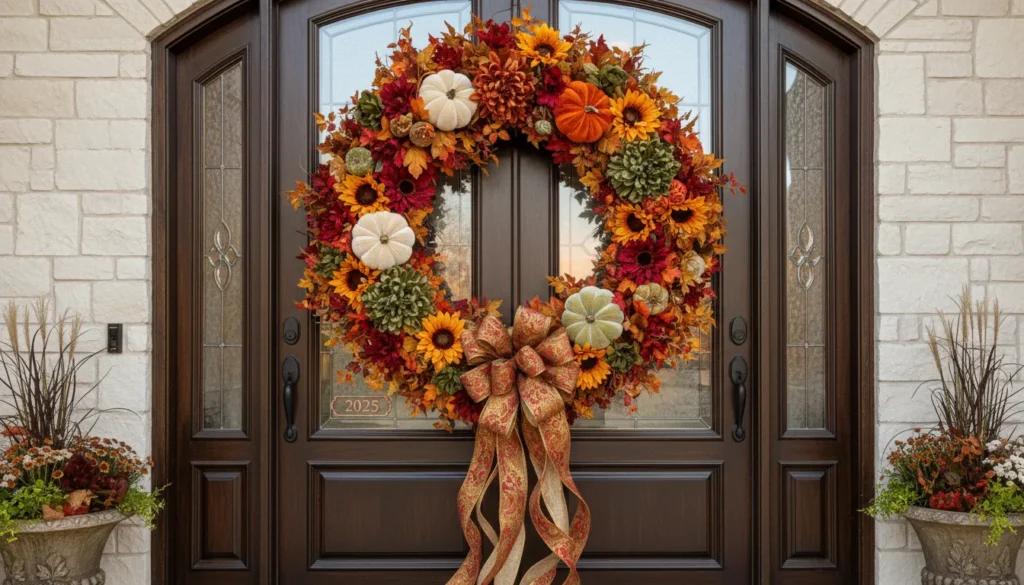
For a standard 36-inch door, a fall wreath between 22-26 inches in diameter looks properly proportioned. This provides visual impact without overwhelming the door or blocking the peephole.
Should Fall Wreaths Match Other Decorations?
Your fall wreath should coordinate with your other seasonal decor but doesn’t need to match exactly. Pull 1-2 colors from your wreath into porch decorations (pumpkins, mums, signs) to create cohesion without looking too matchy-matchy.
Conclusion: Creating Your Perfect Fall Welcome
There’s something deeply satisfying about perfecting your fall wreath for front door display. It’s that sweet spot where creativity meets practicality, where a relatively small investment of time and money yields daily joy every time you come home.
Don’t overthink it. Your first fall door wreath doesn’t need to be perfect. Choose something that speaks to you, hang it with confidence, and enjoy the compliments from neighbors and delivery drivers who appreciate your effort to celebrate the season.
And remember—fall wreaths are forgiving. If you don’t love it after a week, swap it out. Try something new. Make adjustments. This is supposed to be fun, not stressful.
As autumn settles in and the air gets crisp, there’s no better time to give your front door that seasonal refresh it deserves. Your perfect fall wreath is out there waiting, whether you’re making it with your own hands or bringing it home from your favorite shop.
Ready to find your perfect fall wreath? Start by measuring your door, deciding on your budget, and browsing options that match your style. Your autumn transformation is just a wreath away. Happy decorating!