Thanksgiving Dinner Table Setting: Create a Warm and Inviting Holiday Feast
Introduction:
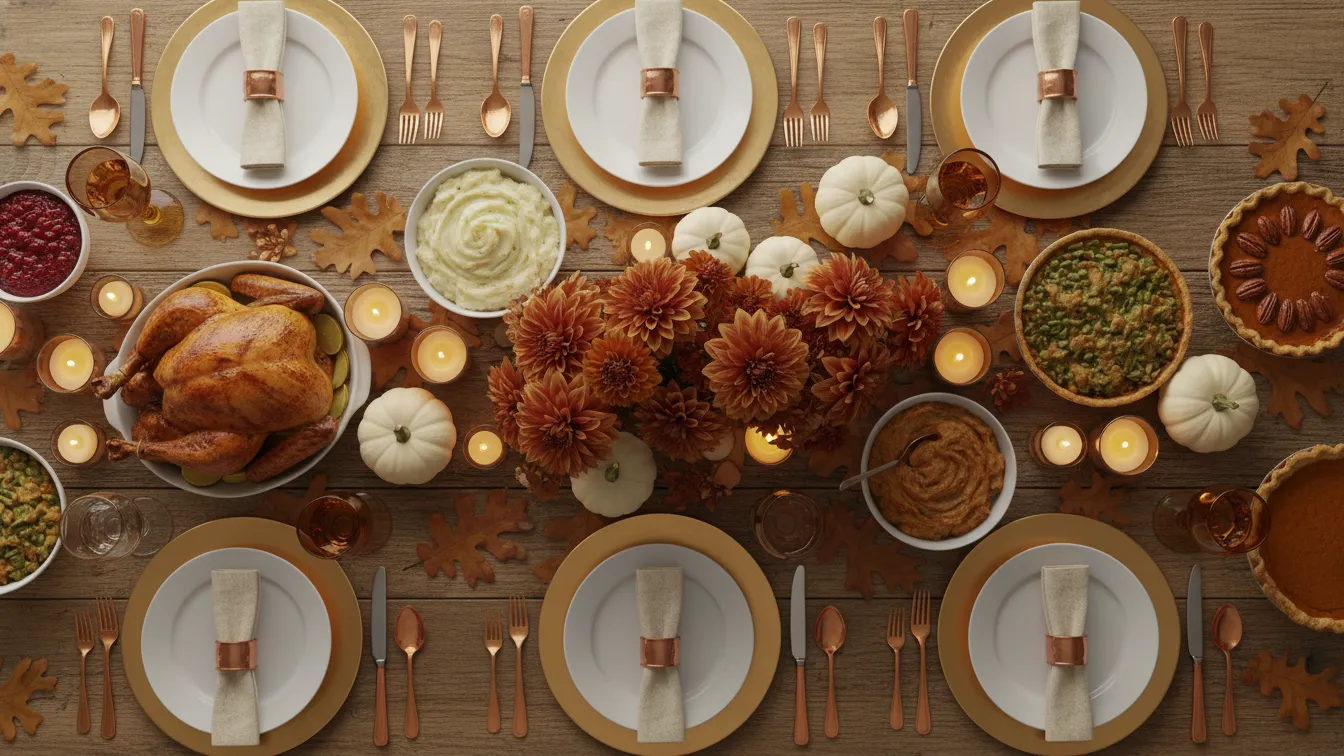
Picture this: your family walks into the dining room, and there’s this collective gasp. Not because you’ve spent a fortune on fancy decorations, but because you’ve created something truly special. That’s the magic of a well-planned thanksgiving dinner table setting.
Here’s the thing—I used to stress about my Thanksgiving table every single year. I’d scroll through Pinterest, see these impossibly perfect setups, and feel completely overwhelmed. But then I learned something important: the best table settings aren’t about perfection. They’re about warmth, personality, and making your guests feel welcome.
In this guide, I’ll walk you through everything you need to know about creating a thanksgiving dinner table setting that’ll have your guests talking (in a good way) long after the pumpkin pie is gone. Whether you’re hosting your first Thanksgiving dinner or you’re a seasoned pro looking for fresh ideas, you’ll find practical tips that actually work in real life.
Understanding the Basics of Thanksgiving Table Settings
Let’s start with the fundamentals. You don’t need to be a professional event planner to create a stunning thanksgiving table setting. What you need is a basic understanding of how things work together.
What Makes a Table Setting Complete?
A complete table setting has several layers. Think of it like getting dressed—you start with the basics and add accessories. At its core, you’ll need these essential elements:
Your foundation starts with the tablecloth or table runner. This sets the entire mood for your thanksgiving dinner table setting. Next comes the dinnerware—your plates, bowls, and serving dishes. Then you’ve got your flatware (that’s fancy talk for forks, knives, and spoons), glassware, and napkins.
Now here’s where it gets interesting. The magic happens when you add those finishing touches: centerpieces, candles, place cards, and seasonal decorations. These elements transform a basic table into something memorable.
The Traditional vs. Modern Approach
You might be wondering whether you should go traditional or modern with your thanksgiving table decor. Here’s my take: there’s no wrong answer.
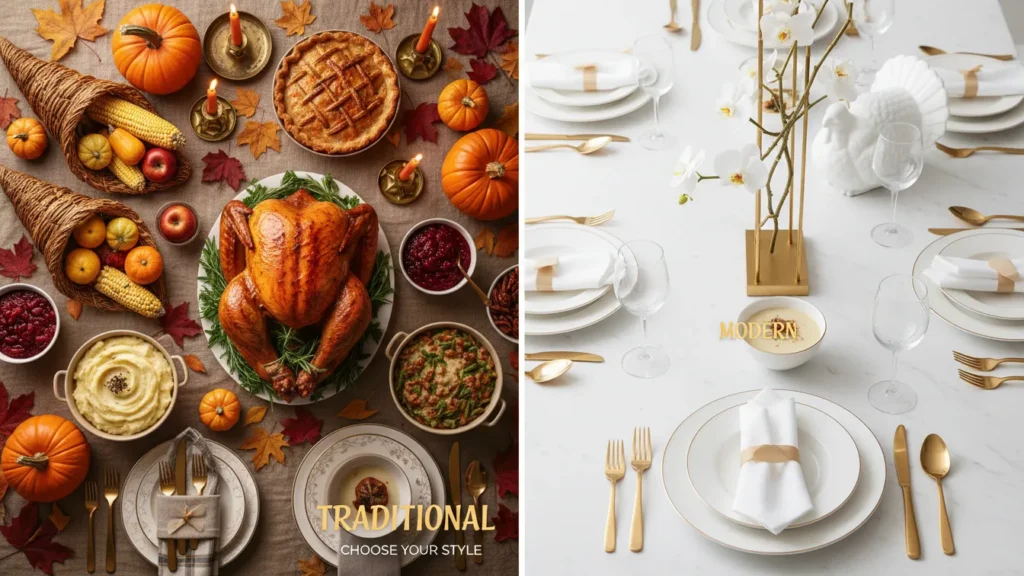
Traditional thanksgiving table settings typically feature warm autumn colors—think deep oranges, rich browns, and golden yellows. You’ll see lots of fall foliage, pumpkins, and classic elements like cornucopias. The vibe is cozy and nostalgic, like something from a Norman Rockwell painting.
Modern table settings, on the other hand, might use unexpected color palettes. Maybe you’re into minimalist whites and metallics, or perhaps you prefer jewel tones. The key difference is in the simplicity and clean lines. Modern doesn’t mean cold—it just means you’re taking a fresh approach to holiday decorating.
In my experience, the sweet spot is somewhere in between. Take traditional elements and give them a modern twist. Use pumpkins but spray paint them white. Include fall leaves but arrange them in sleek glass vases.
Planning Your Table Layout
Before you start setting anything, you need a game plan. Trust me on this—measuring matters.
First, figure out how many people you’re seating. Standard dining tables need about 24 inches of space per person. So if you’re squeezing in extra family members, you might need to get creative. Consider a kids’ table or even two separate dining tables if space allows.
Think about traffic flow too. You want people to be able to move around comfortably, especially when serving or clearing dishes. Leave at least 36 inches between the table edge and the wall or other furniture.
Essential Elements for Your Thanksgiving Dinner Table Setting
Let’s break down exactly what you need. I’m giving you the real deal here—not some impossible fantasy list.
Choosing the Right Tablecloth and Table Linens
Your tablecloth is like the canvas for your thanksgiving masterpiece. Here’s what works:
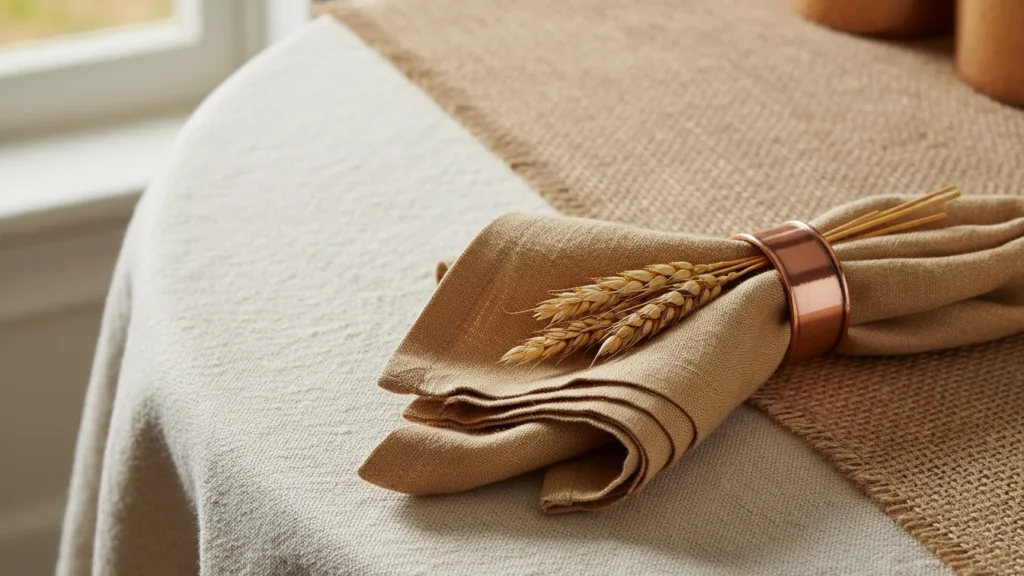
Linen tablecloths are my personal favorite for Thanksgiving. They’ve got this relaxed elegance that feels special without being stuffy. Plus, they actually get softer with every wash. Cotton tablecloths are more budget-friendly and come in endless patterns.
Don’t overlook table runners either. Sometimes I skip the full tablecloth and just use a runner down the center. This shows off a beautiful wood table while still adding that decorative element. Layer a burlap runner over a solid tablecloth for texture.
For napkins, cloth beats paper every time for Thanksgiving. They don’t have to match perfectly—mix and match colors for a collected look. Linen napkins in fall colors or even simple white napkins with a napkin ring work beautifully.
Dinnerware Selection and Placement
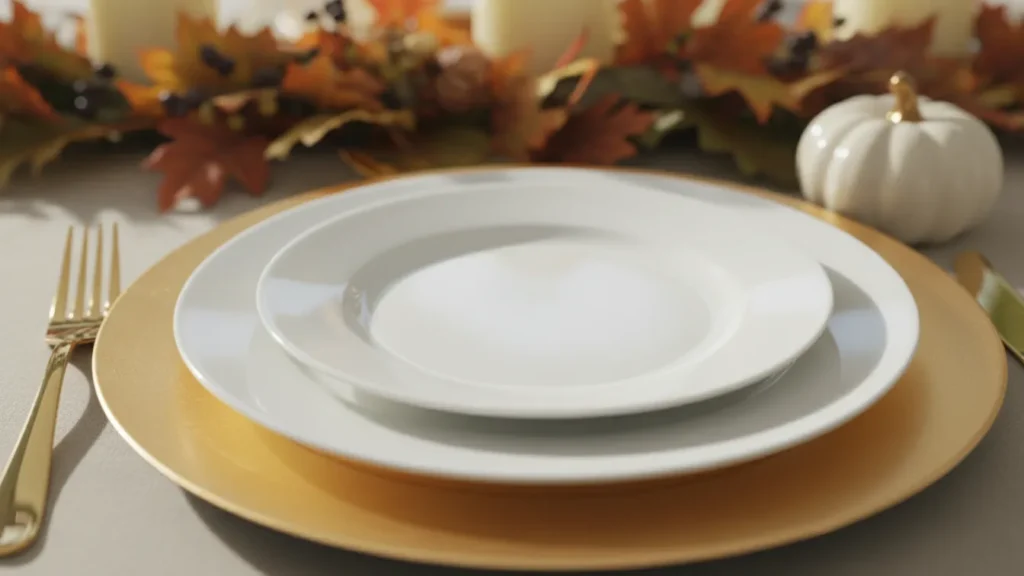
You don’t need fancy china to create an impressive table setting. What matters is how you use what you have.
Standard place settings include a dinner plate, salad plate, and bread plate. For Thanksgiving, you might add a soup bowl if you’re starting with butternut squash soup or similar. White plates are incredibly versatile—they make your food look amazing and work with any decor style.
Here’s a placement tip that changed my table-setting game: charger plates. These large decorative plates sit underneath your dinner plate and instantly make everything look more polished. You can find affordable chargers in gold, silver, or natural materials like wicker.
Layer your plates from largest to smallest. The dinner plate goes on the charger, then the salad plate on top. If you’re serving soup, that bowl goes on the salad plate.
Flatware and Glassware Essentials
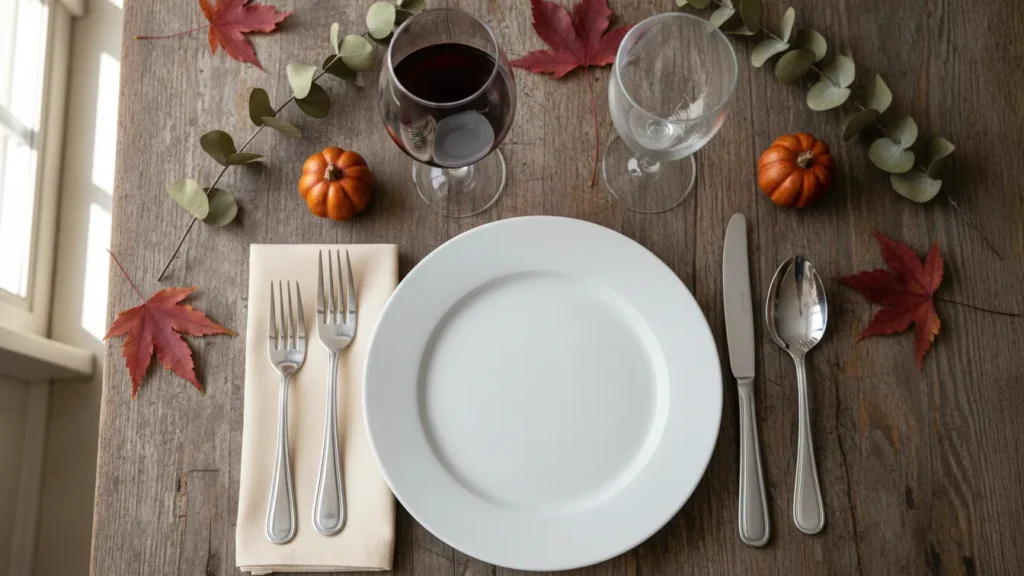
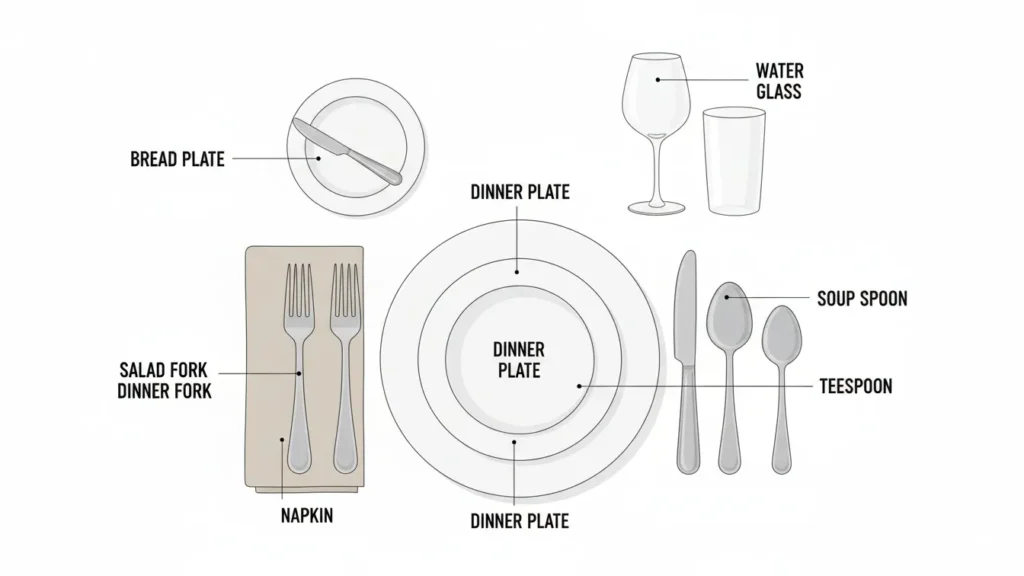
Flatware placement follows a simple rule: work from the outside in. The utensils you’ll use first go on the outside.
For a formal thanksgiving dinner, you’ll place the salad fork on the far left, then the dinner fork closer to the plate. The knife goes on the right side with the blade facing the plate, followed by the soup spoon on the far right. Dessert spoons and forks can go horizontally above the plate.
What I love about this layout is that it gives your guests a roadmap. They don’t have to guess which fork to use first.
Glassware placement is straightforward. The water glass sits directly above the knife. If you’re serving wine (and let’s be honest, Thanksgiving calls for it), place the wine glass slightly to the right of the water glass. For a festive touch, consider stemware in amber or cranberry colors.
Creating Stunning Thanksgiving Centerpieces
Now we’re getting to the fun part. Your centerpiece is the star of your thanksgiving dinner table setting.
Floral Arrangements for Thanksgiving Tables
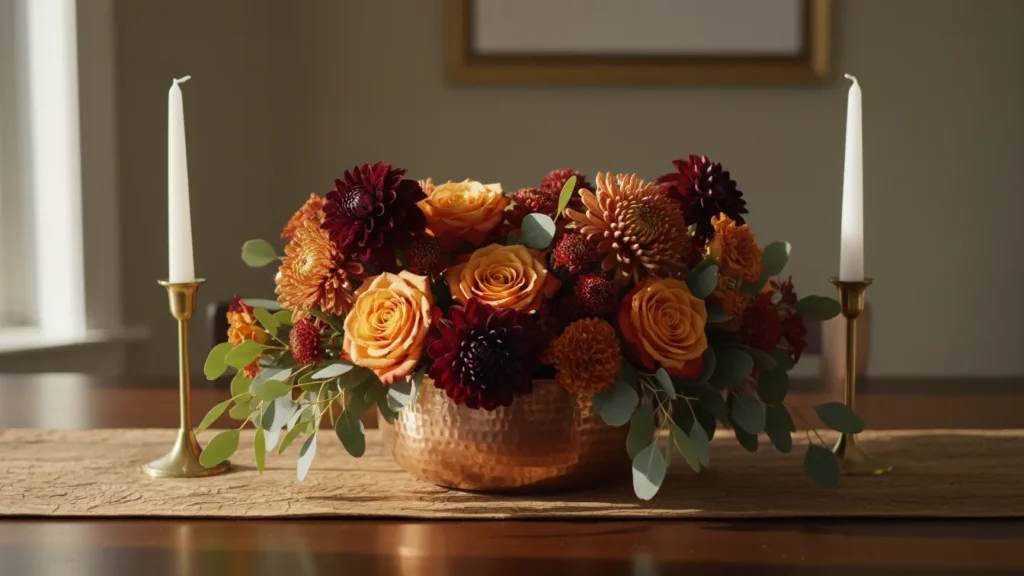
Fresh flowers bring life to any table. For Thanksgiving, think beyond traditional bouquets.
Seasonal flowers like chrysanthemums, sunflowers, and dahlias are perfect for fall. Mix in some roses in deep reds or oranges for richness. What I’ve learned is that fuller, low arrangements work best for dinner tables—you want people to see each other across the table.
Try using unconventional vases. Mason jars, copper pots, ceramic pitchers, or even hollowed-out pumpkins make charming containers. Group several small arrangements down the center of the table instead of one large one. This creates visual interest and makes conversation easier.
Dried flowers and grasses are having a moment too. Pampas grass, wheat stalks, and dried hydrangeas bring that harvest feel without the wilting worry.
Natural and Rustic Centerpiece Ideas
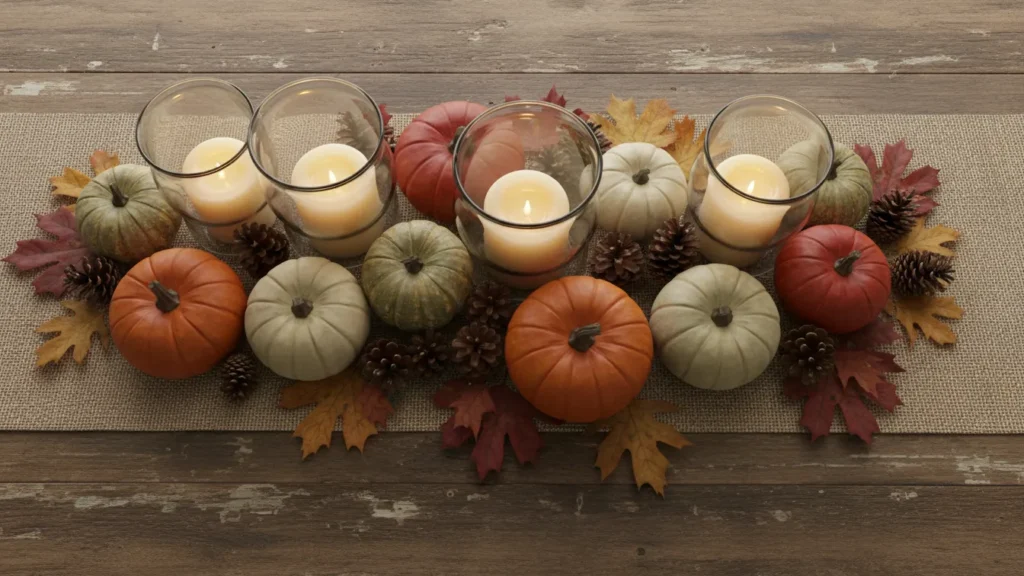
Nature provides the best thanksgiving decorations, and most of them are free.
Pumpkins and gourds are obvious choices, but here’s how to make them special. Mix different sizes and varieties—white pumpkins, traditional orange ones, warty gourds, and tiny baby pumpkins. Scatter them down the table’s center with candles interspersed.
Fall foliage is your friend. Gather leaves, branches, pine cones, and acorns on a walk. Arrange them on the table with votives nestled throughout. Eucalyptus branches, magnolia leaves, and oak branches with acorns still attached look particularly beautiful.
Create a cornucopia centerpiece by filling a woven horn with seasonal fruits and vegetables. Include apples, pears, grapes, mini pumpkins, and spilling vines. It’s classic Thanksgiving but still works today.
Candle Arrangements and Lighting
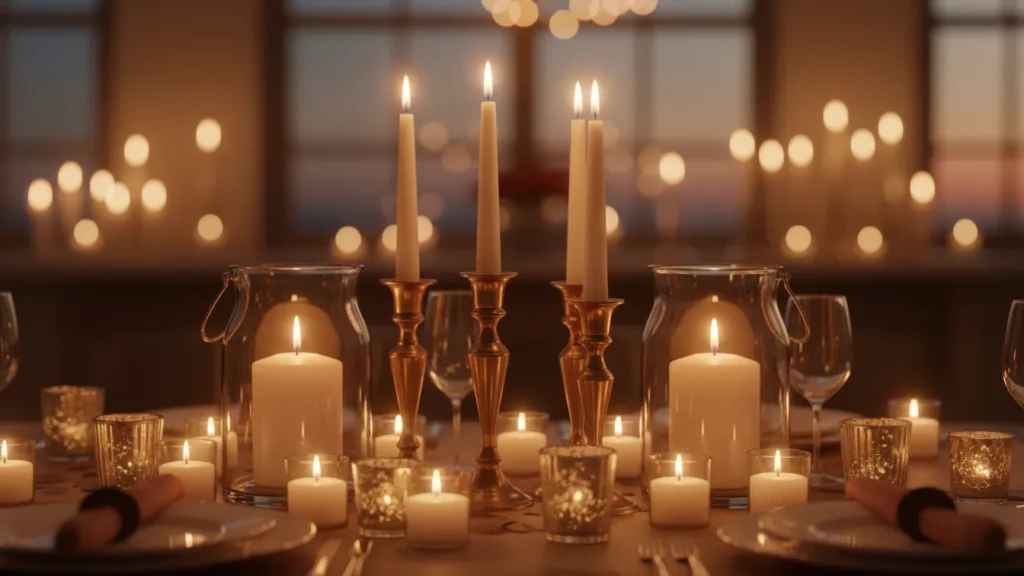
Here’s a secret: lighting makes or breaks the ambiance. And candles are the easiest way to get it right.
Taper candles in candlesticks of varying heights create drama. Use odd numbers (three or five) for the most pleasing look. Pillar candles on trays or plates surrounded by fall elements work beautifully too.
Votive candles are my go-to because you can scatter them everywhere. Put them in small glass holders, mercury glass containers, or even mason jars. Line them down the table’s length between your other decorations.
For safety and convenience, high-quality LED candles have come a long way. They flicker realistically and you don’t worry about wax on your tablecloth or fire hazards with napkins.
Layer your lighting. Dim the overhead lights, use candles on the table, and maybe add string lights or a lamp in the corner. The goal is warm, flattering light that makes everyone and everything look good.
Color Schemes and Themes for Your Thanksgiving Table
Your color palette ties everything together. Let’s explore what works.
Traditional Fall Color Palettes
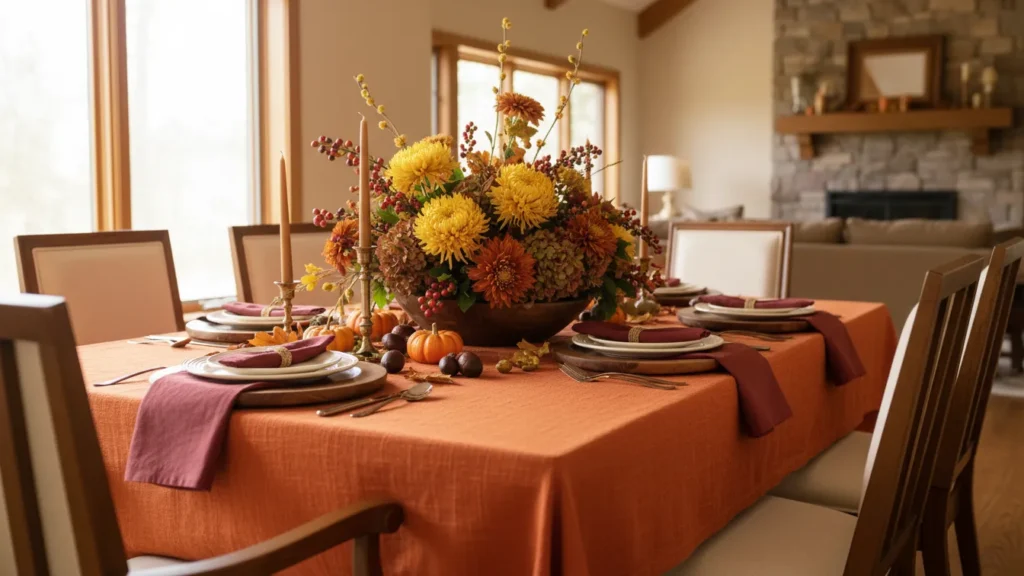
Traditional thanksgiving colors never go out of style because they work with the season.
The classic autumn palette includes burnt orange, deep burgundy, golden yellow, chocolate brown, and cream. These colors reflect the changing leaves and harvest time. They’re warm, inviting, and instantly recognizable as Thanksgiving.
You can build your entire table setting around these colors. Use a burnt orange tablecloth with cream napkins. Add burgundy candles and golden charger plates. Incorporate these colors through flowers, pumpkins, and even food presentation.
What I love about this palette is its versatility. Go heavy on the oranges for a bold look, or lean into creams and golds for something softer. Brown elements through wood chargers, wicker baskets, or burlap runners add earthy texture.
Modern and Elegant Alternatives
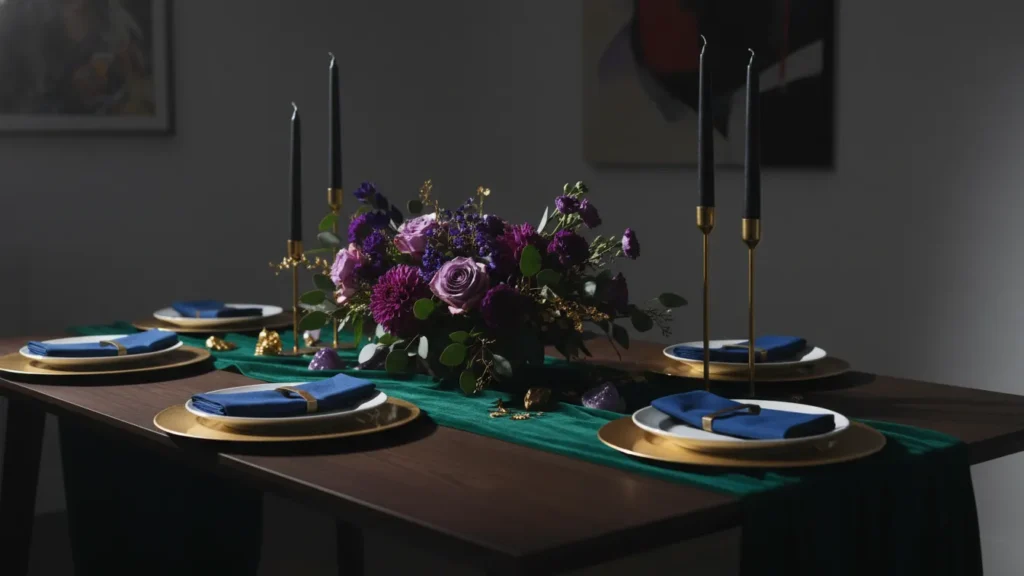
Now here’s where it gets interesting if you want to shake things up.
Jewel tones are stunning for Thanksgiving. Think emerald green, sapphire blue, amethyst purple, and ruby red. Pair them with gold or copper metallic accents for sophistication. This palette feels luxurious and unexpected.
An all-white thanksgiving table might sound crazy, but trust me—it’s gorgeous. White pumpkins, white candles, white flowers, and white linens create this dreamy, elegant atmosphere. Add natural wood elements and greenery for warmth. The food becomes the color.
Neutrals with metallic accents offer modern elegance. Build with taupe, gray, cream, and beige, then punch it up with gold, copper, or silver. Metallic chargers, gold-rimmed glassware, and copper candle holders add just enough sparkle.
For something totally different, try a navy and copper combination. Or sage green with blush pink. The key is choosing colors you genuinely love.
Incorporating Personal Style and Family Traditions
Your thanksgiving table should reflect who you are. Don’t be afraid to break the rules.
Maybe your family has traditions you want to honor. Grandma’s vintage china, that tablecloth from your wedding, or handmade decorations from your kids—these personal touches make your table meaningful.
Think about your overall home decor style. If your house is farmhouse style, lean into rustic elements for your table. If you’re more contemporary, keep things sleek and simple. Bohemian style? Layer patterns and textures. The table should feel like it belongs in your home.
Step-by-Step Guide to Setting Your Thanksgiving Table
Let’s put this all together. I’m walking you through the exact process.
Preparing Your Table Foundation
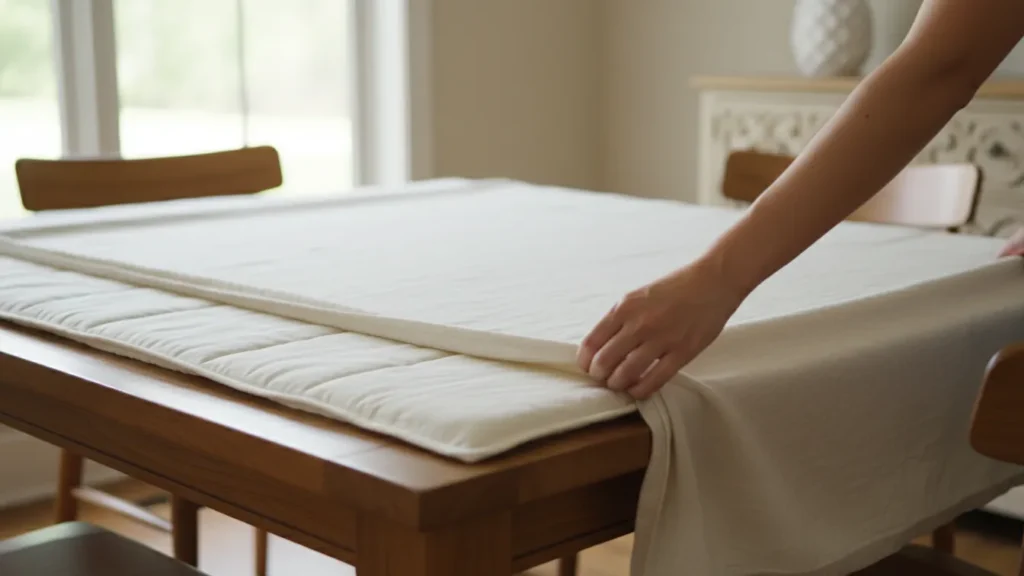
Start with a clean, sturdy table. Wipe it down completely—you’d be surprised what you find.
If your table has leaves or extensions, now’s the time to add them. Make sure they’re secure and level. Nothing ruins a dinner like a wobbly table.
Put down a table pad if you have one, especially if you’re using hot serving dishes. This protects your table surface from heat and moisture.
Now add your tablecloth or runner. For a tablecloth, center it so the overhang is equal on all sides. Generally, 8-12 inches of drop looks right. Too much and it’s in people’s laps; too little looks skimpy.
If you’re using a runner, center it lengthwise. You can use one long runner or several shorter ones as placemats. Layer a runner over a tablecloth for added dimension.
Placing Your Dinnerware
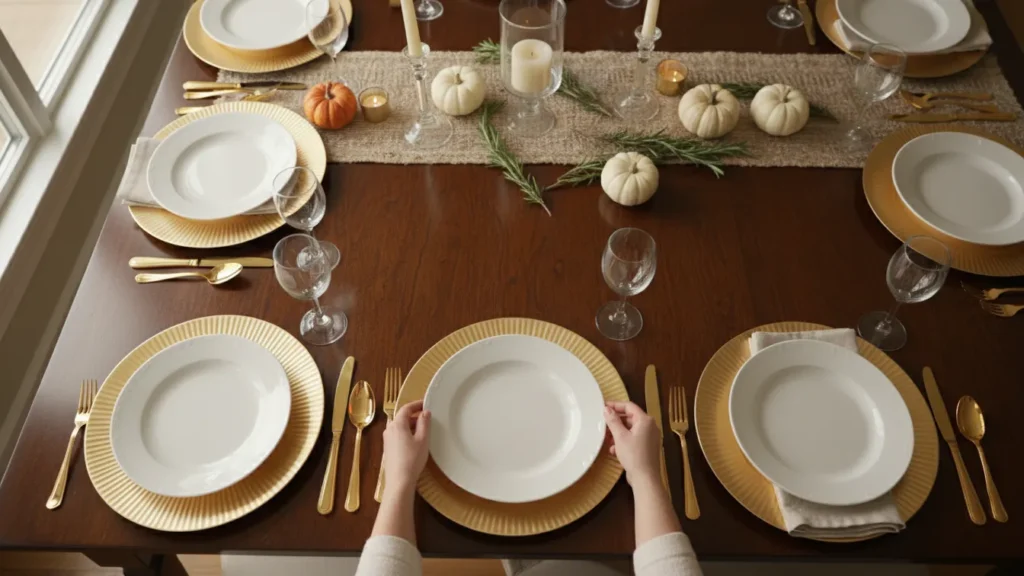
Time for the place settings. This part is actually easier than it looks.
Start by marking where each place setting will go. You want about 24 inches per person. A simple trick: lay out your chargers or dinner plates evenly spaced around the table. The plate should sit about an inch from the table edge.
Stack your plates in order. Charger on bottom (if using), then dinner plate, then salad plate. Some people put the salad plate to the left of the forks, which works too. The bread plate (if using) goes above and to the left of the forks.
Napkins can go several places. Fold them and place them on the plates, tuck them beside the forks, or get creative with napkin folds and napkin rings. A simple napkin fold in a napkin ring looks polished without being fussy.
Arranging Flatware and Glassware
Flatware goes in the order it’ll be used, working from outside to inside.
Left side: Salad fork on the outside, dinner fork closer to the plate. Right side: Knife closest to the plate (blade facing in), then soup spoon or dinner spoon. Dessert fork and spoon can go horizontally above the plate or be brought out with dessert.
All flatware bottoms should align about an inch from the table edge, creating a clean line.
Glassware goes above the knife. Water glass directly above, wine glasses to the right and slightly forward. If you’re serving multiple wines, arrange them in the order they’ll be used.
Pro Tips for Efficient Table Setting
Here’s what makes the process faster:
Set the table the day before if possible. Cover it with a clean sheet overnight to keep everything fresh. The morning of Thanksgiving, you’ve got one less thing to stress about.
Work systematically. Do all plates first, then all napkins, then all flatware. This assembly-line approach is much faster than completing one place setting at a time.
Get help. Turn on music, pour some wine, and make it a family activity the night before Thanksgiving. Kids can place napkins or position pumpkins for the centerpiece.
Thanksgiving Table Decor Ideas
Let’s talk about those finishing touches that elevate everything.
Place Cards and Seating Arrangements
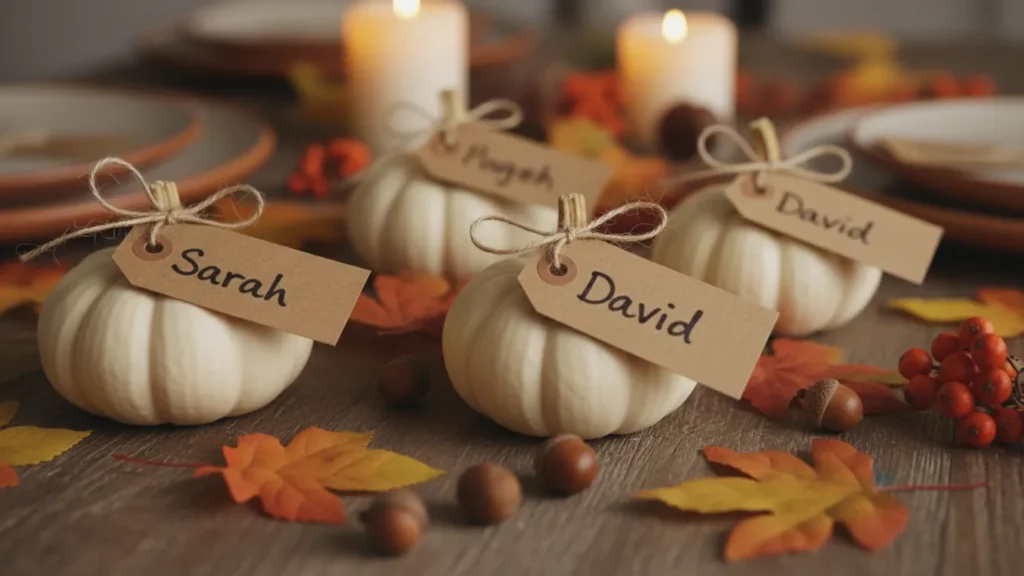
Place cards serve a purpose beyond looking pretty—they prevent that awkward “where should I sit?” moment.
You don’t need fancy calligraphy. Handwrite names on kraft paper tags tied to mini pumpkins. Write on fall leaves with a gold or white paint pen. Tuck name cards into pine cones with a slit cut in them.
For something more permanent, collect small chalkboard signs or frames. Write names with chalk or use printable place cards. Wooden slices with names painted on them double as favors guests can take home.
Think strategically about seating. Put chatty people near quieter folks. Separate the kids strategically. Seat grandparents where they can easily see and hear. Put yourself near the kitchen for easy access.
DIY Place Card Ideas
Making your own place cards is easier than buying them, and they’re more personal.
Gather fall leaves and write names with metallic markers. Press the leaves first if they’re very curled. Attach mini flags to toothpicks and stick them in pumpkins, apples, or even dinner rolls.
Cut pears or apples in half, scoop out a small hole in the top, and insert a name card. These edible place cards are charming and can become part of your decor or dessert.
Use kraft paper tags with twine tied around napkins. Stamp them with fall designs or leave them simple and rustic. Write names on small chalkboards propped on tiny easels—you can find these at craft stores inexpensively.
Adding Texture with Runners and Placemats
Texture makes your table interesting. Flat and boring doesn’t cut it.
Burlap runners add rustic charm. Layer one over your tablecloth or use it alone on a bare wood table. Lace runners bring vintage elegance. Velvet runners feel luxurious for a formal dinner.
Placemats define each person’s space. Woven placemats in natural fibers pair beautifully with fall decor. Cork placemats are budget-friendly and protect your table. Fabric placemats in fall colors or patterns add softness.
Mix textures intentionally. Rough burlap against smooth china. Woven placemats under glass chargers. Linen napkins in wood napkin rings. These contrasts make the table more dynamic.
Incorporating Seasonal Decorations
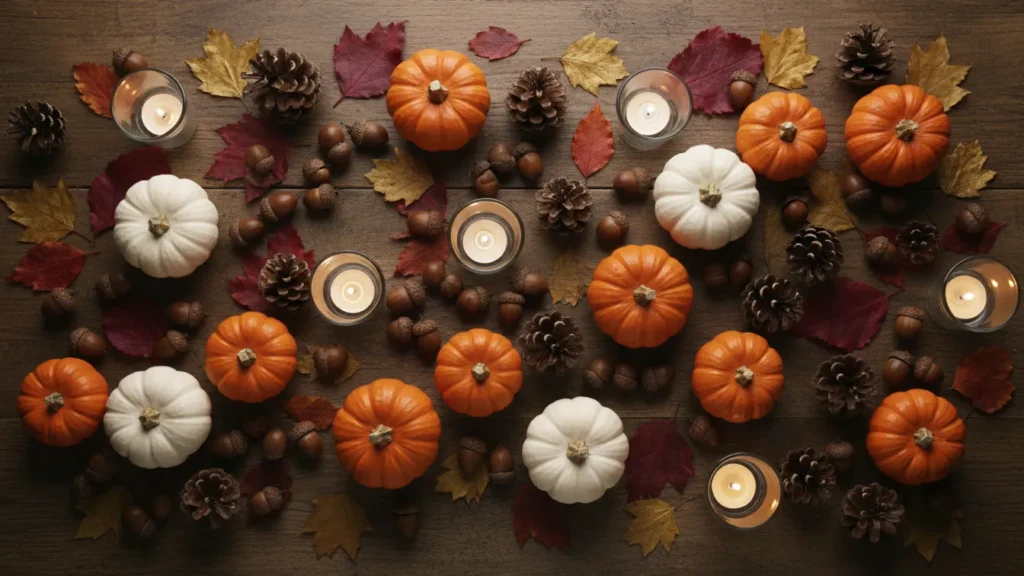
Seasonal touches announce “this is Thanksgiving” without being over the top.
Scatter mini pumpkins and gourds down the table between candles and other decor. Use Indian corn in its husks as natural decoration. Pile apples, pears, and pomegranates in bowls or baskets as edible decor.
Wheat sheaves, tied with ribbon or twine, lean beautifully against walls or in vases. Corn stalks flanking the dining room entrance create a festive welcome. Fall wreaths don’t have to hang only on doors—lay one flat in the table’s center with candles in the middle.
Acorns, pine cones, and chestnuts scattered across the table or grouped in small dishes add natural elements. Spray paint them gold or leave them natural for different effects.
Don’t forget vertical space. String lights or garland hung above the table adds another layer of decor. A chandelier draped with fall foliage becomes part of your tablescape.
Practical Thanksgiving Table Setting Tips
Real talk: Thanksgiving is busy. Let’s make this manageable.
Budget-Friendly Decorating Solutions
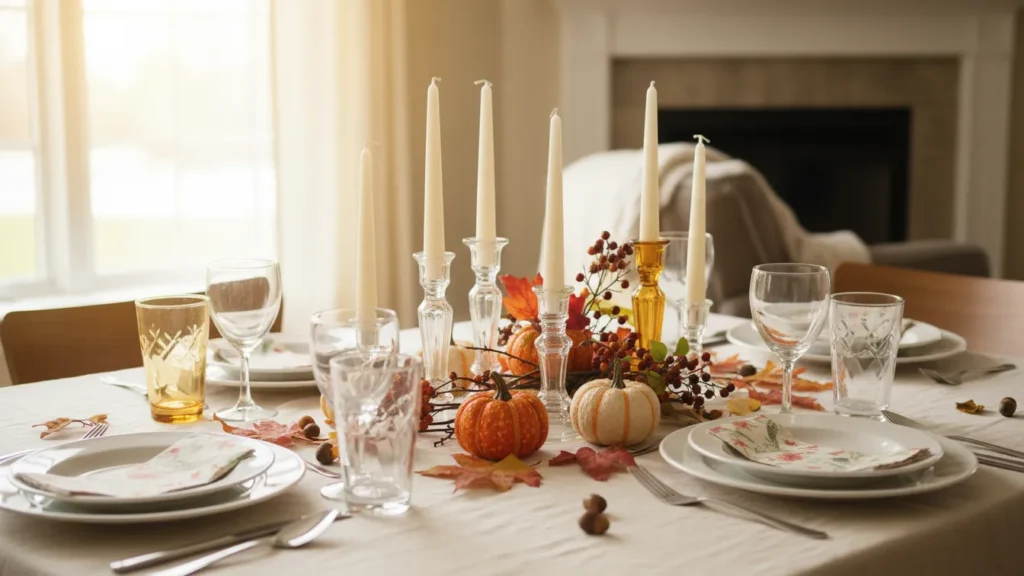
You don’t need to spend hundreds of dollars for a beautiful table.
Dollar stores carry amazing fall decor. I’ve found vases, candles, pumpkins, and table decorations for literally a dollar each. Stock up early because popular items sell out.
Nature is free. Take a walk and collect leaves, branches, pine cones, and acorns. Arrange them artfully and you’ve got a centerpiece that cost nothing. Backyard greenery like ivy or ferns fills in arrangements beautifully.
Thrift stores and garage sales are goldmines for mismatched china, vintage glassware, and candlesticks. The non-matching thing is actually trendy. You’re not broke; you’re curated.
DIY whenever possible. Make your own table runner from burlap or fabric (no sewing required—just cut to size). Print place cards on cardstock from free online templates. Fold napkins in interesting ways instead of buying napkin rings.
Use what you have creatively. Mason jars become vases or candle holders. Baskets corrall pumpkins or bread. Cutting boards serve as rustic trays for centerpiece elements.
Setting Up for Large Gatherings
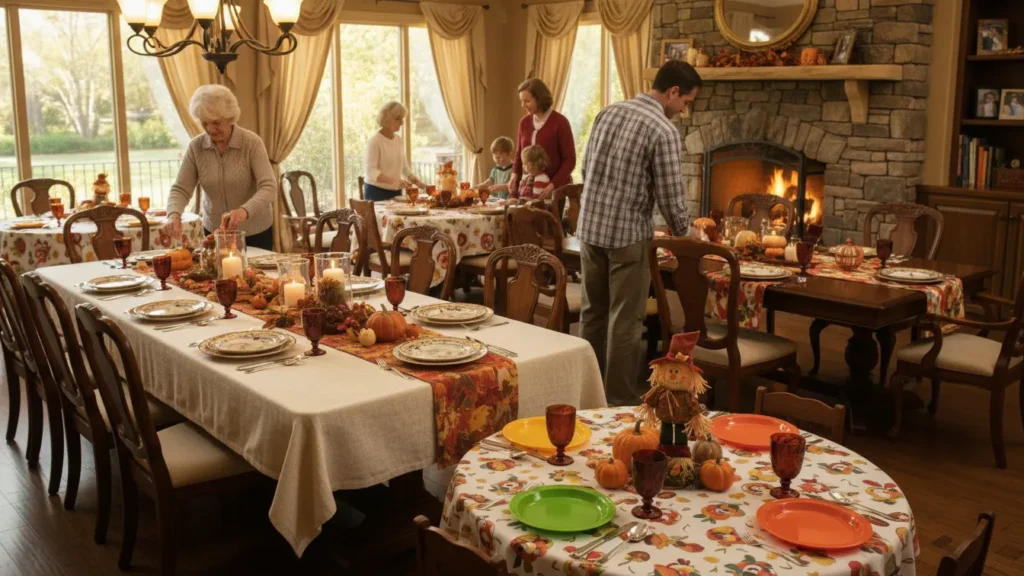
Big Thanksgiving dinners need strategic planning.
Consider multiple tables instead of cramming everyone at one. A kids’ table is classic, but you could also do a dessert table, appetizer station, or separate tables by family branch. Make each table special with its own decorations.
Buffet-style serving saves table space. Set up a serving station on a sideboard, kitchen island, or separate table. This keeps hot dishes off the dining table and lets people serve themselves.
For seating, rent or borrow chairs if needed. Folding chairs with seat cushions or chair covers look much better than bare metal. Benches on one or both table sides fit more people than individual chairs.
Table extensions are your friend. Most dining tables have hidden leaves. Use them all. If your table still isn’t big enough, push two tables together and cover them with one large tablecloth—it’ll look like one continuous surface.
Make-Ahead Preparation Strategies
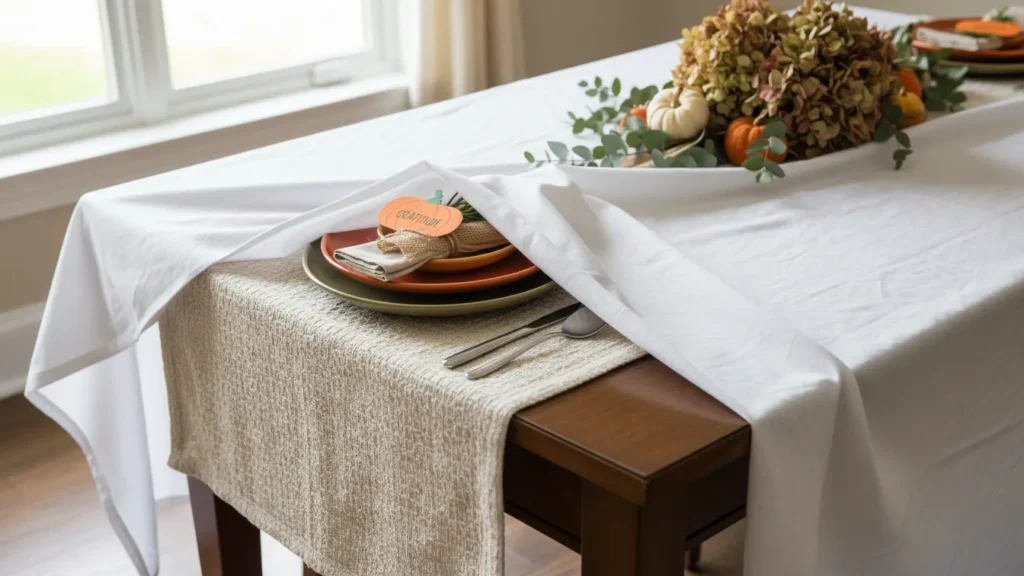
The key to a stress-free Thanksgiving is doing as much ahead as possible.
Set your table completely one or two days before. Everything except water in the glasses and bread on the plates can be done early. Cover with a clean sheet to keep it fresh.
Prep your centerpiece in advance. Floral arrangements can be made the day before. Natural elements like pumpkins and branches can be positioned days ahead. Candles can be placed early; just don’t light them yet.
Create a table setting checklist. Note exactly what goes where, what still needs to be done, and what can be delegated. When you’re juggling turkey and sides, you don’t want to be figuring out where forks go.
Take a photo of your finished table before guests arrive. You’ll want to remember what worked, and it’s nice to have before the inevitable mess begins.
Special Considerations for Thanksgiving Table Settings
Every situation is unique. Let’s address specific scenarios.
Family-Friendly Table Settings
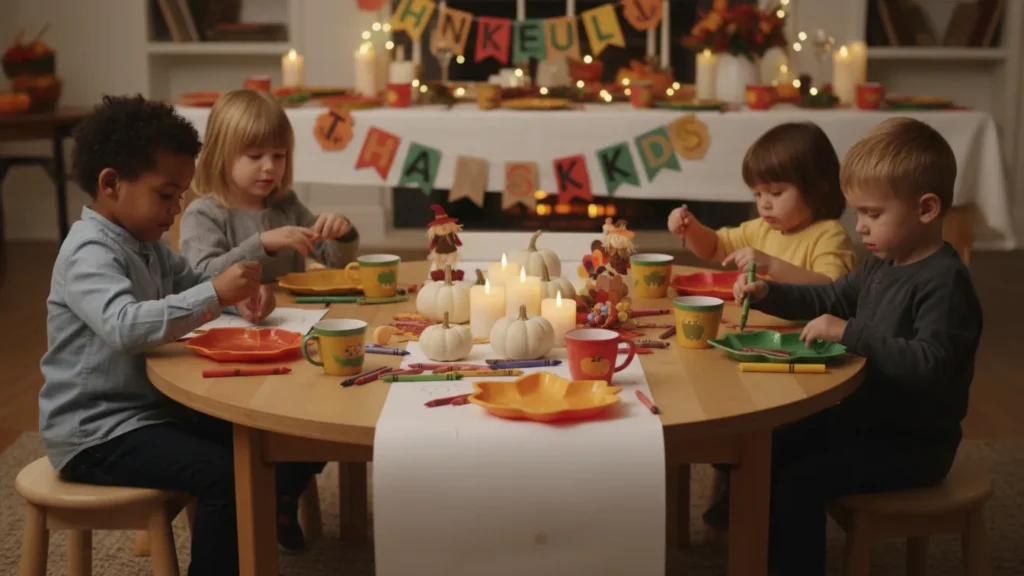
When kids are involved, practicality matters.
Use dishwasher-safe dinnerware instead of family heirlooms. Save grandma’s china for adult-only dinners. Melamine plates now come in beautiful designs that look like ceramic but won’t shatter.
Spillproof tablecloths or wipeable options save sanity. Laminated fabrics or vinyl tablecloths wipe clean. Or embrace the chaos and use paper products strategically—maybe real plates but paper napkins.
Keep centerpieces low and sturdy. Nothing ruins dinner faster than a toppled vase or knocked-over candle. Skip real candles entirely if you’ve got really young kids; use LED versions exclusively.
The kids’ table deserves love too. Give them their own centerpiece, place cards, and special touches. A craft paper table runner they can color on keeps them entertained. Pumpkin decorating supplies at their table doubles as entertainment.
Accommodating Dietary Restrictions
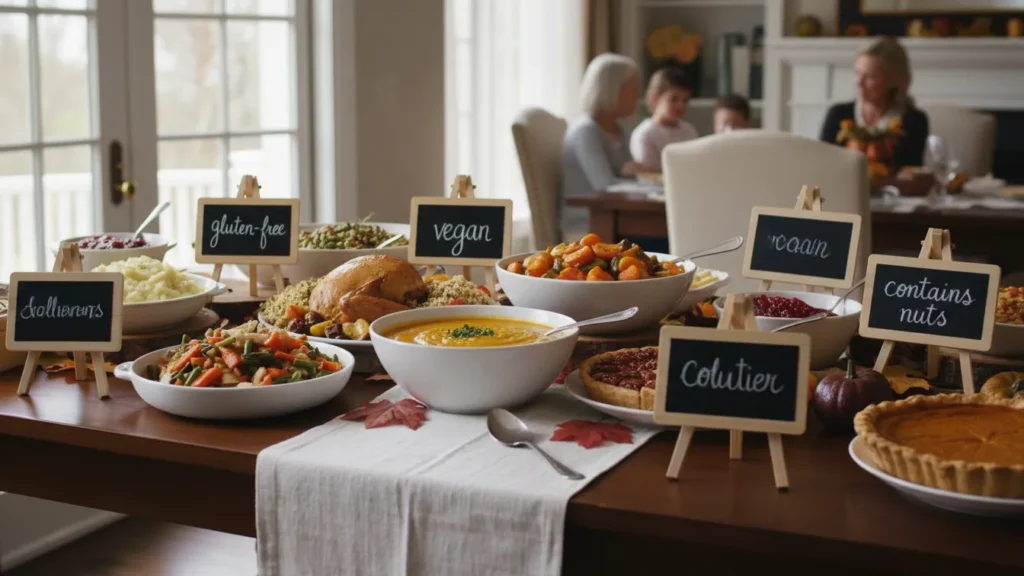
Allergies and dietary needs require thought but aren’t complicated.
Label dishes clearly, especially for common allergens. Use place cards or small signs noting “contains nuts,” “gluten-free,” “vegan,” etc. This prevents constant questions and keeps everyone safe.
Consider separate serving utensils for allergen-free dishes to prevent cross-contamination. Use different colored utensils or label them clearly.
Don’t make guests with restrictions feel awkward. Ensure there are multiple dishes they can enjoy, not just one sad salad. If someone has severe allergies, reach out beforehand to ensure you’re preparing safely.
For kids with allergies, having safe options that look similar to what everyone else is eating helps them feel included. Allergen-free dinner rolls, safe dessert options, and alternatives to traditional dishes show you care.
Outdoor Thanksgiving Table Ideas
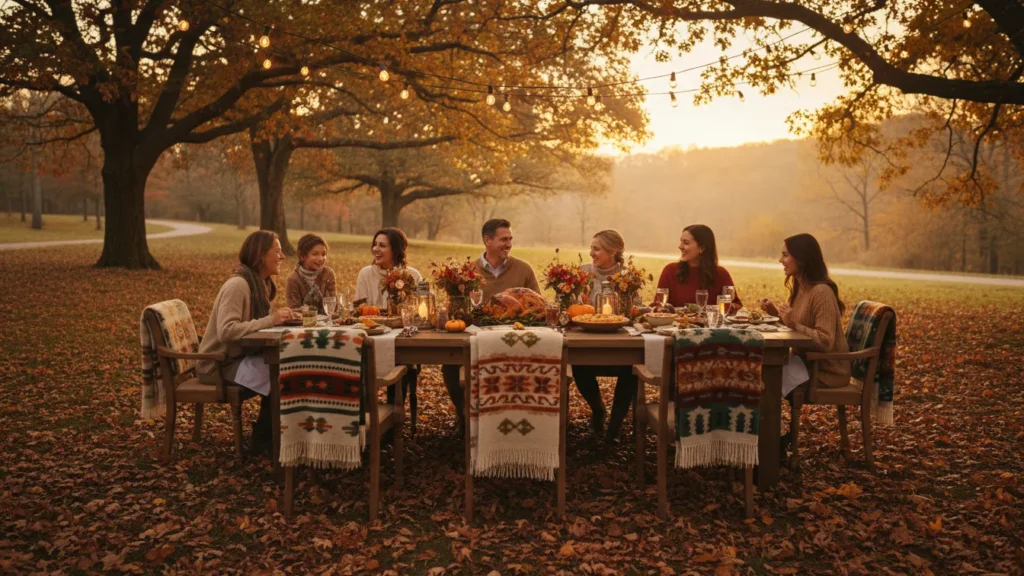
If weather permits, outdoor Thanksgiving is magical.
Choose a stable, level surface. Your patio table, picnic tables pushed together, or even sawhorses with wood planks and tablecloths work. Ensure chairs or seating won’t sink into soft ground.
Weight everything down. Tablecloths need clips or weights (pretty rocks in corners work). Centerpieces should be heavy enough not to blow away. Skip tall taper candles on windy days.
Plan for sun and temperature. Provide shade with umbrellas, canopies, or trees. Have blankets available if it gets cool. Consider timing your meal to avoid the hottest part of day.
Bugs can crash the party. Citronella candles strategically placed help. Covers for food are essential. Serve courses quickly and keep dishes covered when not actively serving.
Lighting is crucial for evening meals. String lights overhead, lanterns on the table, and pathway lights leading to the dining area create ambiance and functionality.
Thanksgiving Table Setting Checklist
Here’s your complete checklist to ensure nothing’s forgotten.
| Category | Items Needed | Notes |
|---|---|---|
| Table Foundation | Tablecloth, table runner, table pad | Choose colors that match your theme |
| Dinnerware | Chargers, dinner plates, salad plates, bread plates, bowls | Count guests plus 2 extra |
| Flatware | Dinner forks, salad forks, knives, spoons, dessert utensils | Polish before setting |
| Glassware | Water glasses, wine glasses | Check for spots or chips |
| Linens | Napkins, napkin rings | Iron or steam if needed |
| Centerpiece | Flowers, vases, pumpkins, candles, decorative elements | Keep below eye level |
| Lighting | Candles, candlesticks, votives, lighters | Test all candles beforehand |
| Personal Touches | Place cards, favors, menu cards | Personalize for guests |
| Serving | Serving bowls, platters, utensils, trivets | Plan what dish goes in which bowl |
| Extras | Salt and pepper shakers, butter dishes, gravy boats | Place within reach |
Essential Items You’ll Need
Beyond the checklist, keep these extras on hand:
Extra napkins—someone always needs another. Stain remover for inevitable spills. Extension cord if you’re using electric candles or warmers. Serving spoons (you always need more than you think). Trivets or hot pads for the table. Pitcher for water refills. Wine opener and bottle opener. Matches or lighter for candles.
Have a backup plan for everything that could break or fail. Extra bulbs for string lights. Additional candles in case one won’t light. Paper napkins as backup. Extra plates in case of breakage.
Last-Minute Details
The hour before guests arrive, handle these final touches:
Fill water glasses about 30 minutes before guests arrive. Light candles just before people sit down. Place butter on the table. Set out salt and pepper. Put ice in beverage station. Turn on music at low volume. Dim overhead lights and turn on ambient lighting.
Do a final walk-around. Make sure chairs are evenly spaced. Straighten any crooked place settings. Fluff napkins or adjust napkin rings. Check that centerpiece elements are secure. Ensure everyone has all their utensils.
Take a deep breath. Your table looks beautiful.
Frequently Asked Questions About Thanksgiving Table Settings
Let me answer the questions I get asked most.
How Far in Advance Should I Set My Table?
You can set your thanksgiving table one to two days before. Cover it with a clean sheet to protect from dust. The morning of Thanksgiving, remove the sheet, add water glasses, and do final adjustments. Setting the table early reduces Thanksgiving Day stress significantly.
If you’re really organized, set your table a week ahead and take a photo. Then break it down and re-set the day before using your photo as reference. This lets you perfect your design without tying up your dining table for a week.
What If I Don’t Have Enough Matching Dishes?
Mismatched dishes are actually charming. Embrace the eclectic look. Use different patterns in similar colors, or mix white plates with patterned salad plates. Vintage thrift store finds create a unique tablescape. What I love about this approach is that each place setting has personality.
If uniformity matters to you, rent dinnerware from party supply stores. Or use white plates as your base—you can find inexpensive white dinnerware anywhere, and it works with everything.
How Do I Keep Centerpieces from Blocking Conversation?
Keep centerpieces under 12 inches tall if they’re in the table’s center. People should see each other’s faces easily. Or use several low arrangements instead of one tall centerpiece. Long tables work well with multiple small vases or groupings running down the center.
Another trick: create height at the table’s ends where it won’t obstruct views. Tall candelabras or arrangements at either end add drama without blocking conversation.
Thanksgiving Table Inspiration and Trends
Let’s look at what’s current in thanksgiving table design.
Current Design Trends
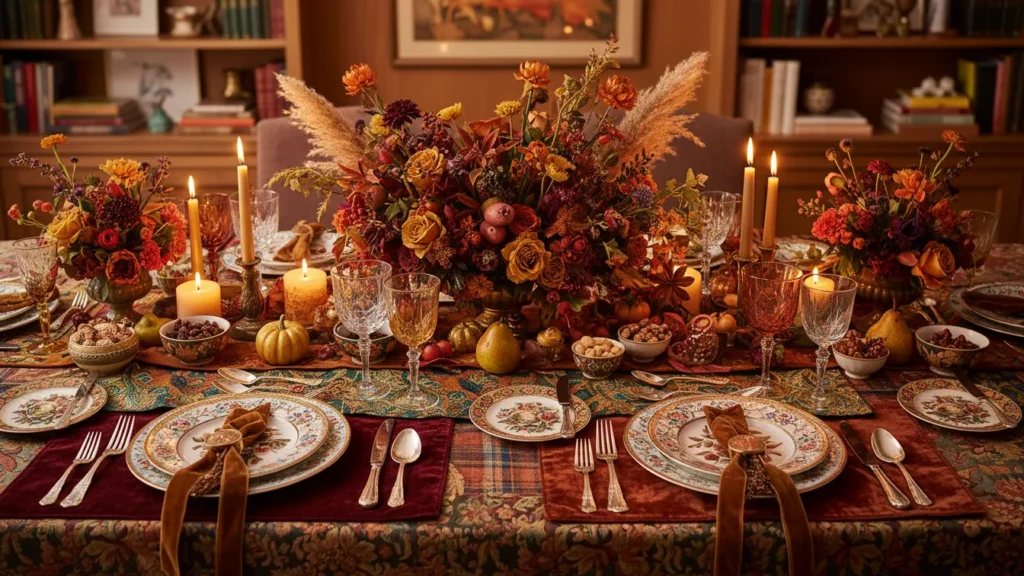
Maximalist tables are having a moment. Think layers upon layers—multiple runners, mixed patterns, abundant florals, and lots of decorative elements. It’s the opposite of minimalism and celebrates abundance (perfect for Thanksgiving).
Sustainable and eco-friendly decor continues growing. Reusable items, natural materials, potted plants instead of cut flowers, and vintage pieces all align with this trend. Beeswax candles, cloth napkins, and real dishes over disposables fit this aesthetic.
Moody fall palettes are trending—think deeper, richer colors than traditional fall. Plum,burgundy, forest green, navy, and charcoal with gold accents create sophisticated autumn vibes.
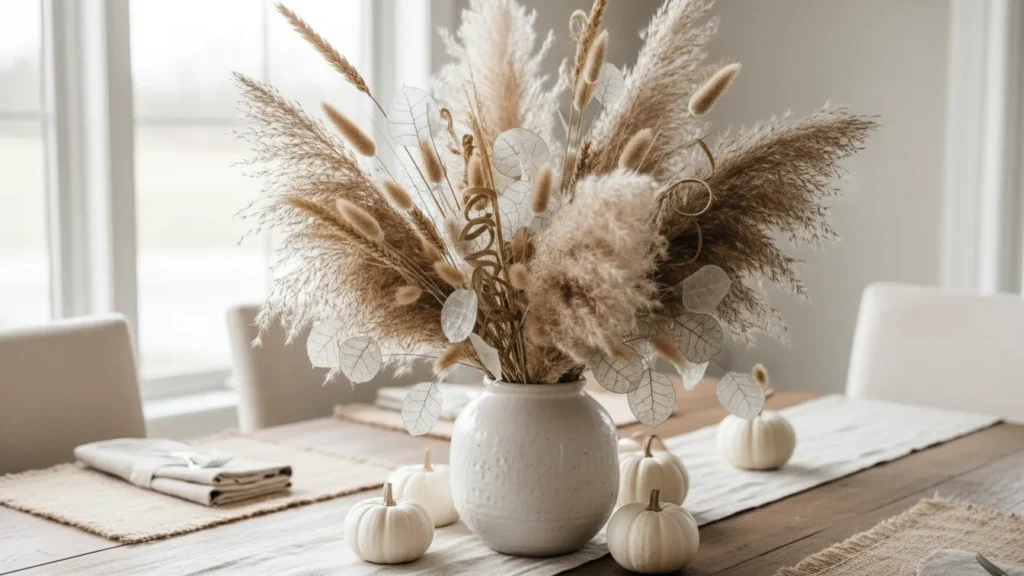
Dried florals and grasses dominate centerpieces. Pampas grass, bunny tails, dried lunaria, and wheat create that neutral, textural look that’s everywhere right now.
Drawing Inspiration from Different Styles
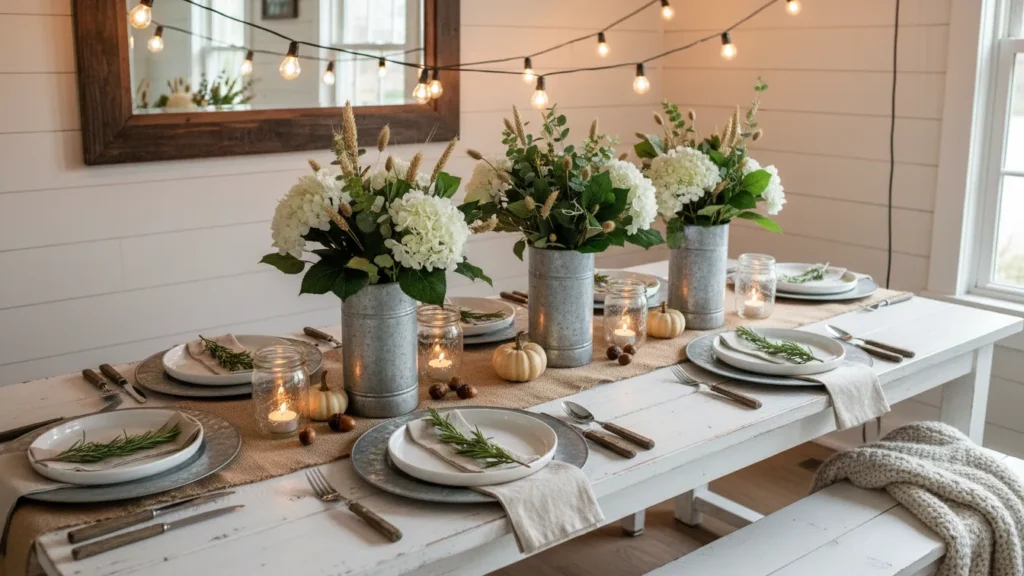
Farmhouse Thanksgiving tables embrace rustic simplicity. Wood elements, galvanized metal, mason jars, burlap, and simple white dishes define this look. Think Chip and Joanna Gaines.
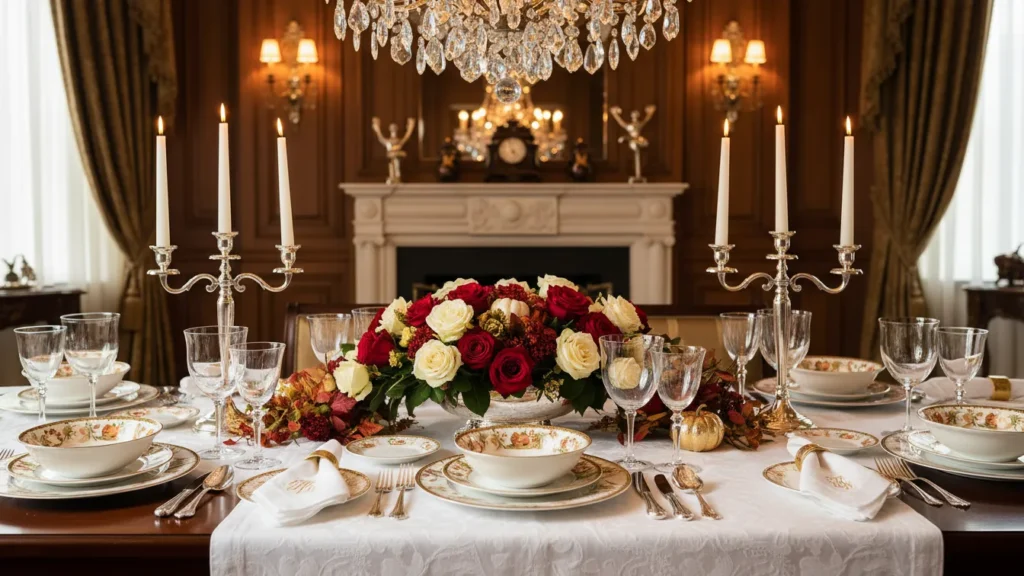
Elegant formal tables feature fine china, crystal, silver, linen napkins with monograms, and classic centerpieces. This traditional approach never goes out of style for those who love formality.
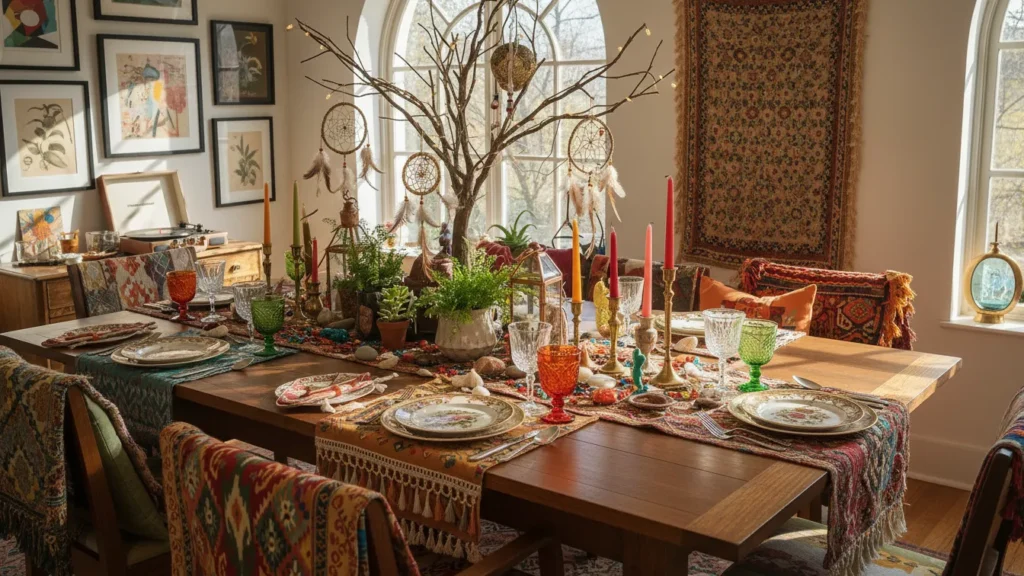
Bohemian tables mix patterns, textures, and colors freely. Layered textiles, macramé, colorful glassware, mismatched plates, and unconventional centerpieces create relaxed, artistic vibes.
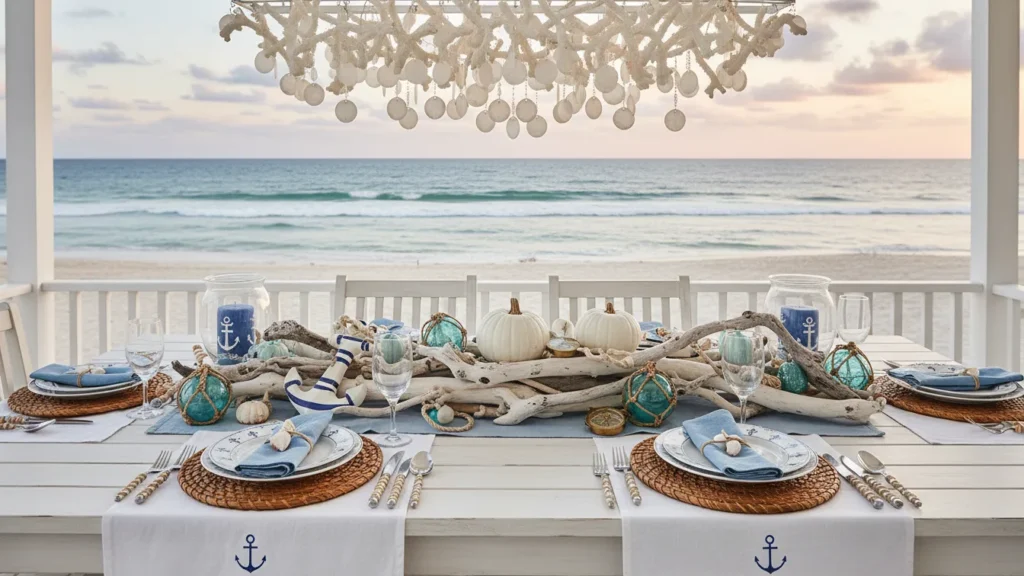
Coastal Thanksgiving brings beach elements to fall. Whites, blues, sandy neutrals, driftwood, sea glass, shells mixed with fall pumpkins create unexpected combinations. Perfect for those not ready to let go of summer.
Conclusion: Creating Your Perfect Thanksgiving Dinner Table Setting
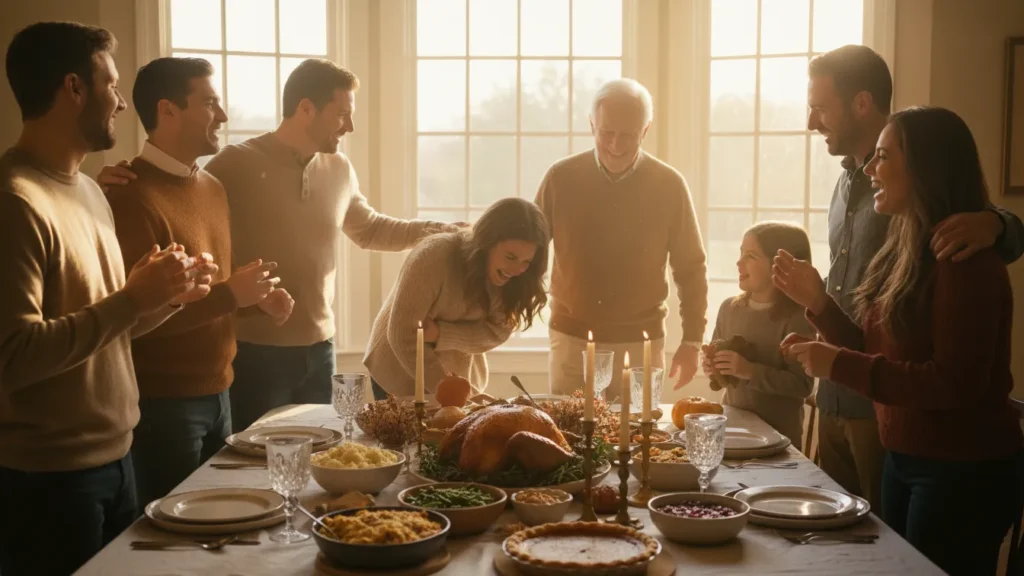
Here’s what I want you to remember: your thanksgiving dinner table setting doesn’t have to be perfect. It needs to be welcoming.
The most memorable Thanksgiving tables aren’t the ones from magazines. They’re the ones where people felt comfortable, where conversation flowed, where laughter happened, and where everyone felt included. Your table facilitates that experience.
Start with the basics—good linens, proper place settings, and adequate lighting. Add seasonal touches that speak to you, whether that’s traditional pumpkins or something completely unexpected. Make it personal with family traditions, handmade elements, or meaningful decorations.
Don’t stress about perfection. That slightly crooked napkin? No one will notice because they’ll be too busy enjoying your company and amazing food. The centerpiece that’s not quite Pinterest-perfect? It’s still beautiful because you made it with care.
Remember: the goal isn’t to impress people. It’s to make them feel welcome and grateful to be at your table. That happens through warmth, not perfection.
Take Action on Your Thanksgiving Table
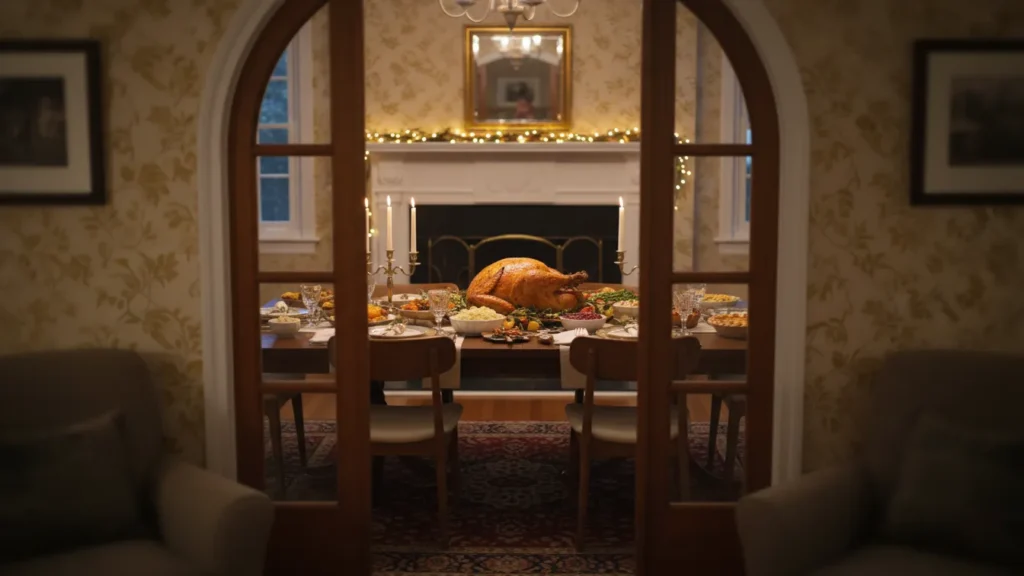
Ready to create your beautiful thanksgiving table? Start planning now:
- Choose your color scheme and theme this week
- Take inventory of what dinnerware, linens, and decor you already have
- Make a shopping list for items you need (prioritize based on budget)
- Gather natural elements from your yard or local area
- Set your table a day or two before Thanksgiving
- Take photos to remember what worked
And here’s my challenge to you: don’t wait for Thanksgiving to create a special table. Practice with smaller dinners first. Try different centerpiece ideas. Experiment with place settings. The more you do it, the easier and faster it becomes.
Your Thanksgiving guests are coming to see you, not judge your table decorations. But a thoughtfully set table shows you care about making the day special. It sets the tone for the entire meal and creates an atmosphere of gratitude and celebration.
Now go create that amazing thanksgiving dinner table setting. You’ve got this. And when your family walks in and gasps—and they will—you’ll know all your effort was worth it.
What table setting idea are you most excited to try this Thanksgiving? Share your plans or photos—I’d love to see what you create!